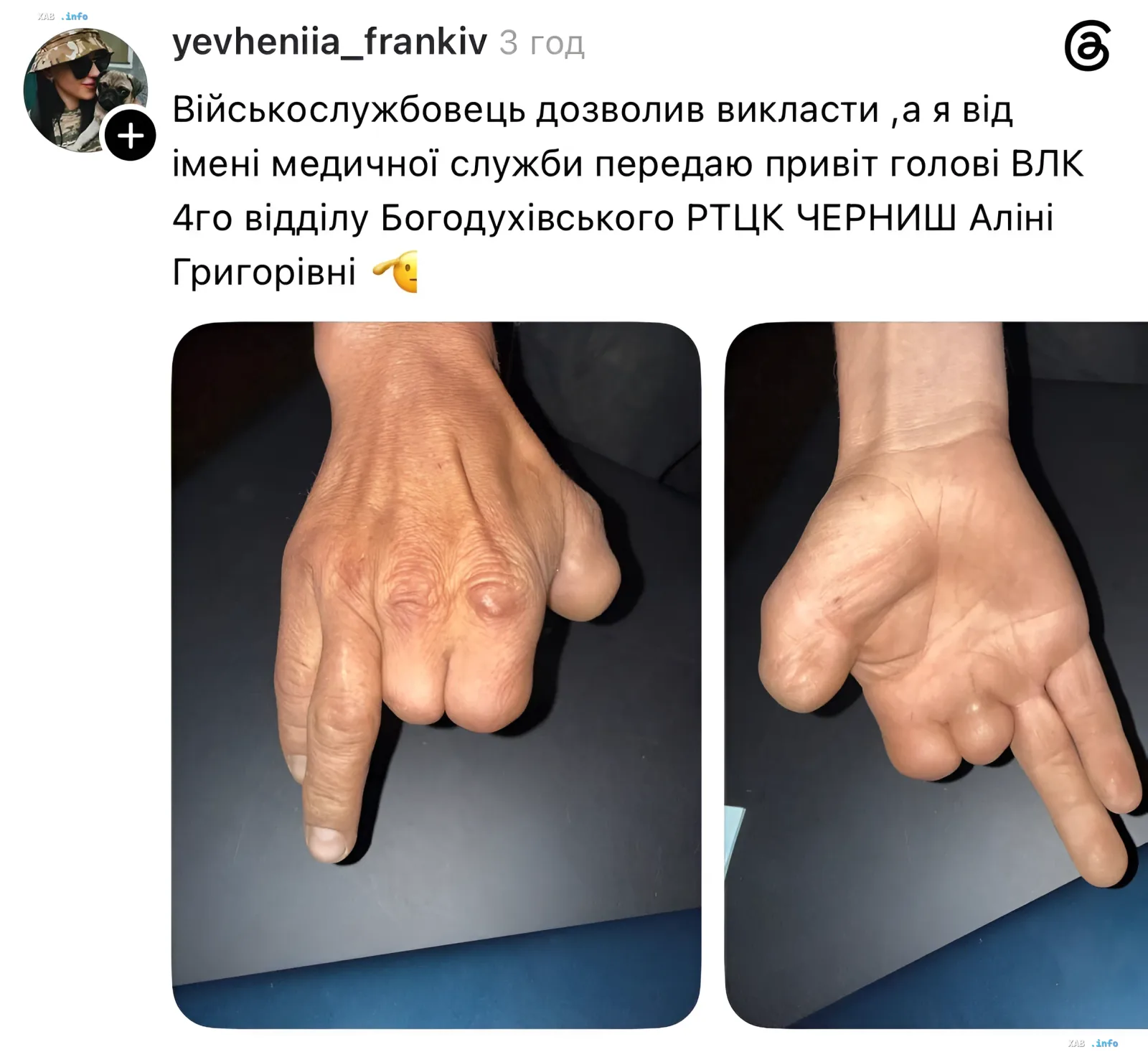
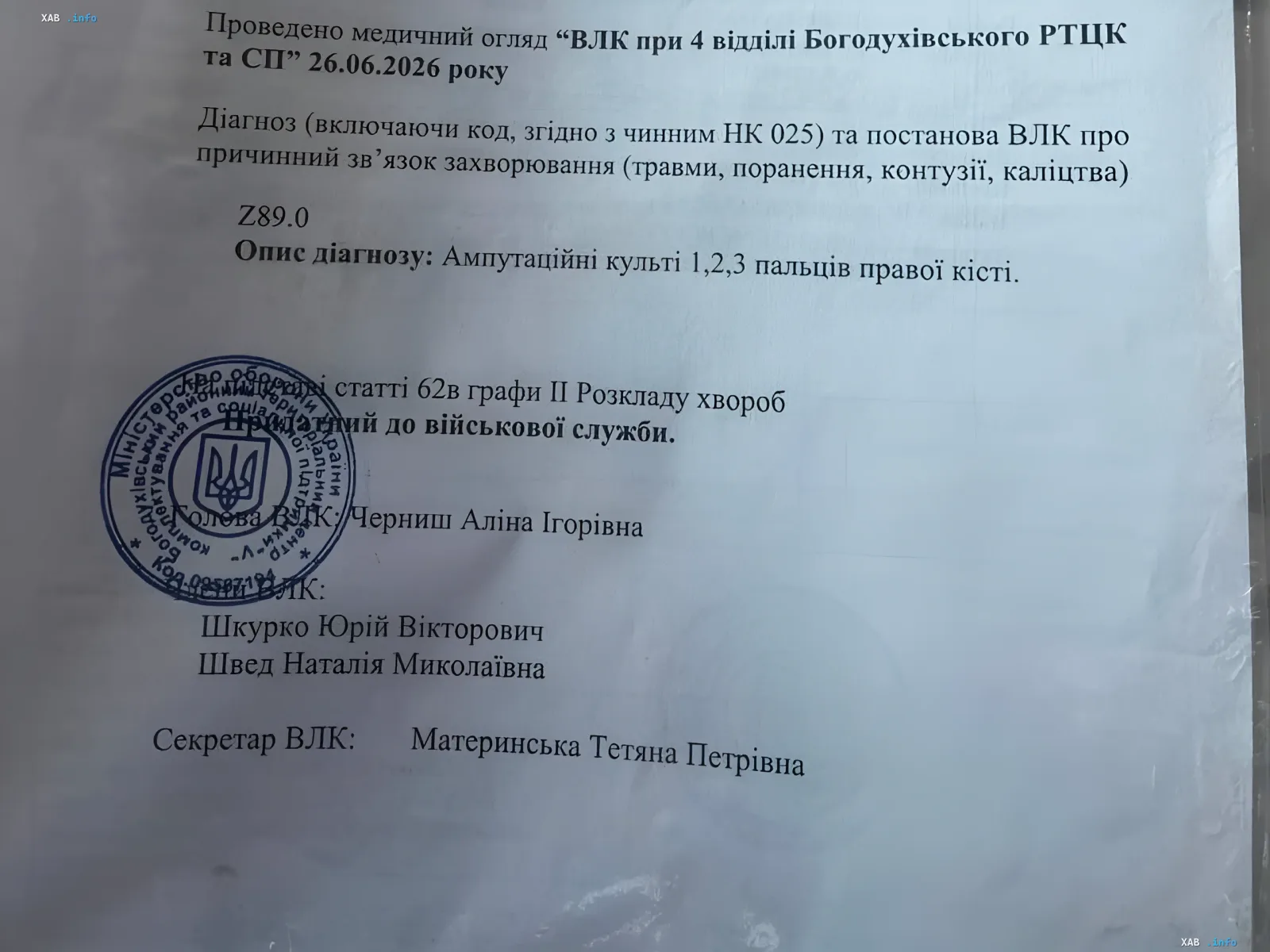
In recent days, social media and Telegram channels have been buzzing over a highly publicized case from the practice of Ukraine's military medical boards (MMBs). In photographs that went viral, the right hand of a man is shown with three fingers — the index, middle, and ring fingers — amputated. Despite the obvious severity of the injury, the MMB's ruling declared the citizen fit for service. This has shocked the public: how can a person without the key fingers of their dominant hand carry out combat tasks, fire a weapon, or operate equipment?
The Legal Core: What Article 62 of the Schedule of Diseases Says
To understand the cause of this "paradox," it is necessary to set aside emotions and turn to the dry wording of the regulatory acts. According to Ukrainian Ministry of Defense Order No. 402 (as amended by Order No. 262), which governs military medical expertise, the assessment of fitness is built not on a person's subjective "convenience" but on strict anatomical criteria. In particular, Article 62, which deals with defects of the hand and fingers, clearly distinguishes between degrees of impairment.
To obtain the status of "unfit with removal from military registration" (item "a"), the presence of more severe defects is required. These include: complete absence of the hand, absence of three fingers on both hands simultaneously, absence of four fingers on one hand, or absence of the first (thumb) and second (index) fingers on both hands. It is precisely these criteria that determine a complete loss of functionality in the context of military registration.
Why the Right Hand Does Not Spare One from Mobilization
A myth has taken root in public consciousness: since the hand is the right one (the "working" hand), the requirements for it should be higher. However, in the precedent under consideration, the man is missing three fingers, but only on one hand, while the thumb is preserved. According to the MMB methodology, since the thumb is in place and can be opposed to the little finger, the hand retains a minimal grasping function. This is classified as a "moderate impairment of the function of one limb" (items "b"/"c"), which makes the person formally fit for service, but with strict limitations.
Contradictory Data
Here arises the main conflict between legal logic and common sense. On the one hand, the state machinery acts strictly within the framework of the instructions: the presence of residual grasping function (holding a pen, documents, light objects) allows the injury to be classified as not precluding service. On the other hand, it is obvious to civil society that the absence of three fingers on the right hand is a severe injury that precludes the effective use of small arms or the performance of field tasks. This gap between real life and bureaucratic instructions is what creates a sense of injustice.
Where a Person with Such an Injury Is Sent to Serve
It is important to note that the MMB's verdict in this case does not mean being sent to the front line. According to the law, a conscript with such a diagnosis is categorically not allowed to be assigned to assault units, rifle companies, or to grenade launchers. His place of service is rear support: guard duty at checkpoints in the deep rear, work with documentation in Territorial Centers for Mobilization and Conscription or in headquarters, as well as service at logistics warehouses where fine motor skills of both hands are not required. Nevertheless, the very fact of being called up for service, even to the rear, remains unacceptable to many.
Appeal Procedure and Citizens' Rights
As long as Order No. 262 remains in its current version, such cases will continue to recur. Citizens who disagree with the decision of the primary MMB are left to defend their rights through higher authorities. The main mechanism of protection is an appeal to the Central Military Medical Board or the filing of an administrative lawsuit in court. It is precisely through these channels that the correctness of the assessment of the degree of hand function impairment can be challenged and a change of the fitness category achieved.