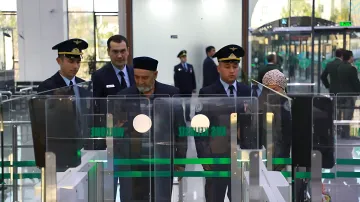
Checkpoints on Estonia's southeastern border with Russia are operating for their final weekend before traffic through them is halted on Tuesday, December 1. According to Peter Maran, head of the Koidula border checkpoint, ahead of the closure, transport traffic in both directions has become noticeably more intense than usual: compared to the beginning of the month, the number of passengers crossing the border has increased by approximately 20 to 30 percent. At the same time, Estonian authorities emphasize that the overall situation at the border remains stable and under control.
Why traffic has increased
According to Maran's explanation, the surge in passenger traffic is directly related to people seeking to wrap up necessary business before the border closes. “Those who still need to resolve some important issues in Russia are trying to do so now. Therefore, passenger traffic has increased somewhat,” the head of the checkpoint noted. Thus, the spike in movement is planned and stems from citizens' desire to meet the remaining time before the checkpoints cease operations.
Queues: Customs, not closure
Despite the increase in the number of passengers, queues at the border have not grown significantly over recent days. Maran explained that waiting times remain the same as since the Tax and Customs Board began conducting full customs inspections upon entry into Estonia as well. According to him, it is the intensification of controls, rather than the upcoming closure of the checkpoints, that has led to the formation of queues: the volume of checks has increased sharply, immediately slowing down border control processing. “Rather, the queues have nothing to do with these checkpoints closing on Monday evening,” he added.
Calm situation unlike Narva
Unlike Narva, where the border closure caused discontent, the situation at the Koidula, Luhamaa, and Saatse checkpoints remains calm: no conflicts, use of force, provocations, or expressions of dissatisfaction have been recorded. Maran assured that people have generally treated the situation with understanding and accepted the fact that the checkpoints are closing. No incidents have occurred at these sections of the border.
What will happen to employees after closure
Since border control at the checkpoints on the Russian border will no longer be conducted from Tuesday, the staff working there will be reassigned to perform other border security tasks. According to Maran, the need for control at these points will disappear, but the agency has other tasks: it is planned to strengthen the security of the eastern border and intensify internal activities within the framework of Schengen area compensation measures.
On-site observations
ERR correspondent in Narva Aleksandr Krasnoumov reported that there was no queue from Narva on Sunday afternoon, while passenger traffic was growing in the opposite direction. According to his data, oncoming travelers report that more than 300 people are standing from Ivangorod. These observations confirm the uneven flow: the pressure on the border is shifted mainly towards exiting Russia, while exiting Estonia proceeds without noticeable delays.