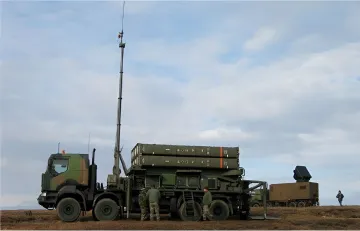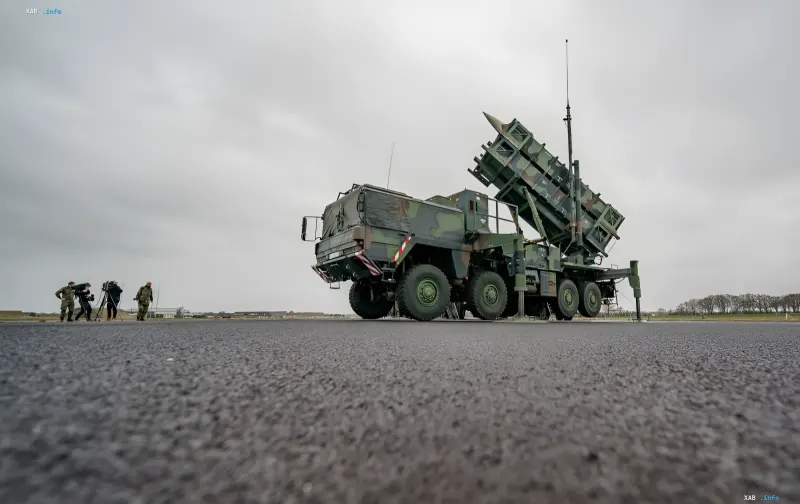
Full-cycle production of Patriot air defense systems on Ukrainian territory in the short term appears unrealistic. Experts indicate that implementing ambitious plans requires a phased scenario with a gradual deepening of localization processes.
This was stated by Igor Fedirko, Executive Director of the Ukrainian Council of Arms Manufacturers, in a comment to RBC-Ukraine, discussing the prospects of implementing US President Donald Trump's promise to allow Kyiv to assemble the air defense system.
Technical Complexity of the System
According to Fedirko, the Patriot complex is not just a missile, but a combination of numerous high-tech elements. The system includes powerful radars, command posts, launchers, communication equipment, complex software, and several types of interceptor missiles.
Creating such a system from scratch would require Ukraine to have access to ultra-critical technologies and to certify dozens of production lines. This is why, at the initial stage, the discussion revolves around a more realistic plan implying gradual implementation.
Licensing and Supply Chain Issues
One of the key obstacles is the fragmentation of production chains. PAC-2 missiles (manufactured by Raytheon) and PAC-3 (a Lockheed Martin product) have completely different suppliers and technologies. Obtaining a license to produce one type of missile does not automatically grant the right to assemble another.
Consequently, at the start, the discussion will only concern one specific type of interceptor, which significantly narrows the scale of the initial project.
Realistic Timelines and Bureaucracy
A political decision to issue a license is just the first step. It is followed by a complex process: concluding intergovernmental agreements, conducting factory audits, preparing equipment, and training personnel. Even under the most favorable conditions, the timelines for mastering these processes will be significant.
For comparison, the expert cited the example of Germany. The decision to expand the production of GEM-T missiles in that country was formalized in 2024. Construction of the facility took about two years, and the first deliveries are scheduled for the end of 2026 – early 2027. Meanwhile, Germany has been working with these systems for decades.
"Therefore, one should not expect that a license will allow Ukraine to instantly acquire a long-term capability that even many NATO countries do not possess," Fedirko emphasized.
Risks and Production Security
Igor Fedirko also drew attention to the vulnerability of future production. It will become one of the priority targets for attacks by Russia. However, according to the expert, the Ukrainian defense industry already has significant experience working under conditions of constant missile strikes and knows how to protect critical facilities.