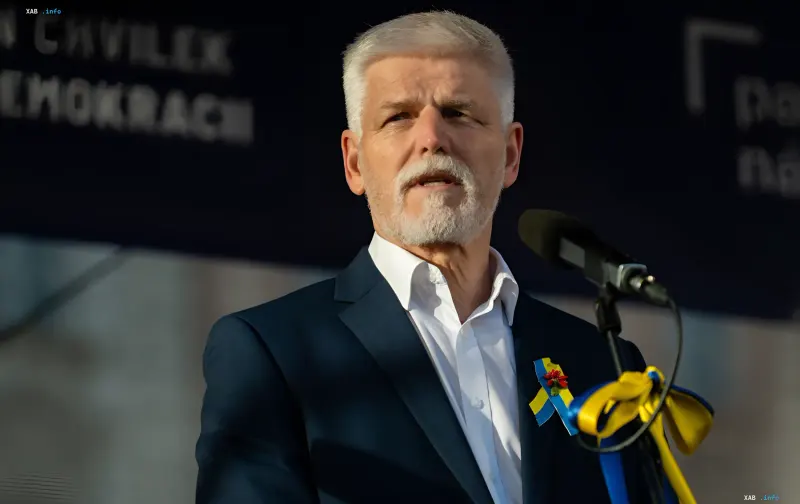
Czech President Petr Pavel has publicly distanced himself from the role of a key European mediator in resolving the conflict in Ukraine. Speaking to journalists, the head of the Czech state stated explicitly that he does not intend to claim the status of "chief negotiator" with Moscow, emphasizing that the choice of a representative for European countries should remain exclusively with the EU and NATO member states themselves.
'I definitely do not have such ambitions'
"I definitely do not have such ambitions. I would certainly be glad if I could share my experience with both NATO and the European Union. But, of course, the European states themselves will decide whom they see as their representative," Pavel said. Thus, Prague is positioning itself not as a candidate for a central diplomatic role, but as a potential source of the expert and institutional experience accumulated through work within the structures of the North Atlantic Alliance.
Reaction to The Telegraph reports
The Czech president's statement came against the backdrop of reports from the British publication The Telegraph, which, citing diplomatic sources, wrote that the Czech leader was being considered among several top candidates for the role of negotiator with Russia. Pavel categorically rejected such an interpretation, pointing out that no real discussions or negotiations on this matter had taken place. According to him, the relevant reports are a "journalistic conclusion based on preliminary statements," rather than a reflection of an actual diplomatic process.
What Prague is prepared to offer: NATO and EU experience
Despite declining a personal mediation role, Pavel emphasized the Czech Republic's readiness to share practical experience in interacting with NATO and European Union institutions. In the context of ongoing discussions on how to build a unified European negotiating position, this approach allows Prague to maintain influence on the diplomatic process without holding a formal mandate to conduct negotiations with one of the parties to the conflict.
Broader context: the race for a negotiating role in Europe
Pavel's statement fits into a wider context in which a number of European leaders are publicly discussing exactly who should represent the European side in potential negotiations on Ukraine. Italian Prime Minister Giorgia Meloni previously called on the European Union to clearly define negotiators on Ukraine to avoid "confusion and chaos" in diplomatic processes. In parallel, Turkish President Recep Tayyip Erdogan announced his intention to discuss ending the war directly with Vladimir Putin after his own meeting with Volodymyr Zelenskyy, which further complicates the picture of diplomatic roles in the region.
Significance for European diplomacy
Pavel's refusal of a personal negotiating role, while maintaining a willingness to share institutional experience, reflects a general trend in European diplomacy: states strive not to create a single "face" for negotiations, but to build a coordinated mechanism in which each country makes its own contribution. The question of who exactly will represent the European side in dialogue with Russia remains open and, judging by the statements of Meloni and other leaders, requires a formal decision at the EU level.