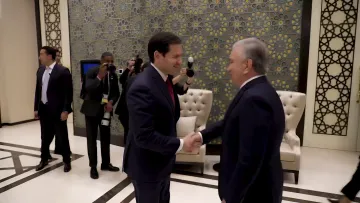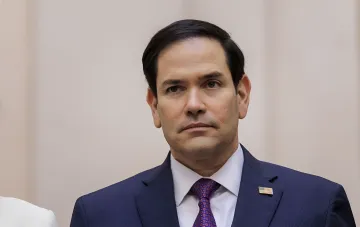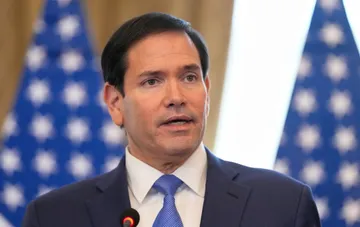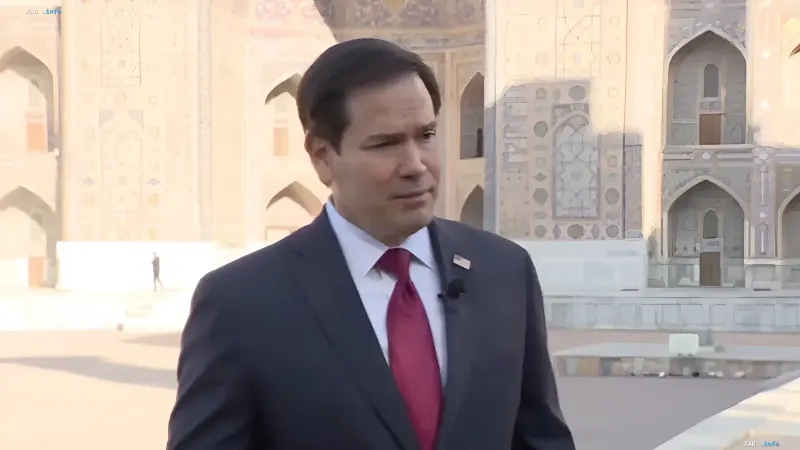
US Secretary of State Marco Rubio has delivered a comprehensive statement on the course of hostilities in Ukraine, which has become one of the most cited signals of Washington's foreign policy course. According to materials from a press conference where he answered journalists' questions during a visit to Iceland, as well as his remarks after a meeting with Russian Foreign Minister Sergei Lavrov, the US administration notes the deadlocked nature of the protracted conflict and declares the priority of its diplomatic settlement.
"Nobody will win"
The central formula of Rubio's statement is the recognition that there is no winner in the current war. According to him, people die on the front lines every day, ceaseless explosions and large-scale destruction are recorded, and both sides suffer irreparable losses. The Secretary of State emphasized that Washington is "monitoring trends" and sees that the situation "is not heading in that direction right now," meaning towards de-escalation.
The cost of the conflict and losses
Describing the human and infrastructural damage, Rubio cited an estimate of losses at around 25,000 people, emphasizing that casualties of this scale "destroy the future" and turn cities into ruins. At the core of the statement, however, the timeframe for this figure is formulated contradictorily (the source alternately indicates "annually" and "monthly"), so the exact periodicity of the estimate should be verified with the primary source. The very fact of large-scale losses and infrastructure destruction, according to the Secretary of State, inflicts irreparable economic and demographic damage on both sides.
The diplomatic track and the US role
Rubio stated that the US government is actively working on mechanisms to end the conflict and resolve it diplomatically, adding that the White House is ready to play a "constructive role" if such exists to end the war. At the same time, he warned that suspending strikes on energy facilities in Ukraine and Russia "will not be an easy task," indicating the complexity of practical implementation even for partial ceasefire regimes.
NATO issue not on the agenda
Answering a question about Ukraine's accession to NATO, the Secretary of State replied that there is no unequivocal "yes" or "no", but "at this moment, the question of Ukraine joining NATO is not on the agenda," since this requires consensus and a unanimous decision. According to him, the US is currently focused exclusively on ending the conflict, "if possible," and regrets the number of lives already lost.
Taken together, the statement demonstrates a pragmatic approach by the new US administration: recognition of the reality of the protracted crisis, rejection of victor rhetoric, and an emphasis on helping to bring the parties back to the negotiating table. Observers view the open formulation of this position as a possible signal of preparations for new political initiatives to resolve the Ukrainian crisis in the near term.