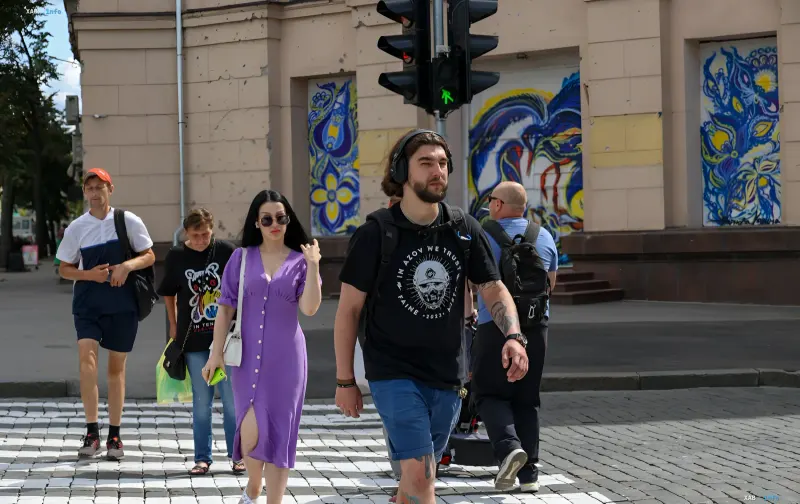
Road situations often become a cause for dispute: a pedestrian is standing at the edge of a 'zebra' crossing but has not yet stepped onto the asphalt. Should the driver stop at this moment? The answer is not as obvious as it seems and depends on the specific actions of the road users. Experts have provided clarifications with reference to the Traffic Rules and the Code of Ukraine on Administrative Offenses.
Presence does not equal the obligation to stop
According to current regulations, the mere fact that a pedestrian is standing at an unregulated crossing does not oblige the driver to hit the brakes immediately. However, this does not mean one can drive at full speed. The driver is obliged to reduce speed and be ready to stop if the situation requires it.
The key point here is not the physical presence of a person on the markings, but their intentions and reaction to the approaching vehicle. If, due to the vehicle's movement, the pedestrian is forced to change speed, change direction, or even abandon the crossing, the driver must yield the right of way.
What 'yielding the right of way' means in legal terms
Clause 1.10 of the Traffic Rules clearly defines this term. 'Yielding the right of way' means not continuing to move or not performing a maneuver if, due to this, another road user who has priority will be forced to change speed, direction of movement, or take other measures to avoid danger.
Thus, the decisive factor becomes the impact of the driver's actions on the pedestrian. If the car creates an obstacle or danger, forcing the person to wait or step back, the obligation to yield arises at the moment of approaching the crossing, even if the pedestrian's foot has not yet touched the 'zebra'.
Liability and fines
Failure to yield priority to a pedestrian entails administrative liability. Violation of Part 1 of Article 122 of the Code of Ukraine on Administrative Offenses entails a fine of 340 hryvnias.
Clause 18.1 of the Traffic Rules obliges a driver approaching an unregulated pedestrian crossing to reduce speed in advance. This is necessary so that one can stop at any moment and not create a dangerous situation for those intending to cross the road.
Practical conclusions for drivers
Experts recommend that drivers follow the following algorithm of actions when approaching an unregulated crossing:
- Reduce speed in advance, assessing the situation.
- Be ready to stop if the pedestrian demonstrates an intention to cross the road.
- Do not create a situation where a person is forced to wait or step back due to your maneuver.
Understanding these nuances helps not only to avoid fines but also to make road movement safer for all participants.