According to The Washington Post, citing officials familiar with the decision, Secretary of Defense Pete Hegseth has imposed new restrictions on U.S. defense cooperation with Canada. The classified memorandum, according to the publication, was distributed last week, in mid-November 2026. The newspaper explicitly points out that it has not seen the document itself, and the report does not provide a list of specific restrictions imposed by the order.
Pentagon Position: Goals, Not a Break
A Pentagon spokesperson commented on the decision, stating that engagement with Canada should contribute to achieving specific U.S. defense goals. The department emphasized that the order will not affect the exchange of military intelligence, NATO cooperation, or the joint North American Aerospace Defense Command (NORAD). Thus, Washington's official position is that it is not a rupture of ties, but a recalibration of the engagement format to meet specific tasks.
"Five Eyes": Informal Reduction in Information Sharing
An official from one of the "Five Eyes" alliance countries told the publication that Washington did not formally notify them of changes to information sharing. However, the source noted that over the past year, U.S. officials have begun sharing less intelligence. This thesis complements the picture: while formal channels remain, according to the Pentagon, the practical volume of exchange is declining, according to the source.
Background: Trade War and Annexation Rhetoric
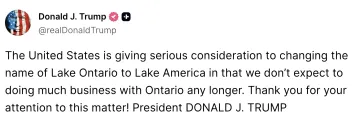
The decision was made against the backdrop of an ongoing trade war between Washington and Ottawa, as well as repeated statements by President Donald Trump about the annexation of Canada to the United States. Previously, the White House imposed tariffs on Canadian steel, aluminum, and other goods, prompting Canada to retaliate with its own tariffs. In this environment, one Washington Post source suggested, the new defense restrictions could be perceived in Canada as a "slap in the face."
Significance of the Move
The combination of the classified nature of the memorandum, the Pentagon’s refusal to disclose the list of restrictions, and the public emphasis on maintaining intelligence sharing and work within NATO and NORAD suggests that Washington is seeking to narrow the scope of joint defense tasks without formally breaking institutional ties. For Ottawa, which is in a state of trade and political conflict with the U.S., such a step increases pressure and, against the backdrop of rhetoric about a possible "annexation," is perceived as an additional signal of a re-evaluation of relations between the two closest allies.