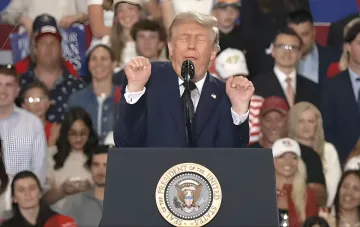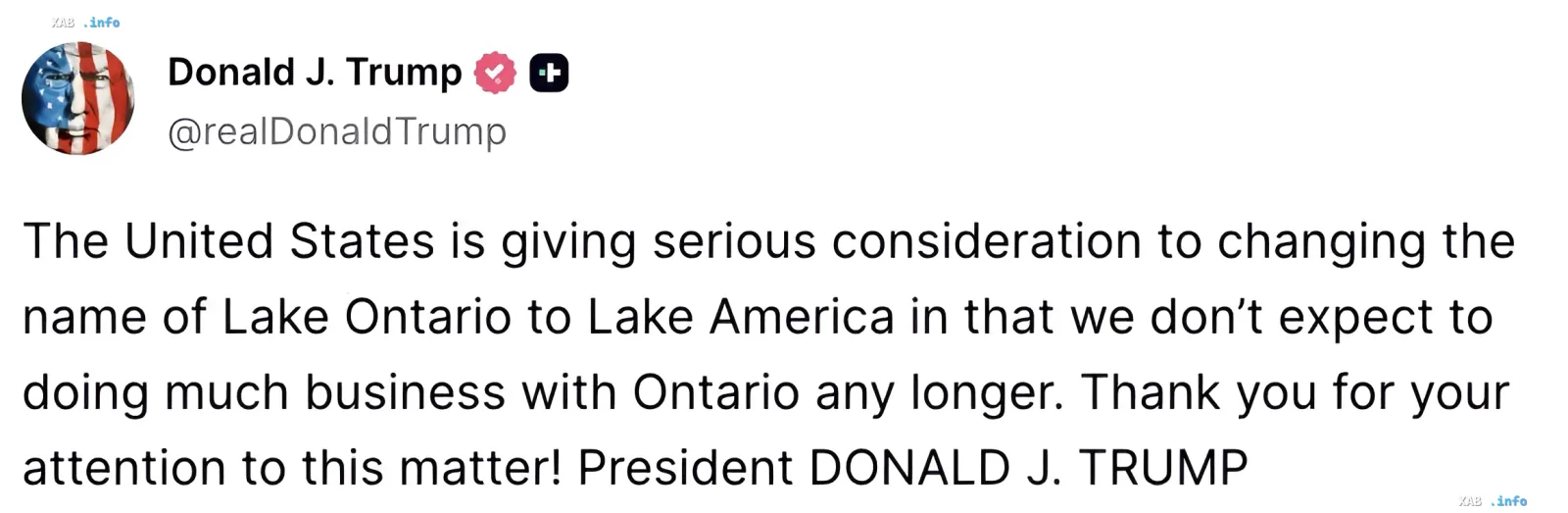
On August 25, US President Donald Trump stated on his social network Truth Social that the White House is "seriously considering" renaming the bordering Lake Ontario to "Lake America." The statement came against the backdrop of a sharp escalation in the trade war between Washington and Ottawa and was a direct response to public insults directed at the American leader by Ontario Premier Doug Ford. According to Trump, the US "no longer expects to do a significant volume of business" with the Canadian province, turning a diplomatic dispute into a planet-scale media scandal.
From "kiss my ass" to "clowns": how the spat reached the maps
The point of no return was Doug Ford's words, who the day before, in response to threats of introducing American tariffs, twice stated that the US president could "kiss my ass," and also called Trump a "loser," a "failure," and the "king of bankruptcies." In response, the American leader dubbed the Canadian leadership "clowns" and hinted at Ford's mental inferiority compared to his late brother, former Toronto mayor Rob Ford. It was precisely this escalation in tone that, in essence, became the trigger for the idea of redrawing the geographical map in a media-driven way.
The Gulf of Mexico precedent and the legal trap
In American and Canadian media, Trump's initiative was immediately compared to his resonant executive order from last year, by which he unilaterally ordered the renaming of the Gulf of Mexico to the "Gulf of America." However, Lake Ontario is under the joint sovereign ownership of the US and Canada, so Washington cannot change its name at the international level unilaterally. The realistically available step is to approve the name "Lake America" on internal US federal maps. For Trump, this is a classic element of his negotiating strategy: pushing the situation to the point of absurdity through media chaos in order to make the counterpart nervous and concede in the deal.
Tariff peak: 50% duties and Ottawa's mirror response
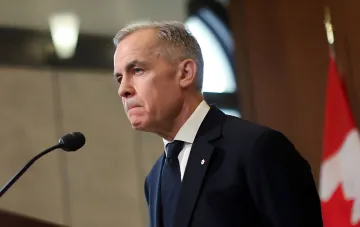
The trade conflict entered a hot phase over the past weekend: the US introduced 50-percent duties on Canadian goods worth about $20 billion, and Trump promised to raise tariffs to 50% on imports of Canadian passenger and freight vehicles, auto parts, and steel starting January 1, 2027. Canada's new Prime Minister Mark Carney refused to submit to the pressure and announced the introduction of mirror duties on American goods worth $20 billion starting September 8 — steel, electronics, and dairy products will be hit. Ottawa's additional trump card is in energy: Doug Ford has already proposed to fully cut off or sharply raise prices on oil, gas, and electricity that Canada supplies to the US — currently Canada provides about 60% of all US crude oil imports.
Contradictory data
Publications by different outlets contain discrepancies in assessing the nature of Trump's statement: some sources call it a "proposal" or a "statement of possibility" to rename, while others — a direct "threat" and "ultimatum." In fact, the formulation on Truth Social was that the White House is "considering" this step, meaning it is a matter of intention, not a decision already made. Moreover, there is a mismatch between the public rhetoric and the legal reality: Trump declares the sovereign right to rename the water body, whereas Lake Ontario is under the joint ownership of two countries, and a unilateral change of name at the international level is impossible. Finally, regarding the timing and amounts of the duties, sources agree on the figures ($20 billion, 50%, mirror response from September 8), but differ on whether these measures have already taken effect or are announced for the future.
The collapse of USMCA and the economic suicide of the auto industry
The current escalation effectively puts a cross on the future of the United States–Mexico–Canada Agreement (USMCA), which regulates $2 trillion in annual trade: in the summer, Trump refused to extend the deal for 16 years, as Ottawa and Mexico had requested. By introducing draconian tariffs, he, by his own earlier statements, is trying to weaken the neighbor's economy so much as to "make Canada the 51st US state through economic force." Meanwhile, the US and Canadian automotive industries form a single assembly line, where parts cross the border several times during assembly: 50% duties will hit the auto industry in Ontario, but at the same time will cause a shortage and a sharp spike in car prices for American voters themselves.
Bottom line: name-calling at the level of "clowns" and threats to redraw geographical maps show that Trump is shifting the economic dispute into the plane of personal vendetta, and the Great Lakes region is turning into a full-scale battlefield of economic war, where both sides are ready to incur billion-dollar losses to demonstrate political strength. Mark Carney's tough, uncompromising position, unlike that of his predecessor Justin Trudeau, makes a rollback from escalation in the near future unlikely.