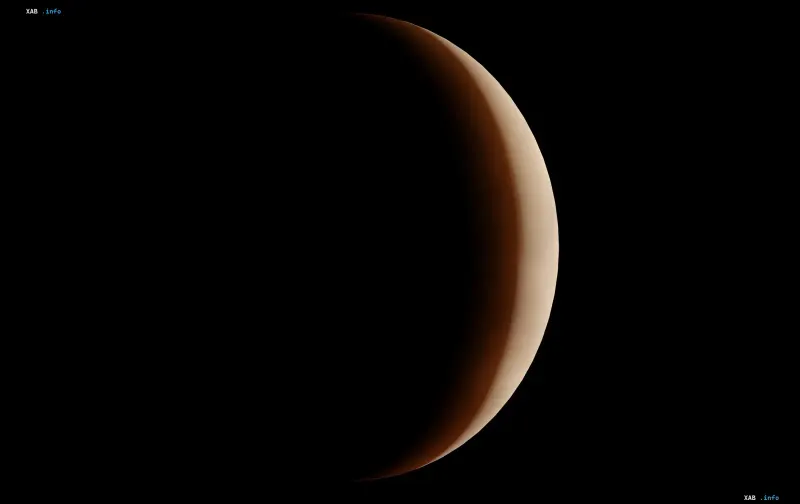
The surface of Venus remains one of the most hostile places for biology in the Solar System: extreme temperatures and crushing atmospheric pressure make the existence of complex chemical compounds there virtually impossible. However, new laboratory experiments, the results of which were published in the prestigious scientific journal Proceedings of the National Academy of Sciences, demonstrate that in the upper layers of the Venusian atmosphere the conditions are significantly milder, and key biological molecules are capable of retaining their structure even in a concentrated sulfuric acid environment. This is reported by RBC-Ukraine, citing data from the Massachusetts Institute of Technology.
An Atmospheric "Pocket" at 48–60 km Altitude
The situation changes dramatically at altitudes of 48 to 60 kilometers above the planet's surface. In these atmospheric layers, temperature and pressure readings become significantly milder and largely approach terrestrial conditions. This is precisely why astrobiologists have been considering this "pocket" as a potential niche for hypothetical microbial life for several decades. The main obstacle for organic matter in this zone has long been considered the aggressive chemical environment: Venus's clouds consist predominantly of concentrated sulfuric acid, which, according to previous understanding, should have instantly destroyed any protein structures.
NMR Experiments: Peptides in 98% Sulfuric Acid
To test the stability of organic compounds, scientists conducted a series of laboratory experiments using the method of nuclear magnetic resonance (NMR). This approach made it possible to track in detail the molecular structure and physical state of chemical substances under the influence of aggressive factors. During the trials, three types of peptides were placed in an environment containing 98 percent sulfuric acid. The key result was that the peptides retained their folded three-dimensional configuration. The formation of such structures is of decisive importance for biology: it is precisely the specific volumetric shape that allows amino acids to enter into chemical reactions and perform precise functions in an organism. The ability of peptides to maintain such a configuration in sulfuric acid indicates that biological processes can occur in solvents previously considered entirely unsuitable for life.
From a 1950 Hypothesis to Practical Evidence
Notably, the idea of the existence of living organisms in Venus's clouds was first formulated back in 1950 in the work of physicist Heinz Haber, and was later supported by such distinguished scientists as Carl Sagan and Harold Morowitz. For over seventy years, this hypothesis remained in the realm of theoretical speculation due to the lack of direct experimental data. The modern experiments at the Massachusetts Institute of Technology provide, for the first time, practical evidence that the key building blocks of biological systems are capable of functioning under conditions simulating Venusian clouds. Astrobiologists have traditionally regarded liquid water as an essential factor for the emergence and maintenance of living organisms; the new study confirms the possibility of biological systems functioning on planets without liquid water.
Contradictory Data
There is a significant difference in the scale of the claim between the headline in the RBC-Ukraine publication and the actual content of the study. The headline states that "scientists have proven that bacteria can survive on Venus," whereas the experiments themselves were conducted not with living bacterial cells, but with peptides — short chains of amino acids that are the building blocks of proteins. The survival of molecular structures in an aggressive environment is not equivalent to the survival of an entire living organism with its metabolism, replication, and homeostasis. Thus, the data obtained open up a theoretical possibility for the existence of microbial life in Venus's clouds, but do not constitute direct evidence of its presence. This distinction between "molecular stability" and "organism viability" is key and requires caution when interpreting the results for a broad audience.
Revising Habitability Criteria and Future Missions
The data obtained prompt the scientific community to reconsider the criteria for assessing the suitability of planets for life. If biological molecules are capable of retaining a functional structure in sulfuric acid, then the search for extraterrestrial life should include not only planets with liquid water, but also worlds with aggressive atmospheric solvents. The focus of research is now shifting to future space missions aimed at the direct analysis of Venus's atmospheric layers. Planned missions capable of delivering probes to the cloud layer at an altitude of 50–60 km will become a decisive stage in testing the hypothesis: it is precisely there, according to the new data, that conditions are most favorable for potential organic matter. Until the results of such missions are obtained, claims of the presence of life on Venus remain in the realm of a well-founded scientific hypothesis, albeit one supported, for the first time, by direct laboratory evidence at the molecular level.