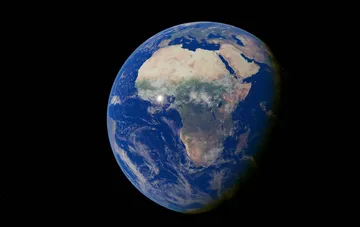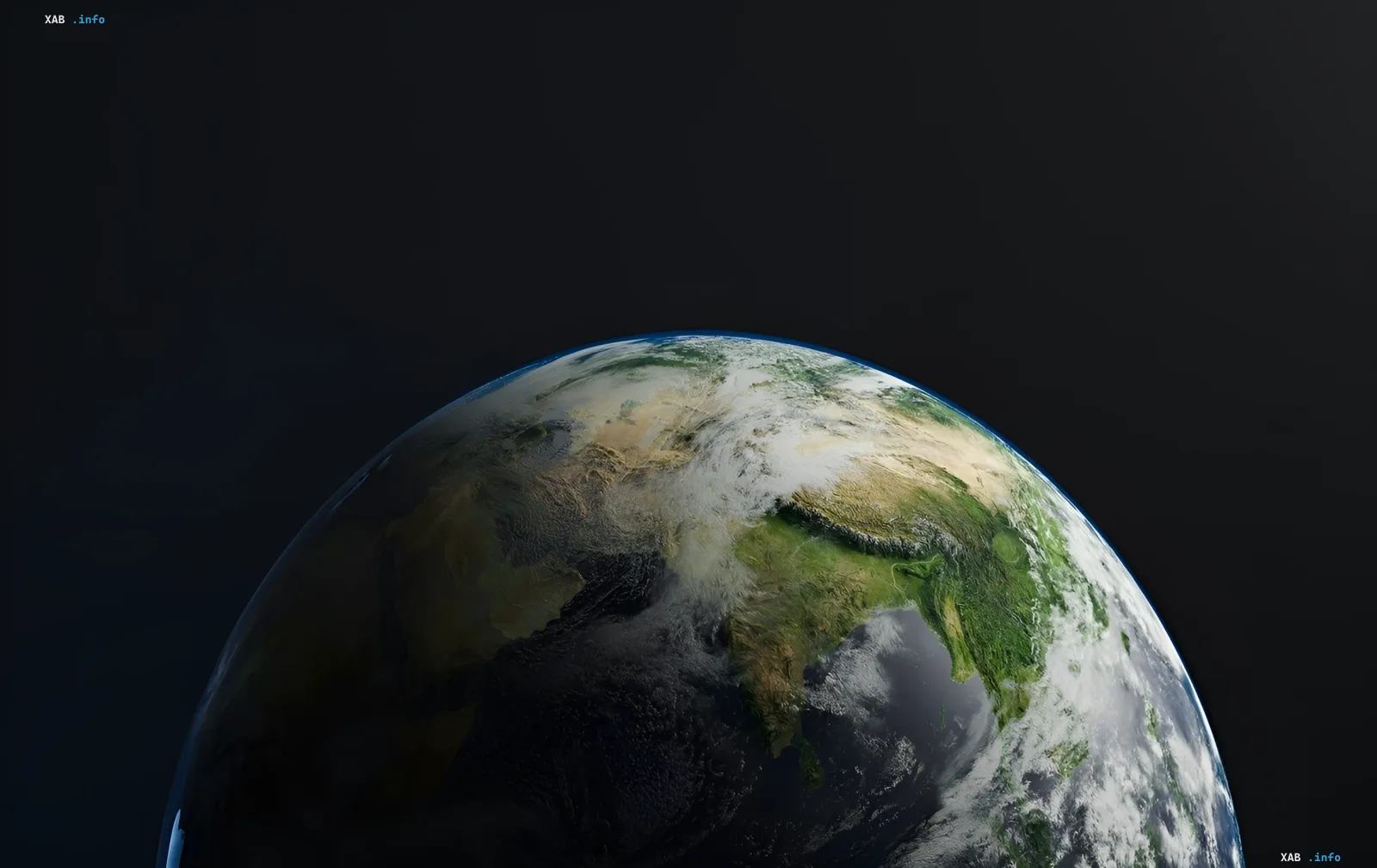
Scientists from Toho University and the Georgia Institute of Technology have reached an alarming conclusion: Earth's oxygen-rich atmosphere will last significantly less time than previously believed. According to the study published in the scientific journal Nature Geoscience, the planet's catastrophic deoxygenation will occur a billion years earlier than previous models suggested. This means that the era of aerobic life on Earth may end substantially sooner than geologists and astrochemists had expected.
How the Digital Model of Earth Was Built
To assess the evolution of Earth's atmosphere, Kazumi Ozaki, an associate professor at Toho University, together with Christopher Reinhard from the Georgia Institute of Technology, developed a detailed digital model of the planet that accounts for climatic and biochemical processes. The team ran more than 400,000 simulations, each time varying the input parameters — from Earth's rotation rate to the intensity of volcanic activity and the productivity of photosynthesizing organisms. This scale of computation allowed the researchers to build a probabilistic picture of atmospheric change over billions of years, rather than relying on single scenarios.
What Will Happen to the Atmosphere After Deoxygenation
The modeling showed that after the turning point — catastrophic deoxygenation — the composition of the air will change fundamentally. Methane levels in the atmosphere will rise sharply, carbon dioxide content will drop to a critical minimum, and the ozone layer will be completely destroyed. Under such conditions, complex multicellular organisms, plants, and animals will be unable to survive. Earth will once again become a world dominated exclusively by anaerobic microorganisms that do not require molecular oxygen for their life processes. In essence, the planet will return to a state similar to the one that prevailed before the Great Oxidation Event about 2.4 billion years ago.
The Oxygen Era — Only a Small Part of the Planet's History
One of the key findings of the study is that the oxygen era accounts for only 20–30 percent of Earth's total history. Given that the planet is about 4.5 billion years old, this means that the period during which the atmosphere contained a significant amount of free oxygen lasts only around 900 million to 1.35 billion years. It is precisely this compressed time interval that defines the window in which complex aerobic life is possible on Earth. The scientists emphasize that the new picture shifts the moment of oxygen loss a billion years earlier compared to previous estimates, narrowing the already limited "aerobic window."
Why This Matters for the Search for Life in the Universe
The results of the study have direct practical significance for astronomers searching for biosignatures — chemical traces of life — on exoplanets. If the oxygen phase occupies only a small fraction of a planet's life, then randomly encountering an exoplanet precisely during this period is extremely unlikely. Alien civilizations, if they exist, would find it difficult to catch Earth in that narrow moment when it has oxygen. The researchers therefore recommend shifting the focus of the search: humanity should deliberately look for biosignatures characteristic of planets with oxygen-free atmospheres — for example, elevated concentrations of methane, hydrogen sulfide, or other products of anaerobic metabolism. In the authors' view, this significantly increases the chances of detecting life in the universe.