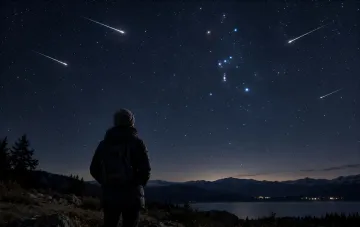
On August 12, 2026, Earth enters the densest part of the tail of Comet Swift-Tuttle, offering observers one of the most spectacular astronomical events of the year — the Perseid meteor shower. On the night of August 12 to 13, the sky above the planet transforms into a stage for a grand cosmic show, where bright fireballs and "shooting stars" cross the dark void. This phenomenon, reaching its peak precisely on these days, traditionally attracts the attention not only of astronomers but also of everyone seeking inspiration in the grandeur of the Universe.
Cosmic Mechanics and Viewing Conditions
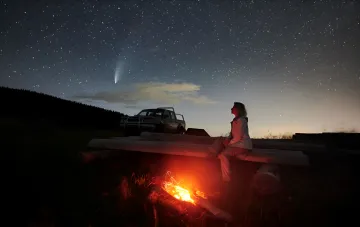
According to data from astronomical observatories, the peak activity of the Perseids in 2026 falls on the night of August 12 to 13. To enjoy the spectacle to the fullest, experts recommend leaving the city limits. Light pollution from megacities can hide up to 80% of meteors, making the sky dull. Far from artificial lighting, under the dark summer sky, one can expect up to 100 meteors per hour. The best time for observation is from 22:00 until dawn, when the radiant of the stream (the point from which the meteors seem to originate) rises high enough above the horizon.
Energy of the Perseids: Time for Change and Insights
Beyond pure physics and astronomy, this period holds deep symbolic meaning. The energy of the Perseids, originating from the constellation Perseus, is traditionally considered a time of liberation from old chains. Astrologers and esotericists note that during these days, intuition is sharpened, and sudden insights can become catalysts for creative breakthroughs. This is the ideal time to let go of past disappointments and open up to new opportunities that the Universe is offering right now.
Influence on Zodiac Signs
The cosmic energy of the starfall reveals itself differently for representatives of the zodiac circle. For some, this is a time for bold actions and the realization of long-term goals; for others, it is a period of emotional healing and deep insights. For example, those accustomed to stubbornness are advised to trust gradual changes that will bring the desired stability. At the same time, creative personalities may notice that their energy is shining at full capacity, and this is a reason to boldly demonstrate their talents. Relationships will also get a breath of fresh air thanks to honest communication and getting rid of unhealthy expectations.
Contradictory Data
Although the astronomical peak of the Perseids is clearly defined for the night of August 12 to 13, there are nuances in the interpretation of the "maximum" for different observers. Some sources indicate that the peak may shift by several hours depending on geographical location and the phase of the Moon. In 2026, conditions are favorable, but it should be taken into account that the visual brightness of the stream may vary depending on atmospheric transparency and weather conditions in a specific region. Nevertheless, the general recommendation remains unchanged: August 12 and 13 are the key dates for observation.
Practical Tips for Observers
To get the most out of this event, it is important to prepare. Bring warm clothing, as August nights can be cool, and a comfortable lying surface. Do not use powerful flashlights so as not to blind yourself and other observers. Simply lie on your back, relax, and let your eyes adapt to the darkness. This is a time not only for visual enjoyment but also for meditation, setting intentions, and searching for hidden meanings in life.