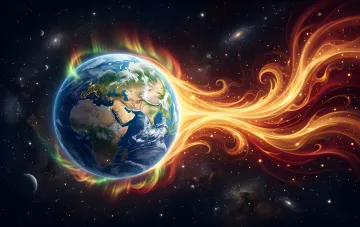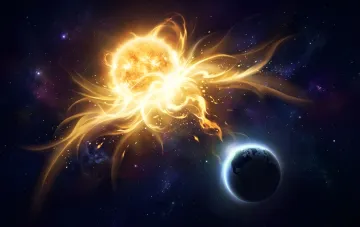
At the end of August 2026, Earth may face an increase in geomagnetic activity. According to experts, the cause of this phenomenon will be a coronal hole in the northern part of the Sun, from which a high-speed stream of solar wind—charged particles—is moving into space. It is expected that its influence on our planet's magnetosphere will begin as early as the end of August 14, which could lead to an increase in geomagnetic activity to G1 level.
What is a G1-level geomagnetic storm?
Level G1 is the lowest category in the five-level geomagnetic storm scale. Despite the word "storm," this does not mean a strong cosmic storm. G1 is a weak geomagnetic disturbance that can cause minor disruptions in the operation of some technological systems, such as radio communication and satellite systems. The appearance of the aurora borealis in high latitudes is also possible. For most people, such an event poses no danger.
Forecast for August 15–16, 2026
On August 15, the possibility of weak geomagnetic activity is forecasted, however, its strength will depend on the parameters of the solar wind that reaches Earth. As of August 16, the forecast is less certain: the strength and duration of the disturbance may change depending on actual conditions. Some sources indicate a calmer situation, estimating activity at Kp 2 level. This highlights how quickly space weather forecasts can change.
Impact on health: myths and reality
Often, people associate worsening well-being—headaches, fatigue, blood pressure spikes—with magnetic storms. However, there is no scientific evidence of a direct link between weak geomagnetic disturbances and such symptoms. These conditions may have many other causes, such as stress, lack of sleep, or weather changes. Therefore, one should not automatically attribute poor health specifically to geomagnetic activity. If a person feels unwell, it is important to focus on their own condition rather than the magnetic storm forecast.
Contradictory data
There are discrepancies in forecasts between various sources. For example, one forecast indicates the possibility of a weak G1-level storm, while others estimate activity at Kp 2, which suggests a calmer situation. These differences highlight the complexity of forecasting space weather and the need to consider multiple sources of information. It is also important to note that some forecasts may be based on preliminary data that may change as the solar wind approaches Earth.
Historical context and additional facts
In August 2026, one of the brightest astronomical events of the year is also expected—the Perseid meteor shower. This event attracts the attention of astronomy enthusiasts and may become an additional reason to observe the sky. Furthermore, in previous years, stronger magnetic storms were recorded, which had a noticeable impact on technological systems and even caused power grid failures. However, in the current case, we are talking about a weak disturbance that should not cause serious consequences.
Thus, although geomagnetic activity may increase at the end of August 2026, this should not cause concern for most people. It is important to follow space weather forecasts, but not to exaggerate their impact on health and daily life.