As of August 26, 2026, Earth's geomagnetic field is formally in a state of calm: the current K-index stands at 2.7, corresponding to the "green" level and indicating low magnetic fluctuations. The Schumann Resonance, which tracks the planet's electromagnetic background, also remains within normal limits. However, as experts emphasize, this lull is only a temporary phenomenon before a new wave of space activity, and it is too early to relax.
What Happened on the Sun
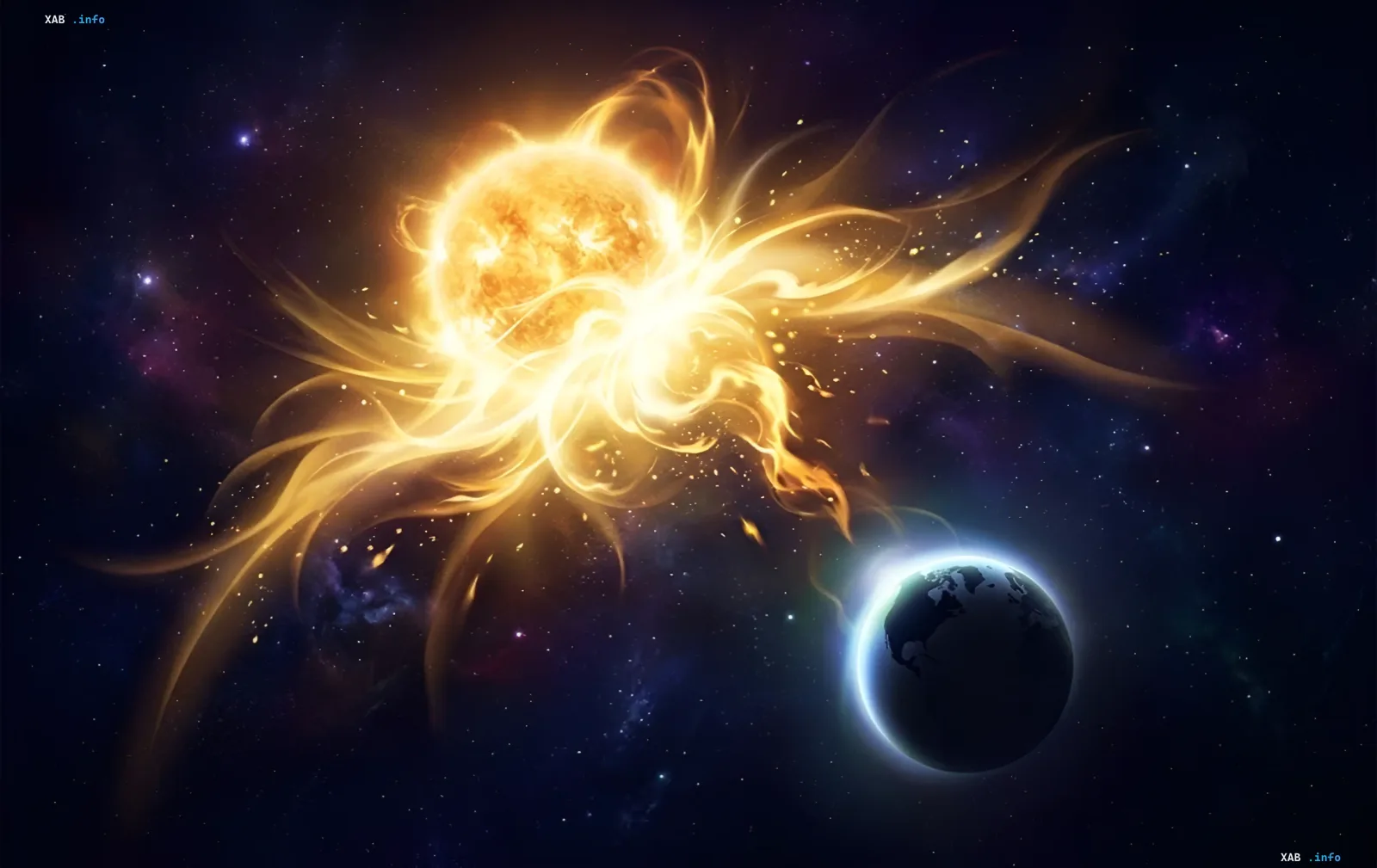
Despite the stability of Earth's magnetosphere, instruments have detected a powerful M7-class flare on the Sun, which falls under the red danger level on the international scale. Such eruptions are often accompanied by large-scale coronal mass ejections — clouds of charged particles that, upon reaching our planet, provoke disturbances in its magnetic field and trigger a chain reaction of geomagnetic disturbances.
Forecast: When the Storm Will Hit
According to forecasts by researchers at the British Geological Survey, Earth will feel the effects of the M7 solar flare within the next few days. A G1-level geomagnetic storm is expected to engulf the planet starting August 26, and preliminary data indicate that space weather will remain unstable for at least until August 28, inclusive. G1-class storms are considered weak under the international classification, but even they can cause minor disruptions in power grids, affect bird migration routes, and — what is especially important for people — impact the well-being of weather-sensitive individuals.
How to Ride Out the Turbulence: Recommendations
Experts advise putting off difficult tasks during the period from August 26 to 28 and avoiding excessive physical exertion — whether at the gym or in the garden. Your diet should also be adjusted: it is better to replace your morning coffee with herbal teas (for example, with mint or lemon balm), which calm the nervous system and do not provoke blood pressure spikes. People prone to hypertension or migraines are recommended to keep their usual medications on hand, since blood vessels react most acutely at the onset of the storm.
How the Turbulence Affects Pets
The impact of space weather on pets can manifest in various ways: from sudden passivity to unwarranted anxiety. A playful dog or an active cat may lie motionless all day long, refusing their favorite games — the animal's body instinctively switches to an energy-conserving mode. Changes in the magnetic field can sometimes cause mild nausea or spikes in internal pressure, leading pets to temporarily lose their appetite; they should not be forced to eat. Cats often hide in closets, under beds, or in far corners of the room, while dogs try to snuggle up to their owners or hide under the table. Some animals begin to whimper for no apparent reason or display heightened nervousness. The main rule for the owner during this period is not to disturb the pet: as a rule, the condition fully normalizes as soon as the geomagnetic background returns to normal.