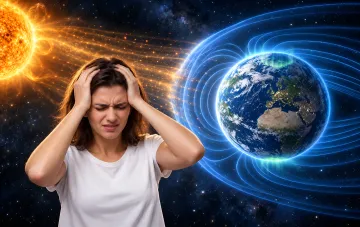
The change of seasons is stressful for the body on its own, and when combined with space weather it can noticeably affect well-being. Although far from every solar flare reaches Earth, specialists at the Space Weather Prediction Center (NOAA) warn that September 2026 will bring several prolonged periods of elevated magnetic activity. Below is a preliminary schedule of geomagnetic fluctuations, which, according to experts, may still be adjusted as the long-term forecast of solar behavior is refined.
NOAA Forecast: Which Days in September Will Be Tense
Preliminary data suggest that September 1–3 will feature an absolutely calm geomagnetic background — so-called "a perfect start to the season" that will give the body time to adapt comfortably to autumn. The first minor fluctuations are forecast for September 4–5: weather-sensitive people may feel unexplained fatigue, general weakness, or mild malaise. Experts call September 10–12 the most tense period of the month — on these days a noticeable increase in solar activity and a moderate geomagnetic disturbance are expected. At the end of the month, from September 25 to 28, a prolonged wave of minor geomagnetic activity is forecast.
How the Body Responds to Geomagnetic Fluctuations
During fluctuations in Earth's magnetic field, the human nervous and cardiovascular systems experience additional strain. The most common symptoms, according to experts, are sudden changes in blood pressure, headaches, daytime drowsiness against a backdrop of nighttime insomnia, as well as increased anxiety, irritability, and reduced concentration. This is why, on days of peak activity, it is recommended to plan your workload in advance and avoid situations that demand maximum concentration and emotional stability.
Children in a Special Risk Zone
Adults are used to blaming headaches or blood pressure spikes on solar flares, yet they often fail to consider that a child's body reacts to geomagnetic storms just as acutely. Pediatricians and neurologists note that infants and children up to 3–5 years old are the most vulnerable, since their nervous system and adaptation mechanisms are still developing. On these days, children more often experience mood swings, capriciousness, and sleep disturbances, which parents frequently misinterpret as "bad behavior."
Practical Tips for the Period of Magnetic Storms
Experts recommend reducing emotional load: on days of elevated solar activity, especially September 10–12, it is best to avoid noisy entertainment, trips to shopping centers, and hosting guests. It is important to limit screen time — the light from smartphones and tablets further stimulates the nervous system, so cartoons before bed should be replaced with reading a book or calm games. Unhurried walks in the fresh air and strict adherence to a familiar sleep schedule will help the body cope more easily with the fluctuations. Parents are advised to show patience: capriciousness on these days is a physiological reaction to discomfort, not an attempt to misbehave, so it is better to surround the child with calm and hug them more often, rather than scolding them for mood swings.
Contradictory Data
It should be noted that long-term forecasts of solar behavior are inherently preliminary and may be adjusted: the source itself, citing NOAA, explicitly points to the possibility of the schedule changing. At the same time, various publications publish their own interpretations of the magnetic storm calendar for September 2026, and the specific dates, as well as the assessment of the disturbance level on the G-scale, may differ slightly depending on the calculation method and region. Therefore, the schedule provided above should be regarded as a guideline, not a guaranteed fact: for an up-to-date picture on a given day, it is recommended to check the operational data from the Space Weather Prediction Center.