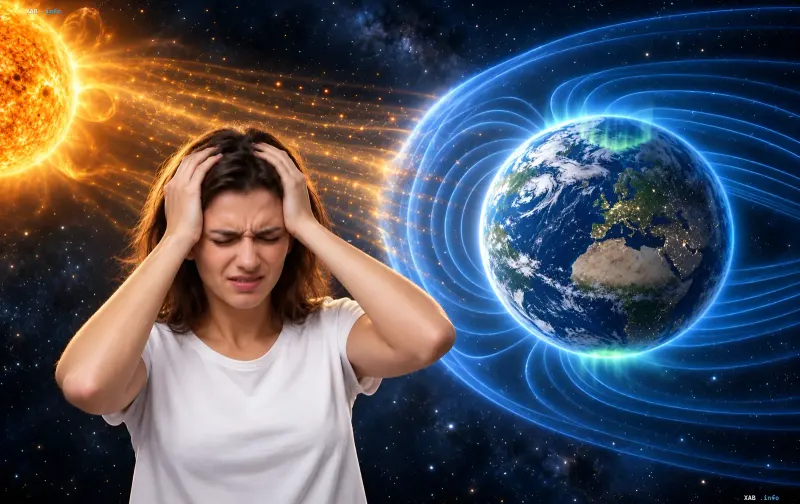
For most of the current week, the Earth's geomagnetic field will remain calm, although closer to its end, experts are recording signs of increasing solar activity. According to current space monitoring data, the period from September 29 to October 3 will pass without major shocks for weather-sensitive people, and disturbance indicators will remain at minimal levels.
Space Weather Forecast and Disturbance Indices
According to the NOAA Space Weather Prediction Center, from September 29 to October 3, the geomagnetic situation will remain steadily calm. The maximum Kp-index on these days will not exceed 2 units, which rules out the possibility of magnetic storms. We remind you that the Kp-index is an international indicator of Earth's magnetic field disturbances, measured in three-hour intervals on a scale from 0 to 9.
Activity Increase on October 4
The situation will begin to change gradually on Sunday, October 4, when the Kp-index rises to 4 units. This indicator is characterized as elevated geomagnetic activity, although it does not yet reach the level of a full magnetic storm. To classify a storm at the G1 level (the weakest on the NOAA scale), the value must reach 5. Thus, powerful geomagnetic storms are not expected in the coming days; only a moderate fluctuation is recorded.
Causes and Potential Consequences of Solar Activity
Scientific experts from the European Space Agency note that such fluctuations are directly related to the constant emission of charged particles by the Sun, forming the solar wind, as well as periodic coronal mass ejections. When solar plasma flows reach our planet and interact with the magnetosphere, this can have a certain impact on the operation of satellite navigation systems, radio communications, and high-voltage power grids, although current forecasts do not promise critical disruptions.
Contradictory Data
It is worth noting that discrepancies in assessing meteorological strike hazards for late September and early October 2026 periodically appear in the media space and on various specialized resources. While official NOAA reports and specialized publications indicate a calm background until October 3 with a moderate rise in the Kp-index to 4 units only on October 4, some regional and independent sources warn of possible local bursts of geomagnetic activity as early as the first days of the week (September 28–29). These discrepancies are due to the promptness of processing solar flare data and the variability of solar wind distribution forecast models, which is why experts recommend regularly updating information before critical dates arrive.