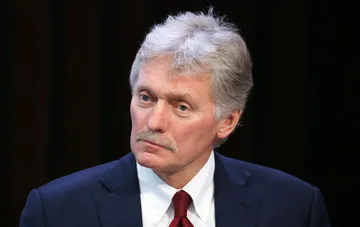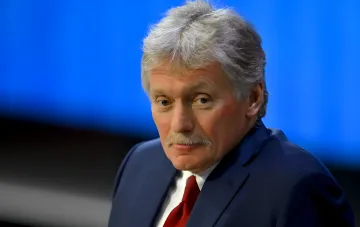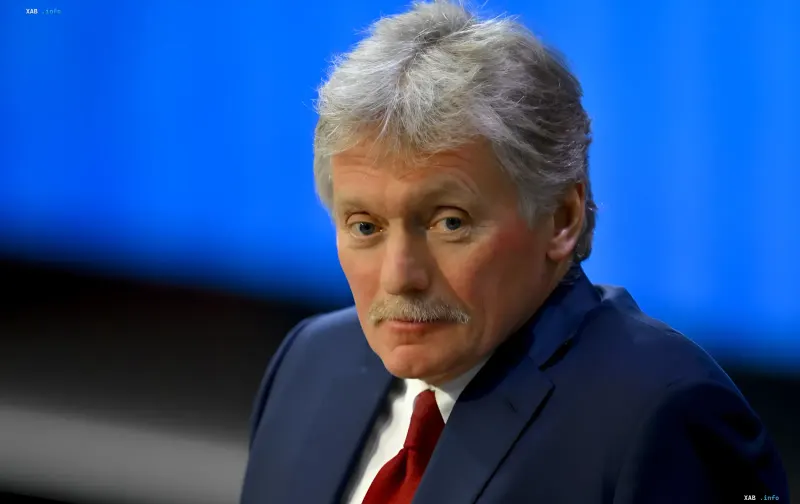
Russian presidential press secretary Dmitry Peskov, in a comment to RIA Novosti cited by RBC-Ukraine, stated that the question of an energy ceasefire with Ukraine is 'not yet being discussed in substance' in the Kremlin. According to him, Moscow is not considering the possibility of a separate halt to strikes on energy infrastructure, and instead characterizes this sector as a vulnerability on the Ukrainian side. The statement came against the backdrop of continuing mutual accusations of escalation and discussions about the format of possible negotiations.
Energy — the 'Achilles' heel'
According to the outlet, Peskov stated that Kyiv, in his assessment, is offering not a long-term settlement, but a ceasefire precisely in the industry that, in his wording, is Ukraine's 'Achilles' heel' — energy. Thus, the Kremlin publicly rejected the very logic of a separate energy ceasefire, interpreting Kyiv's initiative as an attempt to close the most painful area for the population without progress on the other points of the settlement.
Position on a 'peaceful settlement' and strikes on targets
In the same statement, Peskov emphasized that Russia allegedly prefers a 'peaceful settlement of the conflict in Ukraine,' while stating that Russian military forces are 'systematically and methodically' striking targets on Ukrainian territory in response to Kyiv's attacks. The presidential press secretary also noted that, in his words, 'the situation on the ground is getting worse and worse for Ukraine.' Earlier, according to RBC-Ukraine, the Kremlin had stated its readiness for a peaceful settlement, but shifted responsibility for the further development of the situation onto Kyiv's position, and also did not rule out the resumption of trilateral negotiations after visits by American mediators to Moscow and Kyiv.
Abu Dhabi as a possible venue
Separately, Peskov mentioned Abu Dhabi, which, in his words, could enter the agenda as a venue for trilateral negotiations on a settlement. At the same time, he qualified that this is possible only 'on the condition that things come to a substantive discussion.' The wording indicates that the Kremlin is not yet registering the parties' readiness for a substantive format of negotiations.
Contradictory data
The presidential press secretary's statements show an internal inconsistency that is important to reflect honestly. On the one hand, the Kremlin declares a 'preference for a peaceful settlement' and does not rule out the resumption of trilateral negotiations, including at the Abu Dhabi venue. On the other hand, in the same vein, Peskov states that an energy ceasefire is 'not being discussed,' that energy has been called Ukraine's 'Achilles' heel,' and simultaneously emphasizes the 'systematic and methodical' nature of strikes on Ukrainian targets. In other words, the rhetoric of a desire for peace is combined with a public refusal of a concrete de-escalation step (a ceasefire in energy) and assertions about continuing strikes. The different versions — 'readiness for peace' and 'rejection of an energy ceasefire' — come from the same mouth within a single cycle of statements, and the reader should bear in mind that this reflects the positioning of one side, not a neutral fact about the state of the negotiation process.
Thus, according to RBC-Ukraine, the Kremlin publicly registered its refusal to discuss an energy ceasefire, while keeping the thesis of a 'peaceful settlement' and the potential role of Abu Dhabi on the agenda. The real movement toward negotiations, as follows from Peskov's own wording, depends on a 'substantive discussion,' which at the time of the statement had not been registered.