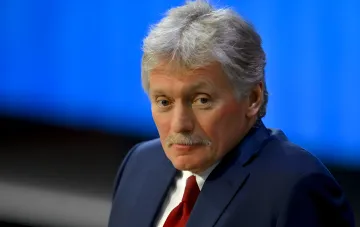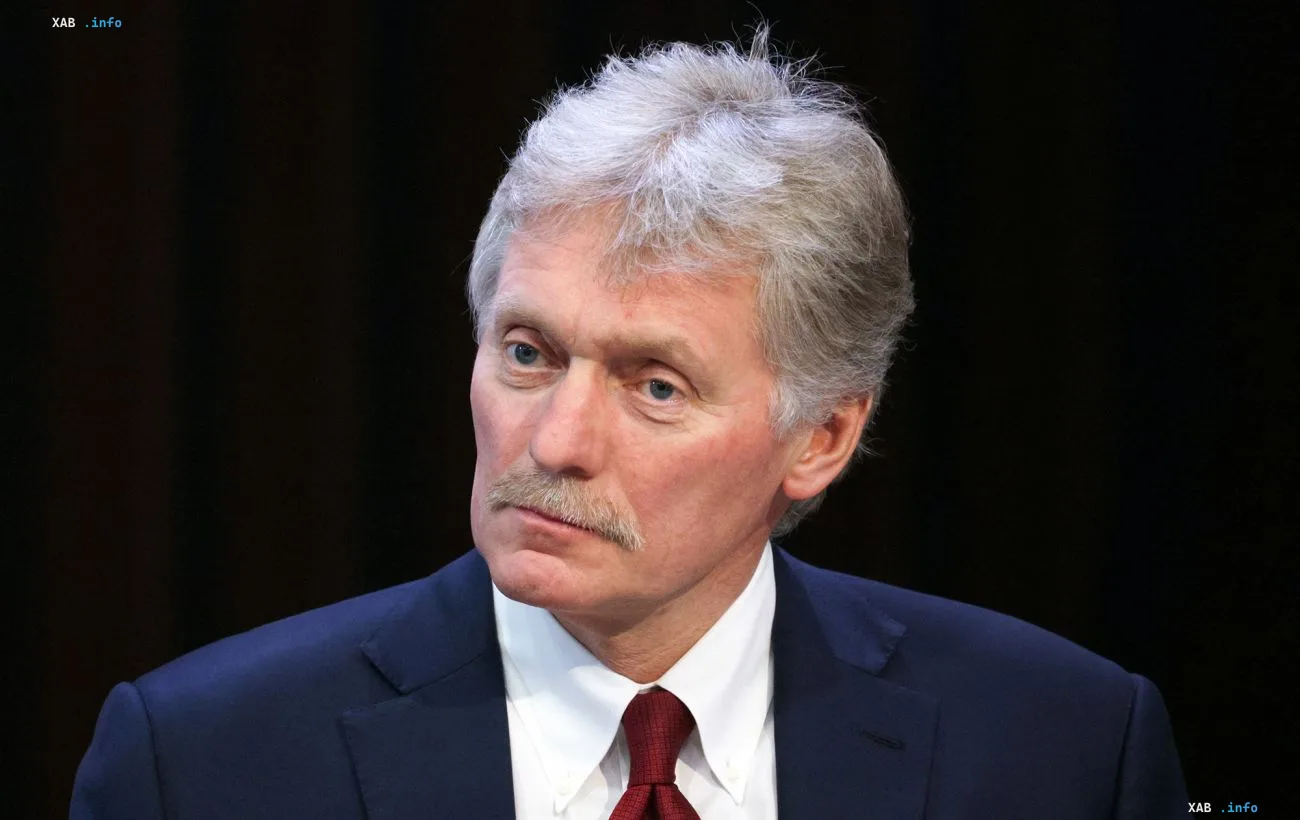
Russian President's press secretary Dmitry Peskov, in an interview carried by TASS and cited by RBC-Ukraine, stated that the Russian side is not interested in concluding a temporary ceasefire with Ukraine. According to him, Moscow consistently advocates what he called a "solid peace, a peace forever," rather than a "ceasefire that, in essence, will yield nothing." Peskov emphasized that, in his words, Vladimir Putin has always held this position and does not consider pauses in hostilities an acceptable format for a settlement.
The conditions of a "sustainable peace" from the Kremlin's perspective
In the same statement, the Kremlin representative claimed that the Ukrainian side "knows perfectly well" the conditions for ending the conflict. Peskov added that, in his assessment, Kyiv understands "exactly which decisions and what responsibility are needed to move toward a sustainable peace." At the same time, the specific list of conditions was not disclosed in the public statement, which is characteristic of Russian leadership rhetoric throughout the conflict.
Trilateral talks and a signal from Washington
Against the backdrop of rejecting the temporary ceasefire format, Peskov had earlier stated Moscow's readiness to return to consultations in a trilateral format involving Ukraine and the United States. According to him, the possibility of holding a new meeting had already been discussed with American representatives, but, as he noted, "there is no progress on this yet." Meanwhile, Russian Foreign Minister Sergey Lavrov reported that Moscow had seen a "positive signal" in the US approach to the peace process, noting that Washington, in his assessment, "is taking into account the realities on the ground." Lavrov also stated Russia's readiness for a new round of negotiations, emphasizing that Moscow "has something to say" and that Russia "has never refused dialogue."
The energy ceasefire: compromise or contradiction
The Kremlin's position on the so-called energy ceasefire deserves separate attention. According to the outlet Verstka, in Moscow such a format was called a "very good idea," but it was emphasized that no final agreement on this issue had been reached. This creates a certain duality in the public rhetoric: on the one hand, a temporary ceasefire in general is rejected as meaningless, while on the other hand, its narrowly specialized variant in the energy sector receives a positive assessment.
Contradictory data
In the statements of Russian officials over the past days, an internal contradiction can be traced. On the one hand, Peskov categorically rejects the very concept of a temporary ceasefire, calling it useless. On the other hand, the same Peskov and Lavrov actively promote the idea of trilateral negotiations and express readiness for dialogue, which logically implies at least a temporary stabilization of the situation. Moreover, the positive assessment of the "energy ceasefire" as a "very good idea" effectively contradicts the thesis that any pause in hostilities "will yield nothing." Ukrainian media outlets broadcasting these statements consistently use the construction "so-called" (allegedly), pointing to the one-sided nature of Russian rhetoric and the absence of verifiable commitments on Moscow's part.
Context and prospects
The statements by Peskov and Lavrov came against the backdrop of ongoing hostilities and sanctions pressure on Russia. According to Fontanka, the agenda of September 22, 2026 also includes issues of sanctions against Russian citizens and strikes on objects in the Black Sea, which indicates the absence of a de facto cessation of hostilities. Thus, the rhetoric of "peace forever" remains at the level of declarations, and practical steps toward a settlement, according to assessments by both sides, have not yet been taken. Experts note that without specifying conditions and tying them to timeframes, the Kremlin's statements about readiness for negotiations are predominantly of an image-building nature.