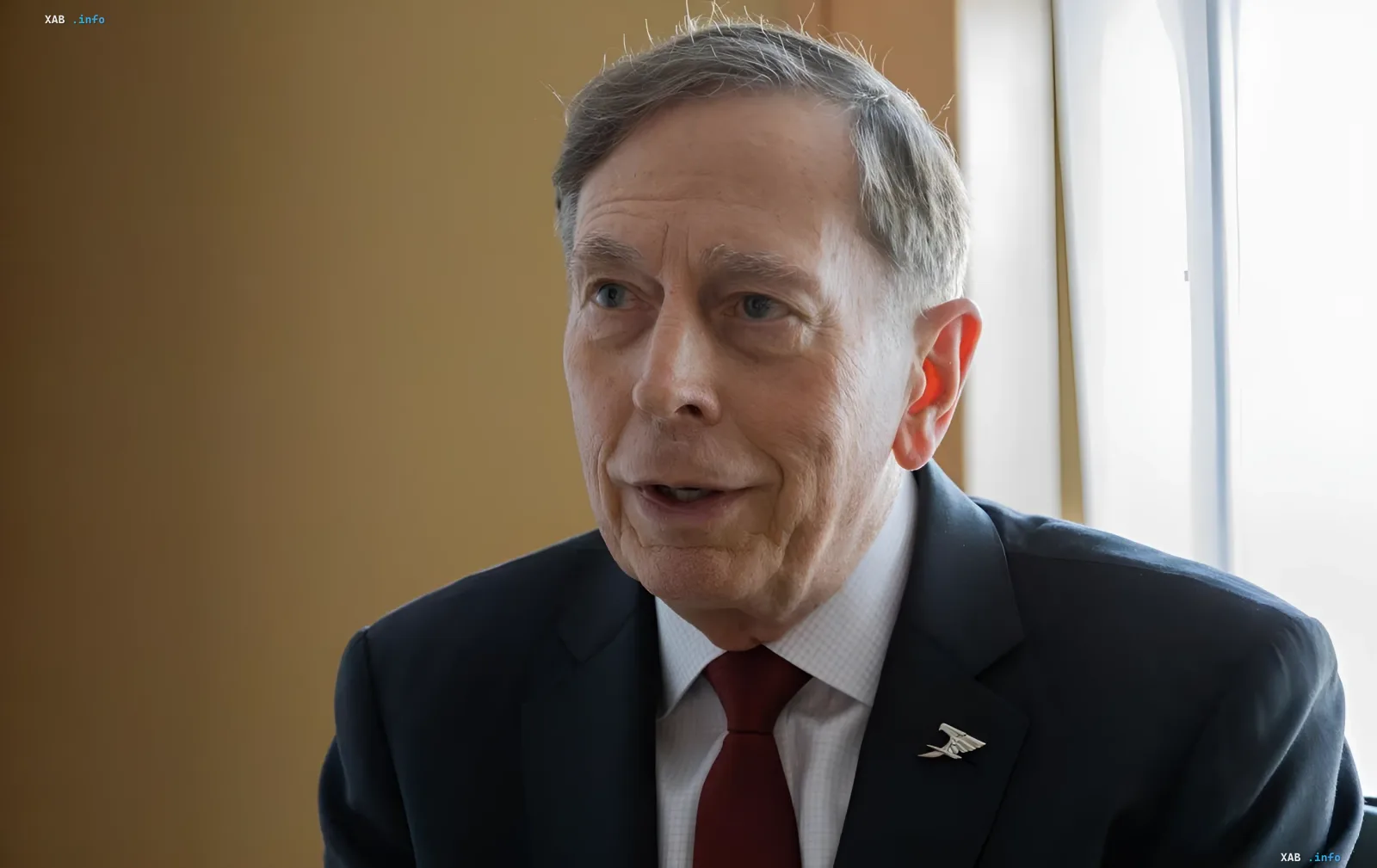
On the sidelines of the annual YES meeting in Kyiv, one of the most authoritative American military figures, David Petraeus, gave a lengthy interview to RBC-Ukraine. According to him, this is already his 11th trip to Ukraine since the full-scale war began. Petraeus is a former commander of US and NATO forces in Afghanistan, of US multinational forces in Iraq, former head of US Central Command, and former Director of Central Intelligence. Unlike many "star" guests, he does not limit himself to "parquet" events in the capital but visits frontline areas, meets with commanders, and actively inquires about how modern warfare is being conducted "on the ground," including AI technologies and autonomous weapon systems. "Ukraine is literally defining the future of warfare," he emphasized, urging the United States and other NATO countries to immediately begin a large-scale restructuring of their military machinery in order to keep pace with the demands of the time and the rapid development of mil-tech.
Who holds the operational initiative
In response to a question about who currently holds the initiative on the front, Petraeus stated that it belongs to Ukraine, since Russia is unable to achieve what it has been striving for. In his assessment, Vladimir Putin's claims of "significant progress" do not correspond to reality: Russia has not even reached the fortified cities but is only on their approaches. "It is becoming increasingly clear that Ukraine will not allow the Russians to achieve their goals in the spring-summer campaign, which, of course, include the capture of the rest of the Donetsk region and the so-called fortified cities," the general noted. He also pointed out that Ukraine holds the initiative on the strategic level as well, thanks to the isolation of occupied Crimea from the Russian Federation.
Losses and the Ukrainian verification system
Petraeus called the Russian side's losses "unthinkable," which, according to him, exceed 1,000 killed and wounded per day. Citing his experience in five command positions at the rank of general, including three as a four-star general, he acknowledged that he "cannot fathom the scale" of such losses. Addressing skeptics, he explained how the Ukrainian report-verification system works: the Unmanned Systems Forces and other units document their actions in full-motion video format to earn points in the E-points system, and there is fierce competition between units for these points as a real means of allocating limited resources through "Delta." He also mentioned the "Brave One" system — a kind of "Amazon online store" for military components and drones. According to his latest estimates, in just one month the losses amounted to more than 35,000 people, and the total number of killed and wounded among Russians exceeded 1.5 million, which, he said, is greater than US losses over the entire Second World War.
The isolation of Crimea as a factor of strategic initiative
The key element of Ukraine's initiative, Petraeus named, is strikes on Crimea's logistics. According to his data, the Unmanned Systems Forces alone have destroyed more than 275 vessels — boats, tankers, ferries, and barges — used to supply the peninsula. Ukraine, he said, is capable of destroying targets on the bridge across the Kerch Strait and on the road along the southern coast leading from the Russian Federation to Crimea. As a result, the general noted, in occupied Crimea "the lights are going out, heating is being shut off," and supplies are running out, which undermines Moscow's ability to hold and supply the occupied territory.
A war of attrition and the future
Summing up, Petraeus stated that Ukrainians on the front line are achieving "something very significant," not allowing Russia to reach its publicly declared goals, and simultaneously inflicting extraordinary losses on the enemy. He warned that it is precisely the experience of the war in Ukraine that is defining the future of warfare around the world, and urged Western partners not to fall behind the pace of mil-tech development by restructuring their own military machinery to fit the new realities.
Contradictory data
It is important to note that all the cited loss figures (more than 1,000 per day, over 35,000 per month, and more than 1.5 million in total) are Petraeus's personal estimates, not independently verified data. He himself acknowledges that he "cannot fathom" such scales, and supports them by reference to the Ukrainian documentation system (E-points, full-motion video, "Delta," "Brave One"). Meanwhile, Moscow's official rhetoric, on the contrary, claims "significant progress" and the achievement of the campaign's goals, which directly contradicts the American general's assessment. Exact data on the losses of the parties in the course of the conflict remain a matter of dispute and cannot be independently confirmed by either side, so the figures cited should be regarded as an expert estimate rather than an established fact.