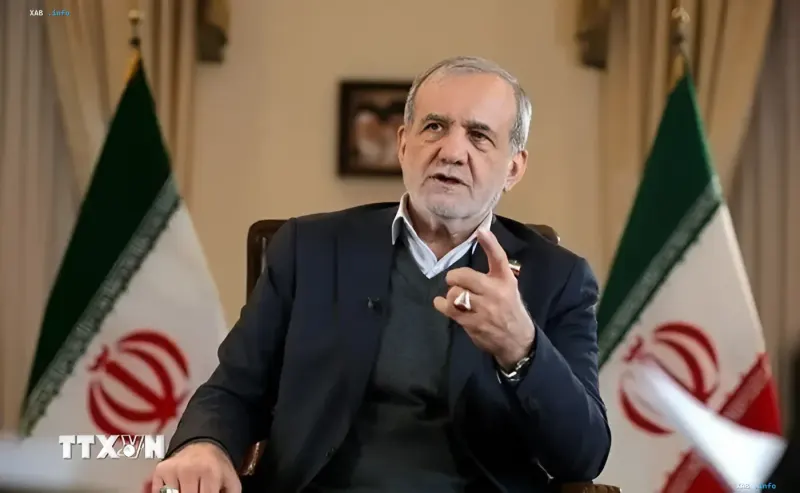
Iranian President Masoud Pezeshkian confirmed on October 16 that Tehran is not seeking to develop nuclear weapons and is ready for dialogue with the United States, while firmly rejecting pressure and unilateral sanctions. The statement was published on the official website of the Iranian President's Office and was made during his participation in an international forum in Yerevan.
Context of the statement: COP17 in Yerevan
According to the president's office, Pezeshkian made this statement during a meeting with Georgian Prime Minister Irakli Kobakhidze on the sidelines of the 17th Conference of the Parties to the Convention on Biological Diversity (COP17) held in Yerevan, Armenia. On the same day, a closed-door conversation between the Iranian leader and Armenian Prime Minister Nikol Pashinyan reportedly took place.
Nuclear program: 'False propaganda'
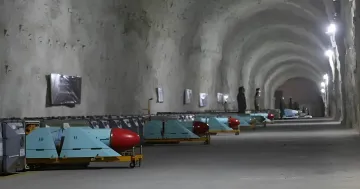
Addressing the topic of the nuclear program, Pezeshkian stated that Iran has no intention of developing nuclear weapons, referencing the stance of Supreme Leader Ali Khamenei, which prohibited their creation. He called the information spread against Iran 'lies' and 'false propaganda' aimed at undermining the country's authority, and emphasized that Tehran is 'always ready for dialogue.'
Relations with the US: Dialogue instead of coercion
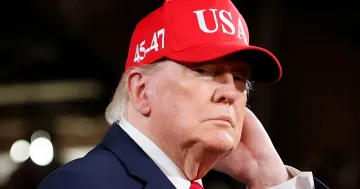
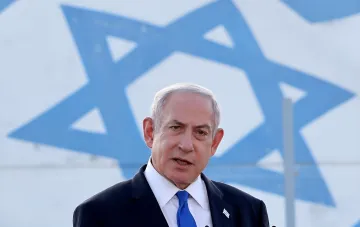
Speaking about relations with Washington, the Iranian leader stated that the US seeks to force Tehran into submission through pressure and sanctions. He criticized American sanctions as contradicting humanitarian principles and condemned recent US and Israeli strikes on Iran, calling them 'unjustified' and 'inhumane.' Pezeshkian warned that sanctions create problems not only for Iran but for the entire world, and urged the US to choose 'reasonable dialogue' instead of using force to impose its demands.
Tbilisi's reaction and regional background
From the Georgian side, Prime Minister Irakli Kobakhidze stated that his country opposes any forms of external interference in the internal affairs of other states. The Iranian president's statement came against the backdrop of persistent tensions between Iran, the US, and Israel, despite efforts to find a diplomatic solution. Amid unresolved disagreements over the nuclear program and sanctions, the prospect of resuming dialogue between Washington and Tehran remains a key factor for the future of stability in the Middle East.