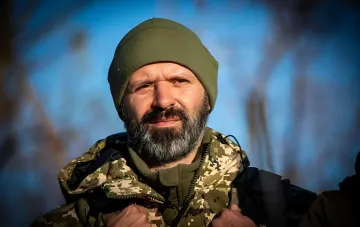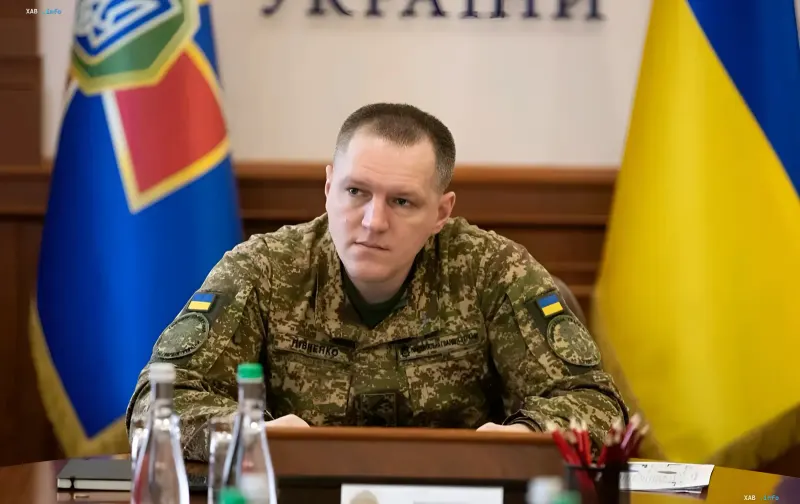
Alexander Pivnenko, Commander of the National Guard of Ukraine, stated in an interview with LB that Russian occupiers will not be able to reach Kyiv from the northern direction, even if they manage to advance up to 20 kilometers into the border area. According to him, any enemy advance of 10–20 kilometers would serve an exclusively tactical purpose — tying down Ukrainian forces, similar to the situation that previously developed in Kharkiv Oblast. "Come on, they won't reach (Kyiv, — ed.). If they go 10–15–20 kilometers deep there, that's the most that could happen. And just hold us, like in Kharkiv Oblast," Pivnenko emphasized.
The "Kharkiv Oblast" Scenario and the Limits of Advance
The National Guard Commander's assessment effectively describes a scenario in which Russian forces are unable to carry out a deep operational breakthrough in the northern direction. The depth of 10–20 kilometers, according to him, is the upper limit of a possible advance, and even in that case the enemy's goal reduces to holding the captured area to pin down Ukrainian reserves. This approach, as Pivnenko noted, has already been demonstrated in Kharkiv Oblast, where after the initial breakthrough Russian forces were unable to develop their offensive and switched to defense on the captured positions.
Threat of "Molniya" Strike Drones on the Chernihiv Direction
Separately, Pivnenko commented on the risk of the occupiers using "Molniya"-type strike drones in the event of a possible advance on the Chernihiv direction. The "Molnyas" that are flying — they are bothering us very seriously on the front line. They can fly them, for example, if they go 20–30 kilometers deep on the Chernihiv direction," the commander noted. Thus, even a limited enemy advance of 20–30 kilometers creates an additional threat to rear areas due to the possibility of launching tactical strike UAVs from distances closer to the positions of the Defense Forces.
Ukrainian Interceptor Drones as a Countermeasure
At the same time, Pivnenko emphasized that Ukrainian military personnel are actively using interceptor drones not only against Iranian "Shaheds" but also against other types of drones — "Mavics," "Molnyas," as well as against the enemy's logistical targets. This, according to him, significantly reduces the effectiveness of the occupiers' air strikes and allows for compensating the numerical superiority in certain categories of UAVs.
Current Situation on the Front and Disinformation
It is worth recalling that over the past few days the Defense Forces of Ukraine have recorded successes on the Kharkiv, Donetsk, and Dnipropetrovsk directions. In addition, Ukrainian military personnel have managed to halt several offensive operations by Russian troops. In this context, RBC-Ukraine previously reported that statements by Russian propaganda and the Russian Ministry of Defense about the alleged encirclement of Ukrainian troops in the so-called "Volchansk pot," as well as about the capture of a number of settlements, do not correspond to reality.
Contradictory Data
Pivnenko's statements contain a minor inconsistency in the figures for the depth of a possible advance. On the one hand, he names a maximum of 10–20 kilometers as the limit to which Russian troops may reach from the north. On the other hand, when discussing the threat of "Molniya" drones on the Chernihiv direction, he operates with a depth of 20–30 kilometers. This may mean that at certain points on the Chernihiv direction the enemy is capable of a short-term advance slightly beyond the average figure, or that 20–30 kilometers is not the actual front line but a zone from which the launch of strike UAVs is already possible. The precise interpretation of these figures remains a matter of debate among military analysts.