In August 2026, against the backdrop of continued tension on the eastern flank of the Alliance, the German publication Bild published details of a secret NATO document — the 'NATO Land Warfighting Concept'. The document, developed under the leadership of US Army Major Andrew Pingree, details the Alliance's course of action in the event of a large-scale Russian invasion of member states. The strategy is based on three key stages: suppressing missile systems, creating an 'autonomous zone' using drones, and striking the enemy's logistical infrastructure on its own territory.
First Stage: Strike on Kaliningrad and Creation of an 'Autonomous Zone'
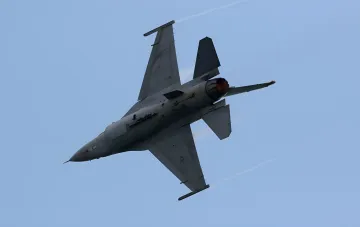
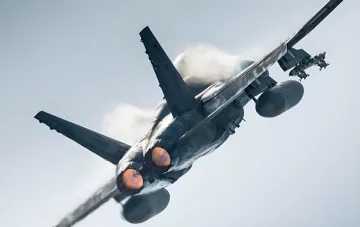
According to the revealed details, NATO's top priority in the event of a conflict will be neutralizing the missile threat. The document explicitly states the need to disable Russian missile systems concentrated in the Kaliningrad region. To accomplish this task, massive use of fighter jets, cruise missiles, and attack drones is planned. The goal is to deprive Russian troops of the ability to launch mass strikes on the Alliance's rear areas in the initial stages of the war.
Simultaneously, the creation of so-called 'autonomous zones' is planned on the borders with Russia and Belarus. This is a unique element of the strategy, involving the use of advanced technologies instead of human force. NATO troops will not be stationed in this buffer zone, which is intended to serve as a protective barrier. Instead, autonomous drones and robotic combat vehicles will act against advancing tank wedges. If Russian troops continue their advance, these systems are tasked with containing and stopping them, minimizing personnel losses for the Alliance.
Second Stage: Strikes on the Rear and the 'Air Bridge'
If containment at the border fails to stop the aggression, the strategy provides for a transition to active operations on Russian territory. The main target becomes the military-logistical infrastructure supporting the functioning of the Russian army. The list of priority targets includes airfields, military factories, critical bridges, and railway hubs used for the transfer of equipment and personnel.
Special attention in the concept is paid to the creation of an 'air bridge'. According to the plan, NATO aircraft will deliver drones and robotic systems to Russian territory, intended for the destruction of military bases and airfields. This approach is designed to significantly weaken Russia's ability to organize new waves of attacks by cutting off the 'arteries' of front-line supply. The Alliance is also considering the possibility of relying on internal forces within Russia opposing Vladimir Putin's regime to destabilize the situation in the enemy's rear.
Transparency Strategy: Deterrence through Openness
One of the most unusual features of the new concept is the rejection of total secrecy. NATO military strategists believe that the effectiveness of deterrence depends directly on how clearly the adversary understands the cost of aggression. The Alliance's logic is simple: if Moscow knows that an invasion will be met not only with resistance at the border but also with strikes on its own infrastructure and logistics, the likelihood of war decreases. Thus, the publication of the plan's details serves not only as a manual for the military but also as a powerful political signal to Moscow.
The document clearly states that NATO's goal is not to conquer Russia or overthrow the regime. The task is limited to stopping the advance and pushing Russian troops back to the borders of the Russian Federation. However, as experts note, the scale of planned operations to strike targets deep inside enemy territory effectively blurs the line between defense and counter-offensive.
Reaction of Partner Countries and Current Situation
The publication of the concept coincided with rising anxiety in the Baltic states and Poland. Warsaw, relying on intelligence data, warns of the possibility of a new large-scale provocation by Moscow in the near future. The Polish Deputy Minister of Defense recently stated: 'We are preparing for war, hoping it will never start'.
In Latvia, the situation is assessed even more harshly: local authorities believe that Russia has already started a hybrid war against EU countries, using sabotage, assassination attempts, and arson to intimidate states supporting Ukraine. Western intelligence agencies are currently investigating a number of such incidents, making the new NATO military doctrine not just a theoretical document, but an actual plan of action in the face of a real threat.