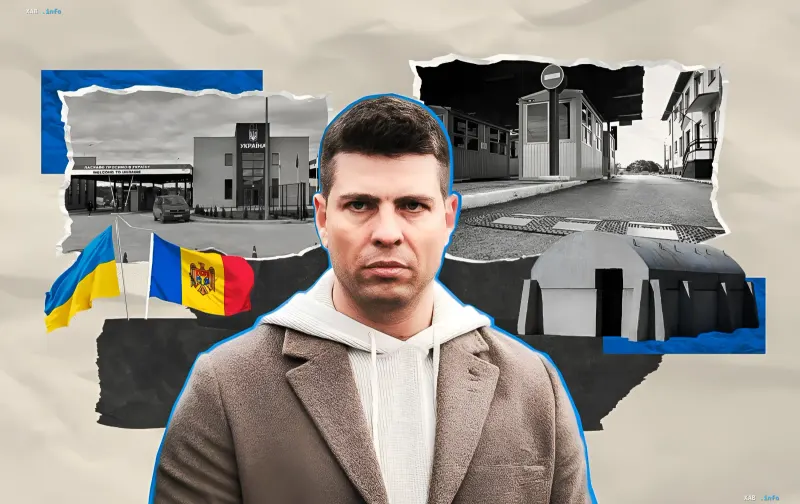
Against the backdrop of Russian strikes on border infrastructure, Ukraine is developing a backup scenario — «Plan B» — to relocate some border checkpoint functions to the territory of neighboring European Union member states. Concurrently, mobile shelters are planned to be installed at 36 checkpoints by the end of the year. Serhiy Derkach, Deputy Minister of Communities, Territories and Infrastructure Development, shared these details in an interview with RBC-Ukraine, revealing negotiations with Poland and Slovakia, the legal nuances of the Schengen Borders Code, and the transition to modular structures.
What is Already Working: The Practice of Joint Checkpoints
According to Derkach, Ukraine already has operational experience with joint checkpoints on the territory of EU member states. Four such checkpoints are fully functioning in Poland, and another operates under coordinated control: a vehicle is inspected by the service of one country first, and literally a meter past the barrier by the service of another. With Moldova, he noted, full joint control is in place, where a person hands over documents and receives them at the exit with stamps and checks from both countries.
Legal Framework and Negotiations with Brussels
A more detailed legal «framework» is currently being developed to allow the creation of such checkpoints in the future. As Derkach pointed out, the checkpoints with Poland were opened long ago — before Poland joined the Schengen Area, meaning separate agreements must be signed for new partner countries. To date, such an agreement exists only with Moldova, but not with EU countries. Separate agreements with Poland and Slovakia have been officially agreed upon but not yet signed. Poland has submitted the document to the European Commission to verify compliance with EU requirements; the European Commission raised objections regarding two provisions of the Schengen Borders Code, although, according to the official, these amendments do not block the possibility of signing. Negotiations are underway regarding wording acceptable to both parties, after which the document can be ratified. There is no exact signing date — the process takes several years, and the planned signing at the conference in Gdańsk was postponed due to the European Commission's comments. On the Polish side, the Ministry of Interior is responsible for the agreement.
Russian Attacks as a Trigger for «Plan B»
Derkach links the acceleration of work on the agreement to the escalation of strikes. According to him, this summer, for the first time in years of full-scale invasion, Russia began striking automobile checkpoints: first in Odesa Oblast — «Tabaky», «Vinohradivka», «Starokozache», and later arrivals were recorded near the Yahodyn-Dorohusk checkpoint on the border with Poland in Volyn Oblast. Previously, he said, Russia only attacked the «Orlivka» ferry checkpoint on the border with Romania. Therefore, the official emphasized, Ukraine needs an alternative plan — relocating its part of the checkpoint to the territory of another country, such as Poland, and this is where the agreement will come in handy. At the same time, it was planned to sign it with each EU member state even before the strikes on checkpoints, in order to create new ones rather than relocate existing ones.
Who Pays and When Will It Work
The agreement provides a general «framework» by which countries can open joint checkpoints on the side of the EU member state. Derkach explained that the maintenance of a checkpoint is borne by the state on whose territory it is located: if the checkpoint is on Ukrainian territory, Ukraine bears the costs; if on the territory of another state, the neighboring country does. The issue of relocation, he stated, is considered in two contexts: during the construction of new points, they will be made joint on the side of the other state, and Ukraine will not have to spend funds from the state budget, while existing checkpoints will continue to operate unchanged unless there is danger. The second context is direct Russian attacks and the necessity of creating an alternative. The exact timeframe for organizing joint checkpoints after the adoption of the agreement, according to the official, depends on the specific country.