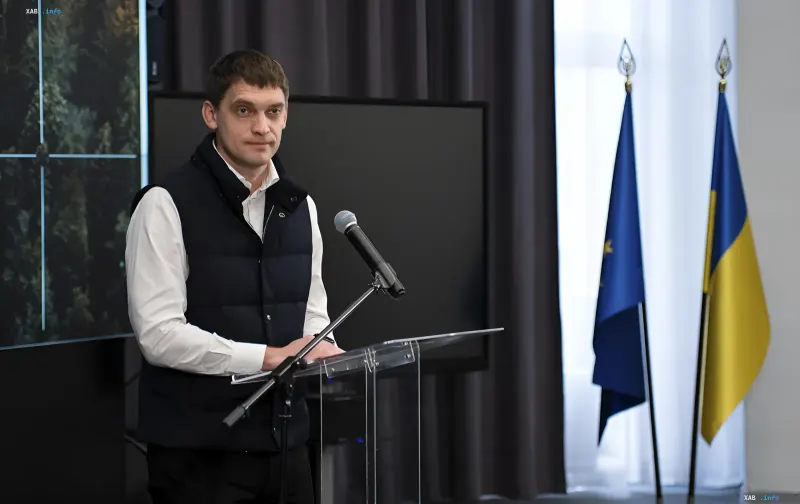
The State Agency for Restoration and Infrastructure Development of Ukraine is launching a large-scale reform of procurement systems and construction control. The agency's head, Ivan Fedorov, announced plans during a briefing to resume full operations of the Central Procurement Organization, strengthen the audit of work costs, and demonopolize the market. The innovations are designed to optimize budget expenditures, which in the 2027 State Budget draft include the partial restoration of the Road Fund amounting to UAH 52.8 billion.
New Funding Principles and the 2027 Budget Draft
The draft state budget for 2027 provides for the partial restoration of the Road Fund with a funding volume of 52.8 billion hryvnias. These funds are planned to be directed toward road maintenance, military and frontline logistics, as well as the repayment of debts from previous periods. As emphasized by Restoration Agency head Ivan Fedorov, military logistics and the protection of critical infrastructure in frontline areas invariably remain the top priority.
Road maintenance and construction project financing will now be implemented under entirely new rules. The agency intends to move away from regional fragmentation and introduce transparent resource allocation mechanisms. An automatic road quality tracking system should make this process as fair and transparent as possible for all regions.
Market Demonopolization and Direct Contracts with Contractors
The agency strongly opposes the monopolization of the construction services market and intends to involve a broad range of companies in project implementation. According to Fedorov, contracts must be concluded directly with contractors who physically work at construction sites, eliminating chains of intermediaries and subcontractors. This approach will not only improve the quality of constructed facilities but also significantly optimize costs.
As part of the reform, the agency plans to resume the full operations of the Central Procurement Organization, previously established with the support of international partners. Moving from procurement by fragmented regional services to a centralized format will ensure the unification of procedures and strengthen control at every stage of infrastructure project implementation.
Interaction with International Donors and Estimate Pricing
The agency is actively negotiating with international partners to attract additional funding and conduct procurement according to donor standards. However, Fedorov particularly noted the critical factor of time: standard international procedures sometimes last up to six months, which is unacceptable under current martial law conditions. Therefore, the agency insists on the fastest possible and simultaneously controlled procedures.
Special attention is paid to pricing control in construction. Although government regulations allow contractors to include up to 15% profit in estimates, the agency strictly checks the compliance of material and work costs with market realities. Increased control and transparency have already met resistance from certain market participants and massive information campaigns in Telegram channels, but the agency's leadership intends to stay the course on reforms.
Significance of the Reform for the Country's Infrastructure Restoration
The launch of large-scale updates to procurement mechanisms at the Restoration Agency marks a transition to stricter state and international control over the expenditure of budget funds. Abandoning outdated schemes, eliminating intermediaries, and strictly auditing estimated costs are designed to minimize corruption risks and increase the efficiency of every hryvnia resource invested. Amid ongoing conflict and constant threats to critical infrastructure facilities, the ability to quickly, transparently, and qualitatively restore logistical arteries becomes a key factor in the state's economic and defense resilience.