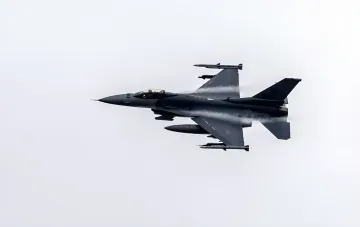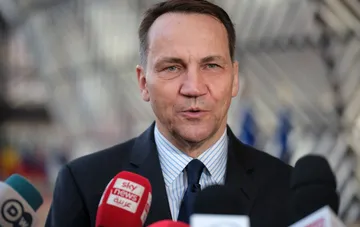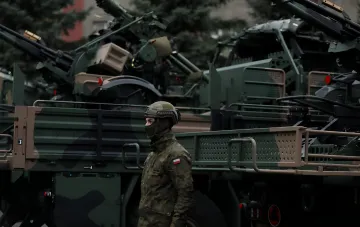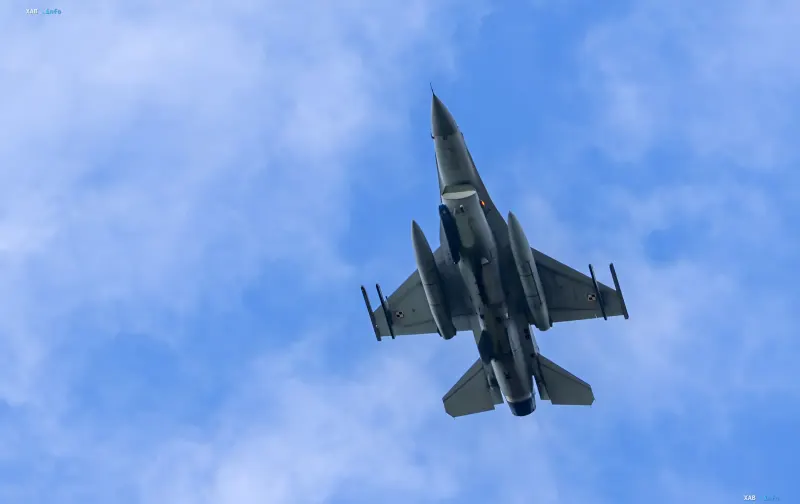
Head of Poland's National Security Bureau (BNS) Bartosz Grodecki has called for a review of current restrictions which, according to him, prevent Poland and its allies from promptly shooting down Russian missiles and unmanned aerial vehicles violating the airspace of NATO countries. This was reported by RBC-Ukraine citing the publication Wirtualna Polska. The statement comes against the backdrop of recurring incidents involving the penetration of Russian airborne targets near the Polish border and increasing pressure on the Alliance's collective defense system.
Legislative Barriers and the Identification Problem
According to Grodecki, Warsaw must adopt a series of legislative changes to expand the powers of the Polish armed forces in destroying Russian airborne targets. The key step, he said, is simplifying the procedure for identifying violators: currently, the official claims, this process takes an unjustified amount of time, which reduces the promptness of reaction. Grodecki emphasized that Poland borders a state waging a full-scale war, and cases of its airspace being violated by Russia are recurring. As a specific example, he pointed to the previously recorded appearance of drones and a helicopter from the direction of the Kaliningrad Oblast.
Interception Over Ukraine: A Proposal for NATO
Separately, Grodecki commented on the possibility of intercepting Russian missiles and drones directly over the territory of Ukraine. In his estimation, such an approach could increase the likelihood of successfully destroying targets and, consequently, the effectiveness of air defense. At the same time, the official stressed that such a decision must be made at the NATO level, rather than unilaterally by Warsaw. He recalled that allies have been supporting Ukraine for five years, and it is in this context that interception over Ukrainian territory appears expedient.
“Inaction Will Be Seen as Weakness”
Grodecki also stated that NATO should not leave the penetration of Russian missiles and drones into the airspace of Alliance member states unanswered. In his conviction, systematic inaction by allies could be interpreted by Moscow as a sign of weakness, which in turn would create an incentive for further violations. This statement fits into a broader discourse on the need for a clear and predictable Alliance response to hybrid and military provocations on the eastern flank.
Context: Prosecutor's Position and Warsaw's Request to NATO
Earlier, Polish Prosecutor General Waldemar Żurek publicly explained why the country is not currently shooting down Russian missiles, indicating the existence of certain legal and political limitations within the Polish system. Concurrently, as RBC-Ukraine reported, Warsaw has already asked NATO to explore the possibility of destroying Russian missiles over Ukrainian territory. Thus, Grodecki's initiative is a logical continuation and reinforcement of proposals previously put forward at the official level.
The totality of statements by Polish officials demonstrates a growing trend toward revising the doctrine of passive defense on NATO's eastern flank. The question of how far the Alliance will go in expanding interception powers and who exactly will make decisions on the use of force remains open and, judging by all accounts, will be one of the key topics at upcoming allied consultations.