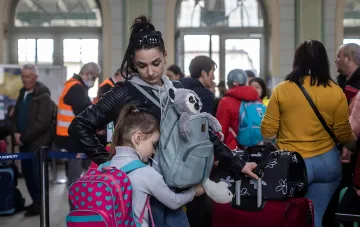
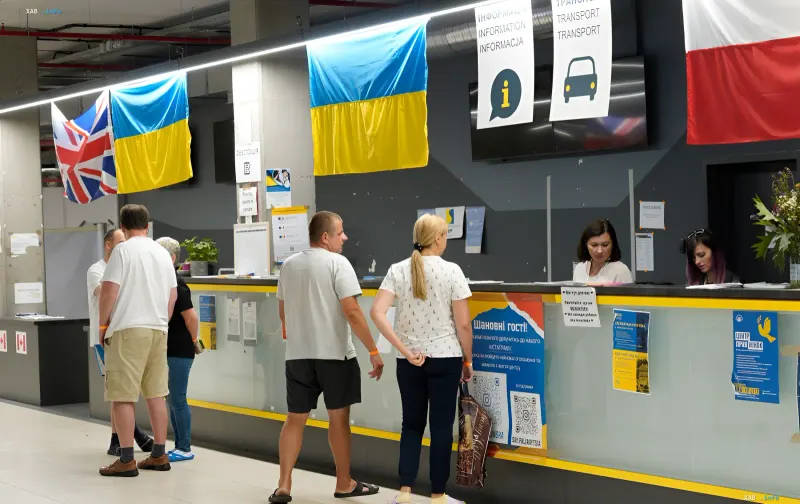
The Polish legislative process in August 2026 is experiencing a significant turning point regarding the Ukrainian diaspora. A bill aimed at expanding the list of vulnerable categories of Ukrainians who will retain the right to free accommodation and health insurance has been officially registered in the country's Sejm. This step serves as a reaction to the sharp tightening of rules that came into force on July 1 of the current year, when Poland cancelled the broad assistance program for most refugees.
Reaction to the veto and narrow criteria
The situation regarding social support for Ukrainians in Poland changed radically after President Karol Nawrocki vetoed the law extending the preliminary assistance program. As a result, since the beginning of July, free housing and food have remained available only to a very narrow circle of people: people with disabilities, pregnant women, and pensioners. The head of the Ministry of Family, Labor and Social Policy, Agnieszka Dziemianowicz-Bąk, admitted that the current list of categories turned out to be too limited.
The Ministry cites specific examples of the unfairness of the current system: if a child with a disability and their mother receive assistance, their siblings in the same situation are deprived of support. It is precisely these legislative gaps that the new document, submitted by the "Lewica" party, which is part of the ruling coalition, aims to eliminate.
New support criteria and financial costs
The bill proposes to significantly expand the list of those entitled to benefits. In particular, it is proposed to include mothers raising children alone in the list of vulnerable groups, provided they are not married or their partner is not on Polish territory (likely at the front). Pensioners whose pension is less than half of the minimum payment — that is, does not exceed 940 zlotys (approximately 11,300 hryvnias) — will also be entitled to support.
An important aspect of the initiative is the extension of assistance to family members of people from vulnerable categories. Furthermore, the bill provides for securing the right to health insurance and free access to the healthcare system even for those who do not live in collective accommodation centers. The implementation of these measures will require additional investment: about 18 million zlotys for expanding housing and another 80 million zlotys for health insurance.
Political context and prospects
The bill was registered in the Sejm on August 3, 2026, and its consideration is scheduled for September. Preliminary estimates suggest that the changes could affect several thousand people. Minister Dziemianowicz-Bąk stated that she does not expect serious resistance from the government; on the contrary, she expects support from other coalition parties. The argumentation is based on the humanitarian component: it concerns children and people whose partners are fighting at the front.
This step demonstrates an attempt to find a balance between the need to save budget funds and humanitarian responsibility towards a neighboring country. If the bill is adopted, it will be an important signal to the Ukrainian community that support is not ceasing completely, but is transforming into a more targeted form.