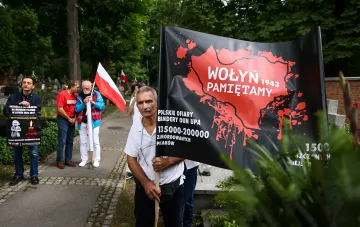
The Center for Public Opinion Research (CBOS), commissioned by the publication Dziennik Gazeta Prawna, has published the results of a fresh survey in which Poles explained why, in their view, attitudes toward Ukrainians in the country have deteriorated. As reported by RBC-Ukraine, respondents first and foremost linked this trend to two groups of factors: disputes over historical memory — primarily over the events in Volhynia — and questions of social benefits that, in the perception of part of society, are received by Ukrainian refugees. It is precisely this combination of “history plus money” that became the main takeaway for the sociologists and is reflected in the headline of the publication itself.
Historical memory and social benefits — two poles of perception
According to the sociologists, it was these two topics that emerged as the most frequent answers when explaining the deterioration of attitudes toward Ukrainians. On the one hand, there is the historical trauma and the disputes over the 1943 events in Volhynia, which regularly resurface in the Polish public discourse in the context of the Ukrainian theme. On the other — the economic dimension: the belief that Ukrainian refugees receive substantial social benefits and, in the view of some respondents, “compete” for resources. At the same time, according to the same data, only 7.6% of those surveyed believe that Poles' attitudes toward Ukrainians have not deteriorated at all — meaning that an overwhelming majority register a negative trend, even if they disagree on its causes.
Contradictory data
The authors of the study emphasize a notable political division among citizens when it comes to identifying the causes of the worsening attitudes toward Ukrainians. Supporters of the ruling political camp and supporters of the right-conservative opposition set their priorities differently: in each of these groups, their own explanations dominated — from an emphasis on historical memory to an emphasis on social benefits and the “burden” on society. Thus, there is no single “official” version of the causes in society, and the public debate is in fact split along party lines. This makes the poll not merely statistics, but a cross-section of intra-Polish political struggle in which the Ukrainian theme is also involved.
Context: deportation sentiments and a million refugees
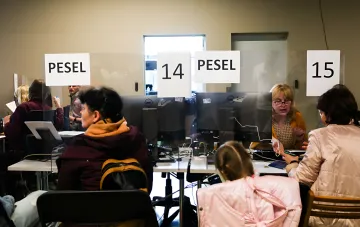
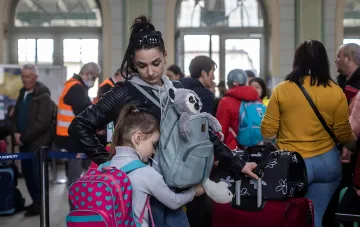
The survey was conducted on 17–20 August 2026 using a mixed method among 1,000 adult residents of Poland. Its results should be considered in a broader context: a recent separate poll showed that 67.2% of Poles support the idea of deporting Ukrainian men who do not have legal employment in Poland. At the same time, since the start of the full-scale war, Poland has provided protection to 1.73 million Ukrainians forced to leave due to the Russian invasion. This figure makes the Ukrainian presence in Poland one of the largest in Europe and explains why the theme of refugee perception has become a persistent element of the domestic agenda.
What this means for bilateral relations
The totality of the data indicates that the deterioration of attitudes toward Ukrainians in Poland is not a single “anti-Ukrainian” impulse, but a set of intertwined factors: historical memory, economic fears, and political competition within Polish society itself. For Kyiv, this is a signal that the Ukrainian theme in Poland is firmly embedded in local party struggle, and therefore any steps toward normalizing perception will depend not only on bilateral policy but also on intra-Polish political cycles. The next CBOS polls and the reactions of the ruling camp and the right-conservative opposition will become key indicators of how this dynamic will develop.