Starting Friday, September 25, 2026, Poland will begin the mass distribution of a special 12-page instruction on how citizens should act during air attacks and how to find safe places. The document will be published on government portals and also delivered to all local government bodies through the voivodes. In addition, the materials will be distributed during events of the Academy for Civil Protection and Civil Defense, as well as at national and regional exercises. Deputy Minister of Internal Affairs Magdalena Roguska emphasized that the new brochure is not a standalone "Safety Guide" but rather a supplement to it, aimed at specifying the algorithms of behavior in conditions of immediate threat.
What the new instruction contains
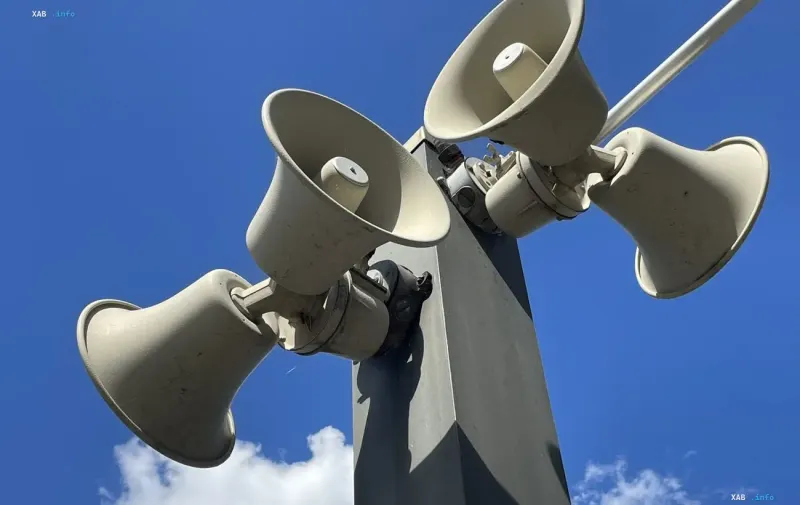
In the brochure, the Polish Ministry of Internal Affairs urges citizens to familiarize themselves in advance with the alarm signals, identify the location of the nearest shelters, and plan safe routes. Each family is recommended to work out a course of action, agree on a meeting point, communication rules, and prepare an evacuation backpack. The document is practical in nature: it describes step by step what to do depending on where exactly a person is caught by an explosion — in a building, on the street, or in a car. Particular emphasis is placed on the fact that, if there is time and a safe route, one must take the backpack and medications, after which one should descend to the shelter only by stairs, without using the elevator.
Practical recommendations for citizens
If it is not possible to reach a shelter quickly, the instruction advises staying in a building with sturdy walls, applying the so-called "two walls" rule — that is, moving away from windows and external walls by a distance that provides additional protection. In the event that an explosion catches a person on the street, they should immediately lie down on the ground, in a depression if possible, and cover their head. While in a car, it is necessary to quickly leave the vehicle and move to the nearest safe place. The Ministry of Internal Affairs emphasizes the mandatory compliance with the instructions of the Government Security Center and official services at all stages of the response.
Exercises and preparation in border regions
In parallel with the distribution of instructions, Poland is already carrying out practical response training in border regions. Last Saturday, exercises were held in the Lublin and Podkarpatie Voivodeships, and the next stages are planned for the Podlaskie and Warmian-Masurian Voivodeships. This sequence reflects geographical logic: all four voivodeships directly border Ukraine and Belarus, which makes them priority zones for rehearsing air alert and evacuation scenarios.
Context: evacuations and incidents at the border
The decision to distribute the instructions en masse was made against the backdrop of growing tension in border areas. On September 24, 2026, Poland evacuated people from the "Drogosk" and "Zosin" border crossing points due to Russian strikes on Ukrainian territory in the immediate vicinity of the border. In addition, the day before, a fire broke out at a Starlink satellite communication ground station in the village of Wola Krobowska in the Masovian Voivodeship; law enforcement agencies are considering arson as one of the versions. The combination of these events forms the backdrop against which Polish authorities deem it necessary to prepare the population for possible air attack scenarios.
Contradictory data
No significant contradictions on the factual side of the news were found in the provided sources. The RBC.UA source confirms the fact of launching the campaign to distribute the instructions from September 25 and the content of the document. The second source (news.mail.ru) addresses a different topic — the possible consequences of incidents involving Ukrainian Armed Forces drones for Polish-Ukrainian relations — and contains no data contradicting the main news. The differences in presentation are thematic rather than factual in nature.