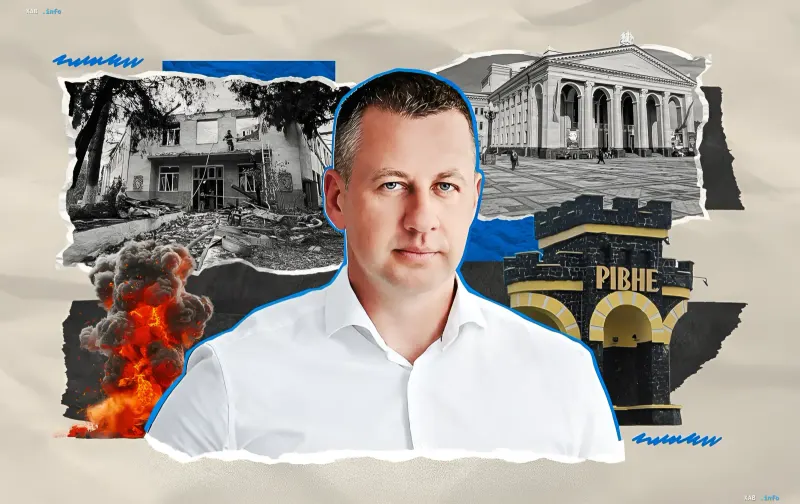
In mid-autumn 2026, Russian attacks on Rivne noticeably intensified. According to the city authorities, between October 12 and 15 alone, residential buildings and enterprises were damaged in the city, a university building was destroyed, and civilian injuries were recorded. Strikes on energy infrastructure left more than 15,000 families in the Rivne district temporarily without power. Amid the mounting threat, RBC-Ukraine conducted a blitz interview with Viktor Shakirzyan, secretary of the Rivne City Council and acting mayor, who spoke about the current security level, assistance mechanisms for victims, and the city's readiness for a potential worsening of the situation.
Security: Constant air raids and emergency services work
According to Shakirzyan, the security situation in Rivne "is worsening every day" as air raid sirens, shelling, and attacks occur both day and night. He confirmed that among the consequences of the strikes are damages to housing infrastructure. At the same time, he noted that municipal services are operating as usual: the State Emergency Service, special services, the landscaping department (clearing debris and construction waste at strike sites), and the social protection department (payments to victims) coordinate their actions. The acting mayor specifically emphasized that unlike Kyiv, where delays in announcing alerts have been recorded recently, in Rivne, population notification is prompt: "We record everything and issue an alert immediately."
Damage assessment and property restoration
The first exact figures regarding the cost of restoring damaged property were not yet finalized at the time of the interview. Shakirzyan explained that all cases are recorded in protocols, and the data is reviewed by the Commission on Technogenic and Environmental Safety and Emergencies (TEB and ES). Afterward, departments submit documents with a breakdown of expenses—from payments for window blocks to financial aid for victims. The final total damage amount will be known after the reporting cycle at the commission is completed.
University, schools, and kindergartens: How education is organized
On October 13, a Russian drone destroyed a building belonging to one of Rivne's universities. Together with the military administration, the city is looking for alternative premises so the university can resume in-person classes. For now, students have been switched to distance learning. In schools—lyceums and gymnasiums—authorities conducted a survey among parents: the majority voted for distance learning, but some institutions remained on the full-time format, resulting in a blended education system. Kindergartens are operating normally, and vocational schools and extracurricular education institutions have been recommended to switch to remote learning. Shakirzyan added that all educational institutions are equipped with shelters, and if necessary during an alert, participants of the educational process move there. The decision on continuing the online format after October 16 will be made jointly with parents: "Safety is number one."
Business, victims, and "points of indestructibility"
For businesses, Cabinet of Ministers resolutions No. 1092 and No. 1128 apply: under a yellow threat level, an enterprise can operate if it has a shelter or safe space meeting requirements; under a red level, operations are suspended. For residents whose homes were damaged as a result of shelling, the city suggests calling the 1553 hotline. A commission visits the site, inspects the premises, records damage (broken windows, doors, other property), and draws up an act. If living in the apartment is impossible, an alternative is provided—a dormitory or housing from benefactors during the repair period. Shakirzyan specifically noted attention to families with children, elderly people, and individuals in difficult life circumstances. In case of a critical worsening of the situation, the city has already prepared 12 "points of indestructibility," 23 heating points, and an "indestructibility town" deployed back in 2022.
Winter readiness and next steps
The acting mayor of Rivne confirmed that the city continues its work on ensuring security and restoring infrastructure amid intensified attacks. Damage assessment, finding premises for the university, coordinating with parents on the education format, and preparing "points of indestructibility" are key areas of work for the coming weeks. At the same time, Shakirzyan did not rule out a further worsening of the situation and stressed that all security decisions are made in a mode of constant monitoring and rapid response.