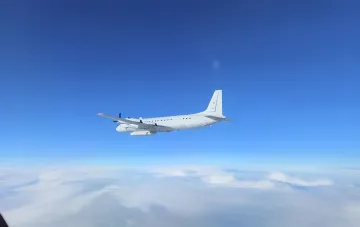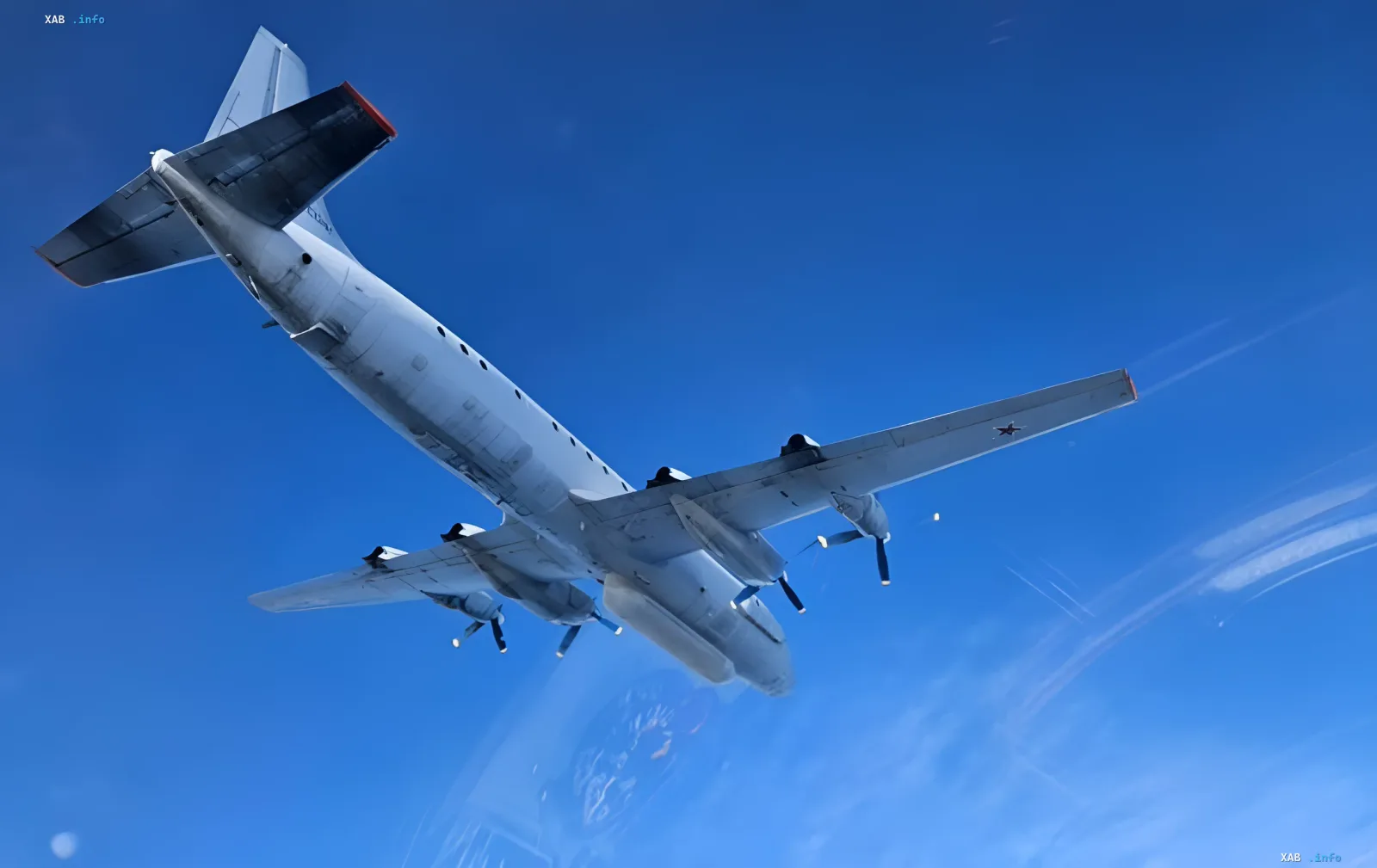
On the day of August 31, 2026, Polish F-16 fighter jets were scrambled to intercept a Russian Il-20 electronic intelligence (ELINT) aircraft flying over the Baltic Sea near the Polish coast. This was announced by Polish Defense Minister Władysław Kosiniak-Kamysz in a statement on the social network X. According to him, the interception took place approximately 30 kilometers north of the town of Łeba — a resort settlement on the Baltic coast in the Pomeranian Voivodeship. 'Russia has once again tested our deterrence and air defense systems,' emphasized the head of Poland's military department, adding that no formal violation of Polish airspace had been recorded.
Timeline of the Incident and Interception Details
According to data published by the Polish news agency PAP and confirmed by Ukrainian media outlets RBC-Ukraine and Focus, the Russian Il-20 was detected by radar surveillance systems at the moment it was flying in close proximity to the Polish coastline. A pair of F-16 fighters based at the Malbork air base was promptly scrambled to intercept it. The ELINT aircraft, according to available information, was flying without filing a flight plan and with its transponder switched off — a standard tactic that allows it to avoid automatic identification, but at the same time makes its flight trajectory 'blind' to civilian air traffic control services. After the escort fighters completed identification and visual control, the Il-20 changed course and left the area adjacent to the Polish coast.
Series of Incidents: Three Interceptions in Two Months
The August 31 incident was already the third recorded episode in the past two months involving Russian military aviation near Polish airspace. On July 12, an Il-20 approached the border of Polish airspace over the Baltic Sea, after which a pair of fighters was scrambled to intercept it. On July 15, two Russian Su-30SM2 fighters approached the area of Polish air defense exercises, which also required interceptors from Malbork to be scrambled. On July 31, the same type of aircraft — an Il-20 — was flying over the Baltic Sea without a flight plan and with its transponder switched off. According to Polish military analysts, such a density of incidents over a short period indicates the systematic nature of Moscow's reconnaissance activity in the Baltic region.
Warsaw's Official Position and the Context of Deterrence
In his statement, Minister Kosiniak-Kamysz emphasized that no formal violation of Poland's sovereign airspace had occurred. At the same time, he did not soften the rhetoric, characterizing the actions of the Russian aircraft as a 'test of deterrence systems.' Such wording in Polish military-political discourse is traditionally used to describe situations in which an adversary deliberately tests the reaction and readiness of defense systems without crossing red lines beyond which escalation may follow. As a NATO member, Warsaw acts within the framework of the alliance's collective alerting and escort mechanism, however, each such incident is recorded in the alliance's protocols and reviewed at the level of military attachés.
Contradictory Data
There is a certain tension between the official statements and the actual circumstances of the flights. On the one hand, the Polish Defense Minister emphasizes that 'no airspace violation occurred,' which legally means the absence of a formal grounds for the use of force or a full-scale diplomatic note of protest. On the other hand, the very fact of the Il-20 flying without a flight plan and with its transponder switched off, 30 kilometers from the coast — in a zone where civilian shipping operates and where NATO facilities are based — creates a potential security threat and forces fighters to be scrambled, consuming resources and time. Thus, formally the incident is not a violation, but in fact it constitutes a regular 'testing' of the readiness of Polish and NATO air defense. The Russian side, as in previous cases, had not issued any public comments regarding the August 31 interception at the time of publication, which in itself remains an inconsistency in the information field: one side records and comments, the other — stays silent.
Strategic Context: The Baltic as a Zone of Constant Pressure
In recent years, the Baltic Sea has become one of the most active directions for Russian reconnaissance aviation. The Il-20 — a modification of the passenger Il-76 converted into an ELINT platform — is capable of collecting data on operating radars, communication systems, and air defense at a significant distance. According to Western analysts, the regular sorties of this aircraft into the Baltic sector are linked to the monitoring of NATO infrastructure being deployed as part of the reinforcement of the alliance's eastern flank. For Poland, whose Baltic coastline is less than 400 kilometers long, each such flight within 30–50 km of the shore means that the reconnaissance asset is within the line of sight and potential range of surface-to-air missile systems, which makes the situation potentially dangerous in the event of any malfunction or misunderstanding.