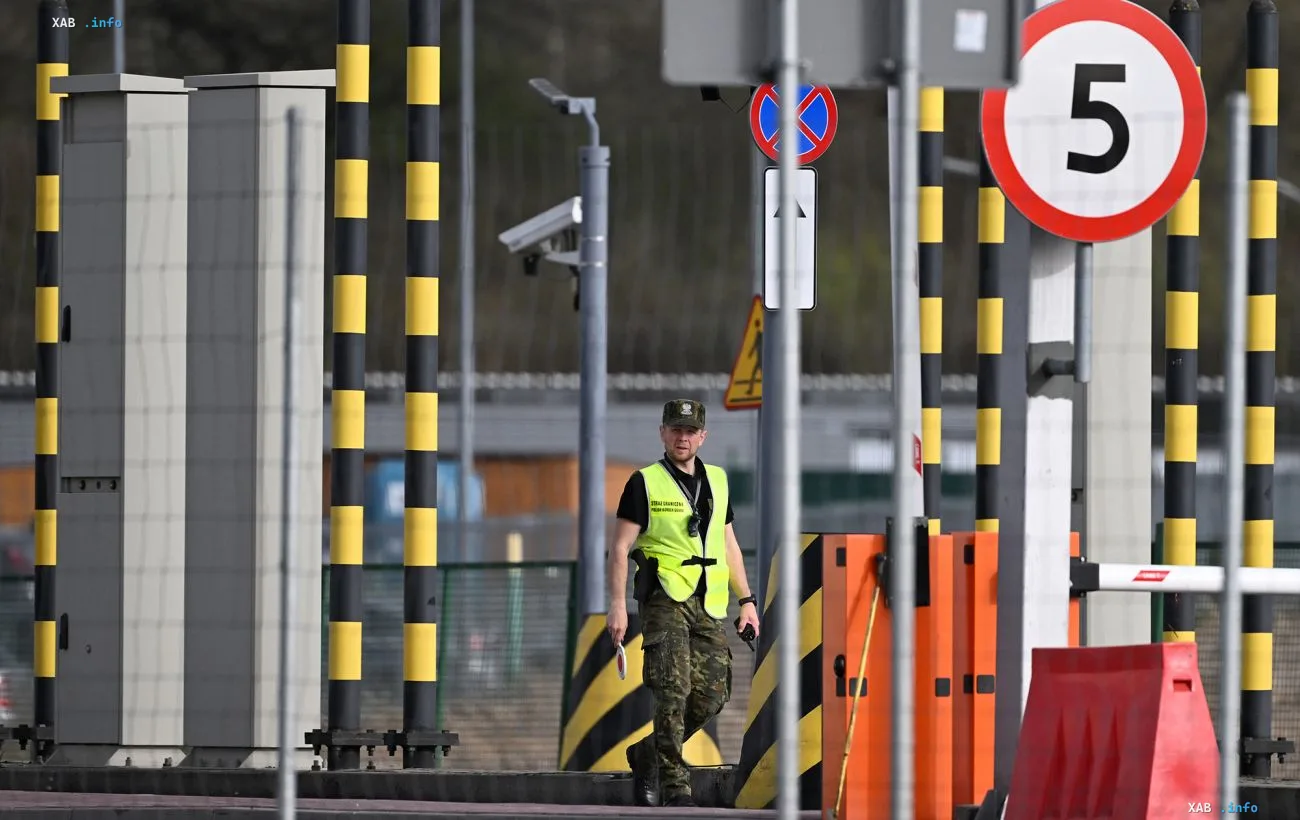
Poland has placed six border crossings on the state border with Ukraine on heightened alert. Polish military posts are being deployed at these facilities to strengthen security. This was announced by Poland's Interior Minister Marcin Kierwiński and Defence Minister Władysław Kosiniak-Kamysz, RBC-Ukraine reports, citing Ukrinform. According to Kierwiński, switching the crossings to the new regime and preparing the servicemen took less than 24 hours after the relevant decision was made.
Which crossings have been placed under a special regime
The special regime has been introduced in the Lublin and Subcarpathian voivodeships — in western and south-eastern Poland, directly adjacent to the Ukrainian border. It concerns six crossings: Dorohusk, Zosin, Budomer, Korczowa, Medyka and Krosienko. A significant part of the cross-border passenger and freight flow between the two countries passes through these facilities, making them both vulnerable and strategically important.
How security and the shelter system are organised
At the facilities in question, the number of people and vehicles that may be on the crossing's territory at the same time has been limited. According to Polish authorities, this measure is necessary so that, in the event of a threat, an evacuation can be carried out promptly. Shelter locations have already been designated at each crossing, and additional protective structures will be built on an urgent basis if needed. The military have set up special posts in accordance with the instructions of the Border Guard Service.
Assessments by Polish authorities
Interior Minister Marcin Kierwiński emphasised that the border crossings are important transport and logistics routes for all of Europe. He noted that, despite recent incidents involving Russian drones near the Polish border, the area "remains safe for the time being". At the same time, he described the deployment of the military as "yet another example of very good coordination between the services". It is worth adding that the Polish government, two years ago, officially classified the border crossings with Ukraine as critical infrastructure facilities, which allows law-enforcement and intelligence bodies to respond more quickly to threats and emergency events.
Contradictory data
The official statements contain an internal tension between two assessments. On the one hand, Minister Kierwiński publicly states that the border-crossing area "remains safe for the time being" and underscores the effectiveness of inter-agency coordination. On the other hand, the very introduction of a heightened-alert regime, the restriction on the simultaneous presence of people and vehicles, and the urgent construction of shelters and observation posts indicate that the authorities perceive the risk as real and current, rather than hypothetical. Thus, the public rhetoric about "safety" coexists with practical measures designed for a scenario of direct threat, and readers should take both elements of the official position into account.
Context: the threat from Russia and the expansion of the alert system
According to reports from Polish intelligence services, the Polish National Security Bureau stated that Russian intelligence services have intensified their actions against European infrastructure that supports Ukraine, with railways, bridges and borders cited among the potential targets. Against this backdrop, Poland has decided to expand the network of emergency alert sirens in the eastern regions of the country. The reason, as stated, is the growing risk associated with Russian shelling near the border with Ukraine. The combination of these measures — from military posts at the checkpoints to the alert system — forms a new protective perimeter for Poland's eastern borderlands.