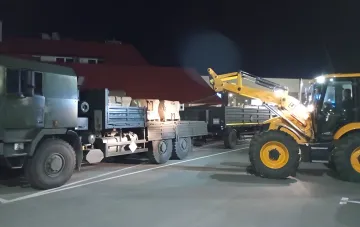
On the night of September 17, 2026, a Russian strike drone landed on Ukrainian territory in Volyn Oblast, just a few kilometers from the state border with Poland. According to Polish Prime Minister Donald Tusk, the incident ended in a powerful explosion near the Dorohusk border crossing, after which Polish Air Force fighter jets were scrambled. This was reported by RBC-Ukraine, citing a post by Polish radio station RMF FM. The event took place against the backdrop of ongoing Russian attacks on western regions of Ukraine and became one of the closest incidents to the Polish border in recent times.
Donald Tusk's statement
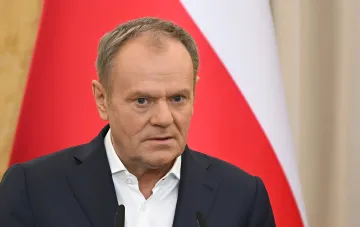
In his address, Polish Prime Minister Donald Tusk said he had received information that the Russian attack on western Ukraine had ended. According to him, the strike occurred "very close to the Polish border, near Dorohusk," and a gas station was likely hit again, after which a "very powerful explosion" was heard. Tusk emphasized that Polish aircraft had been scrambled and called September 17 an "exceptional day" in terms of security. The statement came in the context of a series of incidents near the border, which, as previously reported, had prompted the Polish government to hold special security meetings.
Reaction from Polish military
The Operational Command of the Polish Armed Forces clarified the details: the drone likely landed or was shot down approximately four kilometers from the border, already on Ukrainian territory. According to the Polish side, it was a jet-powered drone that was rapidly approaching the border, which is why fighter jets were scrambled. Command spokesperson Jacek Goryszewski noted that the military is continuing to verify the data from its systems, and that preliminary information suggests the drone may have either hit its target or been destroyed on the Ukrainian side. Thus, official military sources have not yet confirmed that the drone entered Polish jurisdiction.
Contradictory data
There is a difference in emphasis and wording between the prime minister's public statement and the military command's clarifications. Tusk primarily spoke of a powerful explosion and the assumption that the target of the attack may have been a gas station near Dorohusk, which creates the impression of an incident directly affecting the border zone. The Operational Command, by contrast, stresses that the drone landed or was shot down on Ukrainian territory, four kilometers from the border, and that information about a target being hit is preliminary. In other words, one version focuses on the explosion near a potential target (the gas station), while the other focuses on the drone being destroyed or falling on the Ukrainian side of the border. Until the air defense and intelligence systems finish verifying the data, both versions remain under discussion, and the final nature of the incident has not been officially established.
Context: strengthened border security
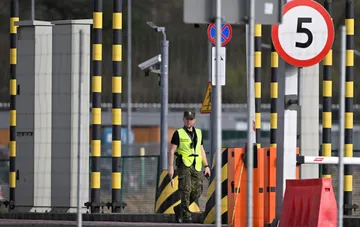
The incident occurred against the backdrop of systematic reinforcement of the Polish-Ukrainian border. Earlier, Poland began equipping more than 100 kilometers of its border with Ukraine with an electronic security system that provides territorial monitoring and motion sensors, complementing the already installed physical barriers. In parallel, Warsaw tightened the regime on other fronts: in August 2026, Tusk announced the "closure" of Poland's borders with Russia and Belarus. The combination of these measures indicates that Polish authorities regard cross-border attacks as a long-term risk factor and are building a multi-layered early-warning system, including the automatic scrambling of fighter jets when fast-moving targets approach.
As of September 18, 2026, Polish military continues to analyze surveillance system data, and final conclusions on the nature of the incident—whether the drone was shot down or crashed, and whether any damage occurred—are expected after the verification is complete. For Kyiv and Warsaw, such an incident once again raises the question of the risks of drones "accidentally" crossing the border and the need for clear response protocols within NATO.