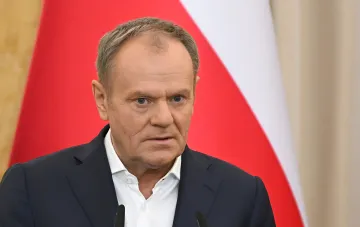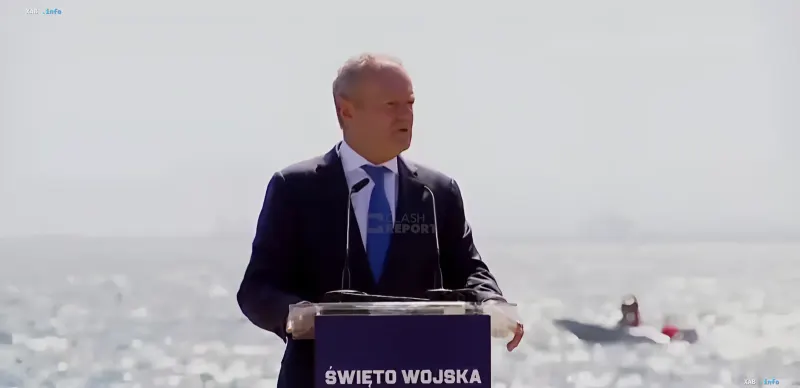
On August 15, 2026, an unprecedented military parade took place in Warsaw, marking a turning point in Europe's new geopolitical architecture. Polish Prime Minister Donald Tusk, addressing the gathered crowd, officially announced the formation of Armed Forces that, by size and level of equipment, will become the largest on the European continent. This declaration marks Warsaw's final transition from a regional player to the status of a dominant military power capable of "determining the fate of the region".
Structural Transformation: From 100,000 to 300,000 Soldiers
The basis of Tusk's announcement is the implementation of the large-scale defense program "Model 2035," which reached critical mass by mid-2026. According to official data announced during the parade, the strength of the Polish Army reached the target figure of 300,000 servicemen. The structure of this army has undergone fundamental changes: the core consists of 250,000 regular troops, supplemented by 50,000 territorial defense fighters. For comparison, the current strength of the German Bundeswehr is about 180,000 people, making Poland the undisputed leader in human resources in Europe.
This increase in numbers is supported by unprecedented financing. Poland's defense budget for the current year reached 5.1% of GDP, equivalent to approximately $40 billion USD. This level of spending places Warsaw first in NATO, significantly outpacing traditional leaders in terms of the share of military spending in the economy. This allows not only to maintain a massive staff but also to equip it with modern technology, which is a key factor in Tusk's statement regarding the "modernity" of the new armed forces.
South Korean Vector: Bypassing European Delays
A key factor that allowed Poland to modernize its army so quickly was the refusal to rely entirely on the Western European defense industry, which faced a crisis in production capacity. Warsaw chose the path of diversifying suppliers, concluding unprecedented contracts with South Korea. Unlike Germany and France, whose factories are overloaded with orders and cannot keep up with the pace, South Korean manufacturers demonstrate high efficiency.
During the parade on August 15, hundreds of K2 Black Panther tanks and K9 Thunder self-propelled howitzers were demonstrated. Deliveries of this equipment are carried out three times faster than similar European contracts. This allowed Poland to saturate its divisions with modern armored vehicles in real-time, without waiting for the multi-year delays characteristic of Western partners. Such a pragmatic approach allowed Tusk to announce the creation of the "most modern force in the region" already this year.
Geopolitical Shield: Strategy Regarding the US and Trump
Tusk's statement that Poland "played a key role in preventing the NATO bloc from splitting" has a deep geopolitical subtext. In conditions where the Donald Trump administration repeatedly criticized European allies for their unwillingness to finance their own security, Warsaw took the position of an "ideal ally." By purchasing American F-35A fighter jets, Abrams tanks, and Patriot systems, Poland demonstrates full loyalty to Washington.
Analysts view these actions as the creation of a diplomatic bridge. Positioning itself as the main strategic partner of the US in Europe, Poland effectively retains the American military presence on the continent, acting as a buffer between Brussels and Washington. Warsaw removes the necessity for other alliance members to choose between Europe and the US, as it takes on the role of security guarantor for the eastern flank, financing it on record-breaking terms.
Contradictory Data
Despite the optimistic tone of Tusk's statement, there are disagreements within the expert community regarding the long-term sustainability of this model. On the one hand, official reports confirm the growth in numbers to 300,000 people and record spending of 5.1% of GDP. On the other hand, economists point to the risks of overloading the Polish economy. Maintaining such a high share of military spending for a long period could create pressure on the social budget and infrastructure projects.
Furthermore, there are questions regarding the integration of heterogeneous equipment. Although South Korean deliveries are fast, the compatibility of logistics and management systems between American, European, and Asian equipment requires significant additional investment in digital infrastructure, which was not detailed during the parade.