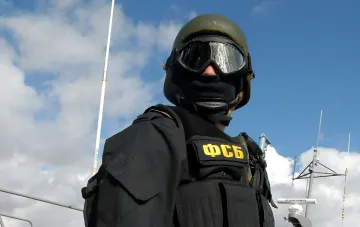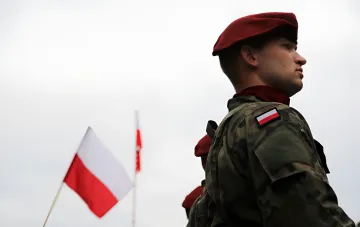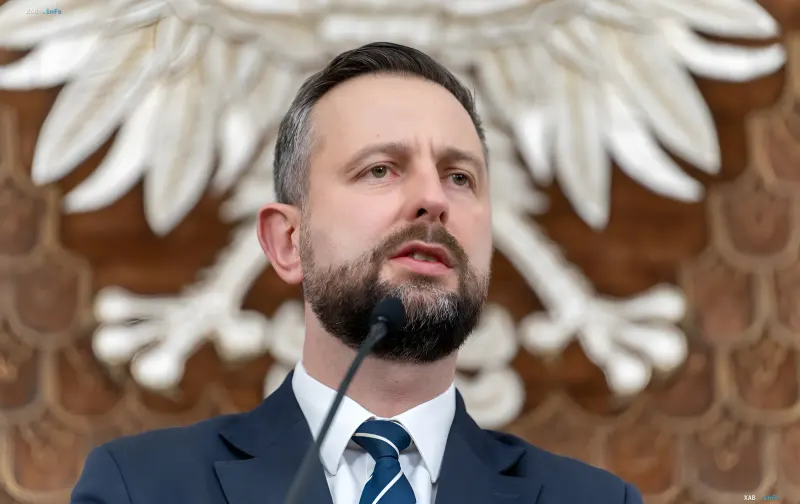
Polish Defense Minister Wladyslaw Kosiniak-Kamysz stated that Polish intelligence agencies were aware of a planned Russian sabotage operation near the border with the Kaliningrad Oblast in advance and took appropriate measures. According to RBC-Ukraine, citing RMF24, the head of the defense department spoke about this against the backdrop of discussions regarding security threats in the region. According to him, Warsaw possessed all necessary information and uncovered the Kremlin's plans well in advance.
"Polish services knew and responded"
"Polish special services knew about the planned Russian sabotage operation near the border with the Kaliningrad Oblast and took appropriate measures," Kosiniak-Kamysz emphasized. Thus, the official representative of the Polish government effectively confirmed that it involved the preparation of a provocation, which Warsaw views as an element of pressure on countries supporting Kyiv. The minister did not disclose details of the operation, limiting himself to the statement that the information was received in advance and was responded to.
Operation "Horizon" and infrastructure protection
Against the backdrop of the declared threats, the minister announced an initiative to continue special security measures in the country. In particular, it concerns expanding efforts to protect critical infrastructure and the transport network. "Today, a request will also be submitted to the Prime Minister, and subsequently to the President, regarding the continuation of Operation 'Horizon' and the participation of armed forces in ensuring, among other things, the security of railway infrastructure," the head of the defense department stated. This means that military structures will be involved not only at the external borders but also in guarding internal transport arteries.
Context: the "Gleiwitz provocation" scenario
Previously, the publication Rzeczpospolita reported that Russian special services planned a mass-casualty sabotage operation in Poland near the Kaliningrad border between October and November. According to the publication, the Russians intended to blame Ukraine for this sabotage, with the goal of ending aid to Kyiv. A source for the publication noted that the scenario was supposed to resemble the so-called Gleiwitz incident—a German false flag operation conducted on August 31, 1939. The statement by the Polish Defense Minister effectively publicly confirms the existence of such plans according to the assessment of Polish authorities.
Growth of Russian sabotage activity in Europe
Kosiniak-Kamysz also expressed his belief that Russia is significantly increasing activities aimed at undermining stability and security in European countries. As examples, he listed airspace violations, attempts to blow up trains, arson, sabotage against arms factories, and activity in cyberspace. According to the Polish defense ministry, these actions form a consistent trend that requires Warsaw to implement long-term security enhancements rather than one-off reactions.
Thus, the Polish Defense Minister's statement highlights two key points: first, according to Warsaw, a specific sabotage operation aimed at shifting responsibility onto Ukraine was uncovered; second, Poland is moving toward systematic strengthening of critical infrastructure protection involving the armed forces. The Russian side did not voice its position on these statements in the provided materials.