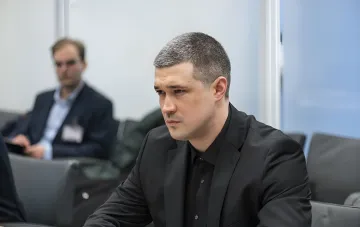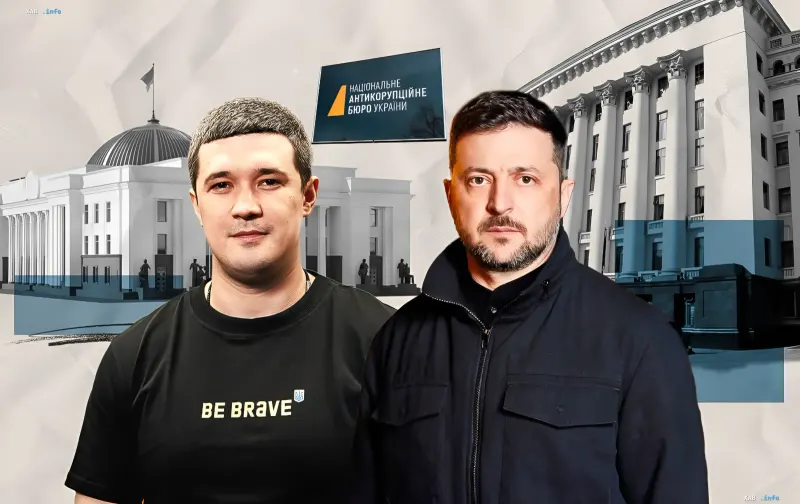
On August 18, 2026, Ukraine's political landscape faced a serious test. Mykhailo Fedorov, the former Minister of Defense, who enjoys a high trust rating, made a resonant statement that most experts and citizens perceived as a direct call for early elections. His thesis that "Putin should not decide when Ukrainians can choose their government" became a trigger for a large-scale discussion. However, despite the volume of the statement, the expected political explosion did not occur: neither the authorities, nor the opposition, nor activists supported the idea of immediately launching the electoral process.
Reaction of the authorities: from skepticism to confidence in failure
In the circle of President Zelenskyy, Fedorov's initiative was assessed extremely negatively. The ruling team predominantly holds the opinion that the former minister committed "political suicide" and staged a "false start." According to sources of the publication, the chances of implementing this idea are assessed as "zero, even negative." The main argument against holding elections remains the current military situation: daily air alarms in Kyiv and shelling of other cities make the organization of voting technically and morally impossible. The authorities are convinced that Ukrainians are not currently concerned with electoral processes, and Fedorov only worsened his position by taking such a sharp step.
Opposition and society: lack of a united front
Expectations that Fedorov's call would unite the disparate forces of the opposition were not met. Leaders of "European Solidarity" and supporters of Valerii Zaluzhnyi reacted to the statement without enthusiasm. Moreover, some opposition-minded politicians and anti-corruption activists subjected the former minister to harsh criticism. Their argumentation is based on the fact that Fedorov saw problems in the system only after he ceased to be part of it, ignoring what suited him for the previous seven years. Even the morning rally under the walls of the Verkhovna Rada did not change the agenda: participants demanded Fedorov's return to the post of minister, not the holding of elections.
Digital alternative and voting for Khmara
Despite the failure to mobilize the masses, Fedorov's statement had a specific political result in parliament. When voting for his successor, Yevhen Khmara, 312 votes "for" were recorded. Experts note that such unanimity of deputies was partially caused by the reaction to Fedorov's initiative. Many analysts believe that the former minister had a "Plan B": presumably, he counted on holding elections through the digital platform "Diia," which would have allowed bypassing the logistical difficulties of wartime. However, for now, this hypothesis remains only an assumption, not publicly confirmed.
Contradictory data
There is a significant discrepancy in the interpretation of Fedorov's statement itself. On the one hand, some experts and politicians insist that he did not make a direct call for elections, but only highlighted the problem of sovereignty. On the other hand, the absolute majority of the public and the media interpreted his words precisely as a demand to launch the electoral process immediately. In addition, polarization of opinions is observed in social networks: some users see in this an honest attempt at democratization, while others, even those who are not supporters of Zelenskyy, call it an attempt to convert protest sentiments into personal political capital.
Prospects for the development of the situation
At the moment, the political "bomb" laid by Fedorov has not exploded, but it has not been completely disarmed either. The street has not yet said its last word, and the potential for mobilization remains. However, the objective difficulties of holding elections in a warring country, confirmed even by representatives of the diplomatic corps, remain the main obstacle. As long as the political class is not ready to support radical changes, and society is divided, Fedorov's initiative risks remaining a loud but barren gesture that will only exacerbate his rift with the current authorities.