In a small warehouse in the United Arab Emirates, workers spend up to 12 hours a day assembling, from 3D-printed parts, interceptors capable of shooting down Iranian drones flying at speeds of up to 320 km/h. According to American media, this enterprise, launched about a month ago, belongs to Powerus, a Florida-based startup out of West Palm Beach. For the company, this is its first entry into the Middle East market and part of a broader plan to become a global supplier of affordable counter-UAS systems.
A Cheap Interceptor Against Iranian Drones
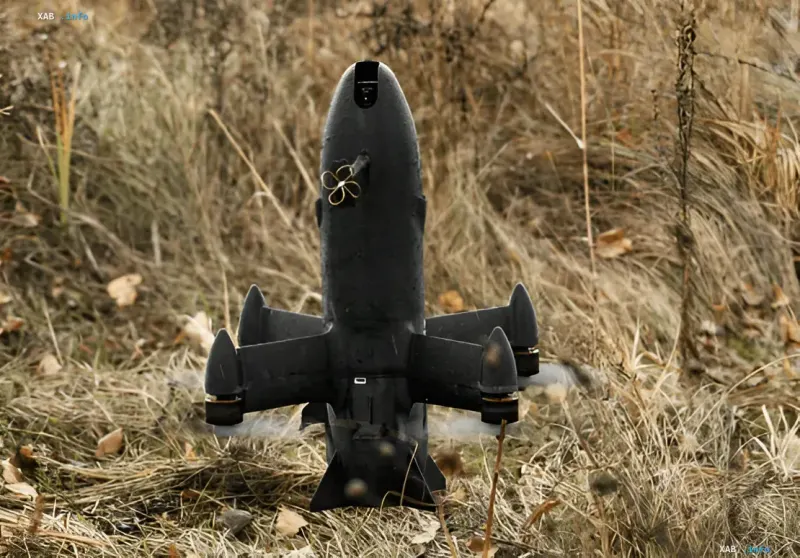
Powerus's flagship model, the Guardian, costs around 5,000 dollars and is based on a Ukrainian development that has proven effective against the Russian Shahed drone. The device is designed as a relatively simple mechanism, its parts assembled "like a Lego set," using off-the-shelf microchips and GPS positioning modules. That said, the Guardian cannot intercept ballistic missiles, unlike Lockheed Martin's PAC-3 system, although the Shahed is one of Iran's most widely used strike weapons.
Production in the UAE and Global Plans
According to a company representative, Powerus's factories are currently producing around 3,000 interceptors per month, and by mid-2027 the company intends to scale capacity to 15,000 units per month worldwide. The specific plant in the UAE, where Powerus provides training, components, and software for a contract manufacturer, is currently assembling about 30 devices a day and plans to reach 100. Last week, the company announced the signing of a $22 million commercial contract to protect oil and gas infrastructure in the Middle East, as well as a partnership with a defense enterprise near Mumbai to produce interceptors in India. Powerus does not disclose the names of its clients or contract manufacturers in the UAE.
Conflict Context and Defense Industry Restructuring
The conflict with Iran has prompted the UAE and a number of other countries to accelerate the development of their own weapons production. Since the start of hostilities in February, UAE civilian infrastructure has become the main target: Iran launched more than 500 ballistic missiles and more than 2,200 drones at the emirates' districts. As a result, at least 15 people were killed, hundreds were injured, an oil refinery was shut down, and two Amazon data centers were destroyed. Against this backdrop, even major corporations are changing their approach: in July, Lockheed Martin announced plans to produce a cheaper interceptor in Europe with partners — around 2 million dollars, twice as cheap as the PAC-3 — but testing is not expected to begin before 2028. Raytheon, for its part, announced plans to produce Coyote interceptor missiles in the UAE, costing approximately 126,500 dollars per unit according to the Center for a New American Security (CNAS), while California startup Neros is developing a Bandit interceptor with a base version of around 5,000 dollars.
Contradictory Data
The main narrative in American media presents the Guardian technology as a successfully transferred Ukrainian solution. However, the Ukrainian outlet UNIAN reports that the UAE has run into problems integrating Ukrainian interceptor drones, which calls into question the flawless nature and speed of adapting the Ukrainian development on Middle Eastern sites. Moreover, a significant portion of the facts relies on American media reports, and information about a recent "unusual merger" of Powerus with a public company is cut off in the original text and not confirmed by secondary sources, so the details of that deal require further verification.