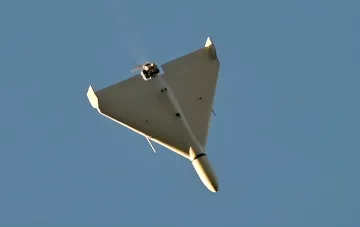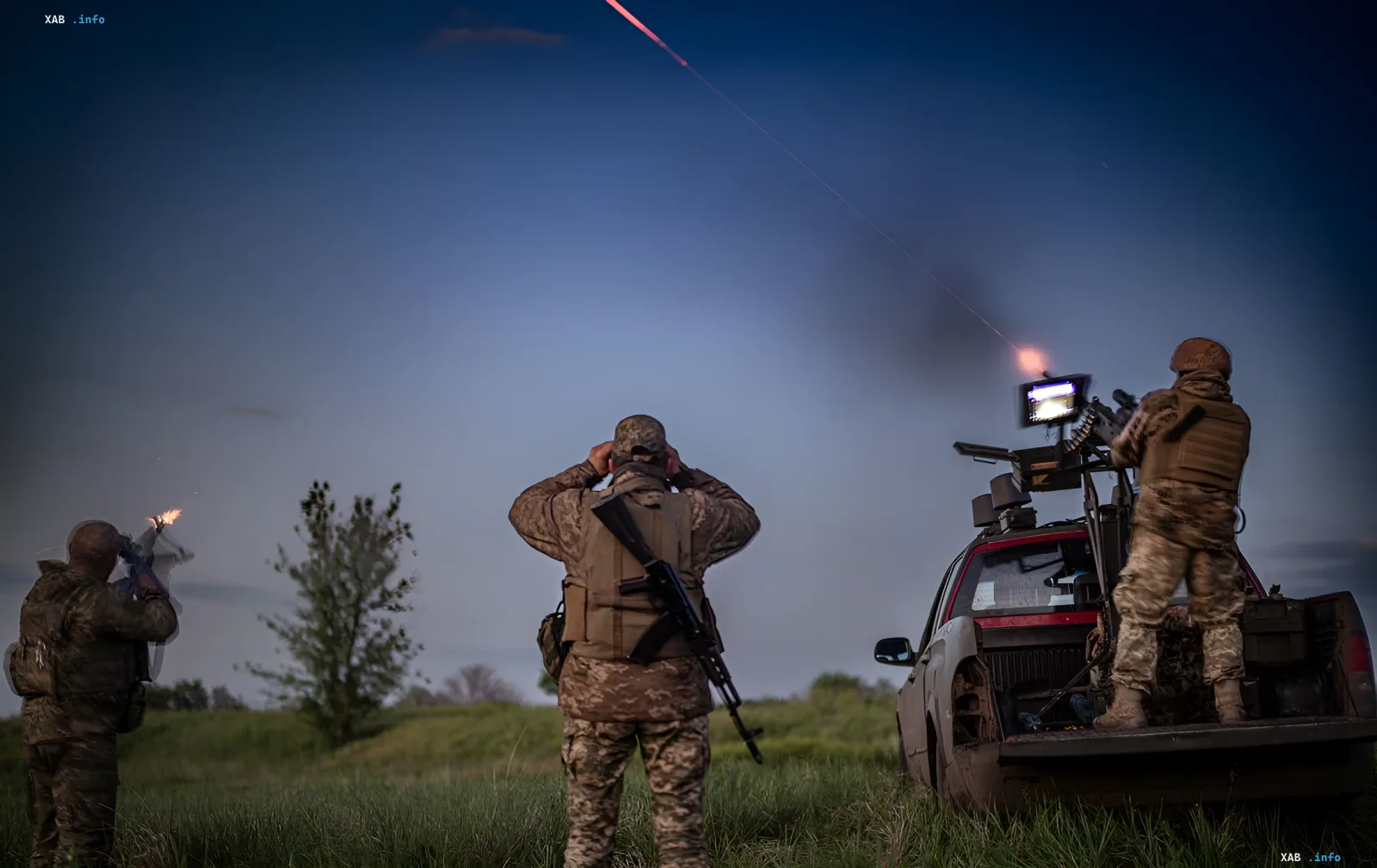
Against the backdrop of the ongoing drone threat, a new niche is emerging in Ukraine's security market — small-scale private air defense. Kirill Lyukov, head of the unmanned technologies department at the Serhiy Prytula Foundation, told RBK-Ukraine in an interview that an increasing number of private companies are expressing interest in protecting their facilities from drone attacks, yet the key barrier remains legislative regulation. In his words, the niche has a full right to exist, provided that the relevant norms are adequately codified, primarily those governing the handling of explosives needed to counter drones.
Legislative Vacuum and Conditions for Legalization
Lyukov emphasized that, given the presence of companies willing to finance such systems, private air defense becomes an economically viable direction. The expert also noted that civilians can be trained to operate interception systems — this refers to corporate security services or engaged private entities. The only issue, in his formulation, is how to legally normalize this process. If the legal framework is established, this approach, in the expert's view, makes direct practical sense.
A Global Trend, Not a Ukrainian Specific
Importantly, Lyukov stresses that the emergence of the drone threat is already a global trend in the security sector, not a purely Ukrainian specific. Previously, security services providing protection for mass events such as football matches offered a limited set of functions under contract. Now, according to the expert, they must account for the scenario in which a small drone could fly into the stadium's airspace and explode. This fundamentally changes the architecture of tasks for private security structures, which are now obliged to protect not only the perimeter on the ground but also the airspace above the protected facilities.
Experimental Project: More Than 50 Companies Already Involved
The legalization of private air defense in Ukraine is developing gradually throughout 2026. As previously reported, more than 50 Ukrainian companies have already joined the experimental private air defense project. Groups of several enterprises are carrying out combat tasks under the command of the Ukrainian Air Force. Thus, in practice, private entities are already participating in the air defense system, although their legal status and authorities have not yet been enshrined in a full legislative act.
Contradictory Data
No direct contradictions in figures or dates were identified in the provided sources. However, there is a semantic gap between the factual situation and the regulatory framework: on the one hand, more than 50 companies are already carrying out combat tasks within the experimental project under the command of the Ukrainian Air Force, meaning that private air defense is functioning de facto. On the other hand, the expert explicitly states that legislative regulation, including in the areas of handling explosives and training civilians, does not yet exist. This means that the current activity of the companies is being carried out within a pilot mechanism, rather than on the basis of a permanent law, which creates legal uncertainty for market participants.