In the context of a full-scale war, the security of an industrial enterprise is no longer solely a matter of corporate management. Every destroyed production site means lost jobs, tax revenue, disrupted logistics chains, and an additional burden on the state budget. This is why involving the private sector in air defense was a logical step: businesses have the resources, interest, and readiness to invest in protecting their own assets. However, as noted in an exclusive column for RBC-Ukraine by Juscutum litigation lawyer Kseniia Mezhova, this move raises an uncomfortable question for the state: is it fair to tax expenses that are essentially aimed at fulfilling national defense tasks?
Legal Foundation: The Cabinet of Ministers' Pilot Project
Resolution of the Cabinet of Ministers of Ukraine dated November 19, 2025, No. 1506, "On the Implementation of a Pilot Project to Strengthen Air Defense of Ukraine's Territory by Involving Enterprises Regardless of Ownership to Form Air Defense Groups," introduced a mechanism allowing companies to create mobile protection groups, purchase armaments, and shoot down enemy drones at their own expense. It is important to understand that private air defense does not mean creating independent armed formations. These units operate as part of a common system under the command of the Air Command of the Armed Forces of Ukraine, following state-defined procedures and under military command.
Program Scale: From Applications to Combat Duty
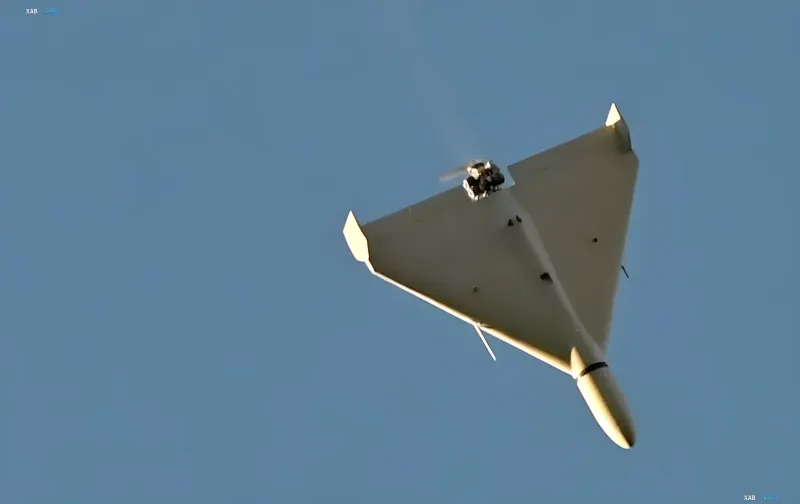
According to data collected by Delo.ua, as of mid-July 2026, 62 enterprises had applied for the experiment, 51 of which received the special status of an "authorized enterprise," yet only groups from four companies had reached combat duty. At the same time, Focus.ua reports that almost 100 Ukrainian enterprises have joined the project, indicating rapidly growing business interest in self-protection. The Ministry of Defense has reported over 50 destroyed "Shahed" attack drones and reconnaissance Zala drones as part of the activities of private air defense groups. Protecting a major industrial facility, depending on the configuration, is estimated at 20 million hryvnias (about $250,000 – $500,000 or more), and potentially the market is in the billions, although its actual turnover and contract values remain classified.
The Tax Paradox: VAT and Tax Credit
For businesses, participating in private air defense involves not only organizational duties but also significant financial costs: equipment for detecting and countering aerial threats, maintenance, staff training, and infrastructure creation. Here arises the paradox pointed out by Kseniia Mezhova. The Tax Code of Ukraine provides for a number of special regimes and exemptions for operations with specific defense-related goods; however, the existence of such provisions does not mean that all equipment purchased for private air defense is automatically exempt from VAT. The specific type of equipment, its classification, delivery terms, the status of transaction participants, and the requirements of specific tax regulations are of key importance. Moreover, it is necessary to distinguish between VAT exemption upon equipment supply and a buyer's right to a tax credit—these are different legal mechanisms with different financial consequences.
Practical Calculation: 10 Million Hryvnias Plus 2 Million
Imagine a company plans to spend 10 million hryvnias to create a protection system. If the corresponding supply is subject to VAT at the standard rate of 20%, the additional tax amount will be 2 million hryvnias. Given the conditions prescribed by law, the company might be entitled to a tax credit, but this does not always eliminate the temporary burden on working capital, and with certain models of equipment usage, additional tax liabilities may arise. In effect, businesses find themselves in a situation where they finance a socially important function and then are forced to separately prove to tax authorities the legitimacy of accounting for these operations. According to Mezhova, a clearly understandable mechanism for applying tax incentives must be provided for official participants of the private air defense system so that uncertainty does not deter potential investors in their own security.
First Licenses and the Post-War Market
"General Chereshnya" was the first among Ukrainian defense-tech companies to receive a license to create its own private air defense. Its technical complexes include AIR and Speed interceptor drones, as well as the BULLET anti-Shahed platform. All mobile groups work using remote launch technologies, controls, and target-guidance systems. In parallel, the company has launched an Academy that trains pilots for other enterprises under an advanced program. The question raised by Delo.ua also concerns prospects: will this model survive after the war, when the private air defense market might transform from a defense sector into a commercial one? For now, the state's task is to ensure that the tax system genuinely reduces the financial burden on businesses investing in defense, rather than creating additional barriers to fulfilling a national function.