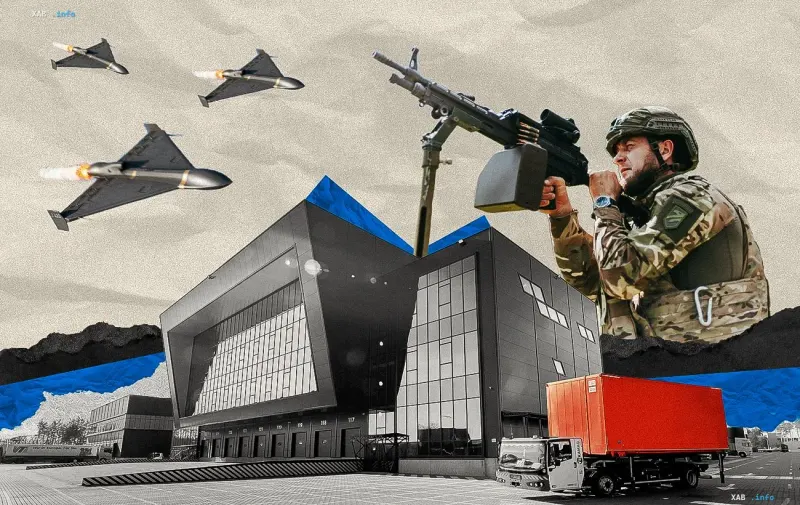
Amidst ongoing attacks on industrial and critical infrastructure, the Ukrainian business sector is turning to active self-defense measures by implementing the concept of private air defense. As of October 20, 2026, companies are increasingly investing in creating layered security systems capable of countering Russian strike drones. At the center of this transformation are developers like the "Wild Hornets" company, whose experience in creating interceptors became the foundation for forming private mobile fire groups integrated into the country's overall defense system.
Integration into the State Air Defense System
A key aspect of private air defense operations is its inseparable link to the Armed Forces of Ukraine. The private sector, lacking access to classified military detection technologies, works exclusively as an auxiliary component of a single defense framework. The military provides the radar field and target coordinates, while companies provide material, technical, and personnel support for their groups. Such interaction is strictly regulated: the location of positions must be coordinated with the command to eliminate risks to aviation and ensure interception effectiveness.
Layered Defense and Interception Technologies
Experts emphasize that effective enterprise protection requires a multi-level approach. The long-range defense echelon, operating at distances of 30–50 kilometers from the facility, is provided by interceptor drones capable of neutralizing the threat upon approach. Automated turrets and electronic warfare (EW) systems are deployed directly near infrastructure nodes, creating a dense near-perimeter defense. Such a combination, while not guaranteeing 100% safety, significantly increases the chances of survival for high-value assets.
The Economics of Security: Costs and Market Realities
Creating a full-fledged private air defense system requires significant capital investment. According to industry reports, the cost of protecting a large industrial site can range from 20 million hryvnias, or from $250,000 to $500,000, depending on the configuration. Despite high prices, these expenses are justified for large holdings: the cost of damage prevented from a single drone strike can exceed tens of millions of dollars. Dozens of companies have shown interest in the program this year, although the process of moving from obtaining special status to actual combat duty remains complex and lengthy.
Significance of Private Air Defense for the Future
The development of private defense groups is a forced but necessary response to the challenges of modern warfare. This mechanism not only protects the real sector of the economy from destruction but also fosters technological development, as data collected during combat use form the basis for improving interceptor drones. In the future, this experience may transform into a sustainable security services market, and the close cooperation between business and state in the defense sector will become an important factor in economic viability during the wartime period.