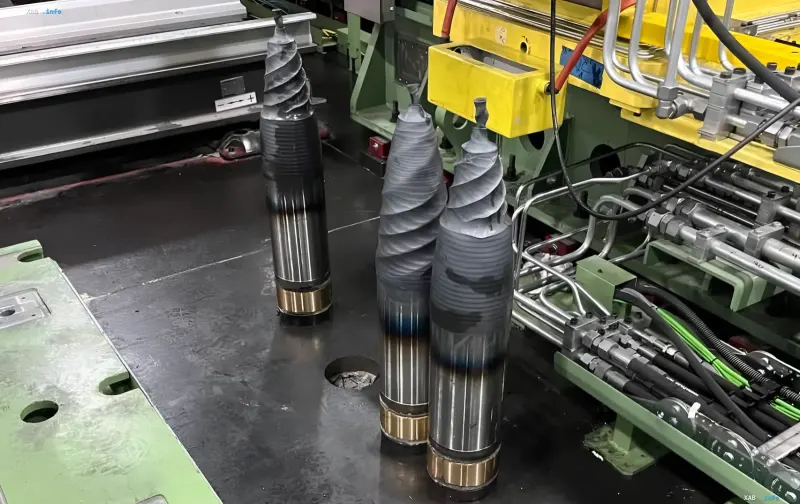
Amid a protracted conflict and a critical need for artillery ammunition, the structure of Ukraine's defense industry has undergone fundamental changes. As of August 2026, the private sector has become the main driving force supplying the front with artillery shells. This is confirmed by data from the National Association of Defense Industry Enterprises of Ukraine (NAUDI), which points to a paradoxical situation: despite billions of dollars in state investments, actual deliveries are being made by private players.
Crisis of State Contracts and the General Dynamics Experience
Vladyslav Belbas, a member of the NAUDI Presidium and General Director of the company "Ukrainian Armored Vehicles," commented on the situation surrounding the failure of the production of 155mm artillery shells financed by the American giant General Dynamics. The expert emphasizes that the presence of a huge budget, the status of a well-known contractor, and political will do not yet guarantee the emergence of real serial production. According to him, the key difficulty lies not in finding funding, but in the ability to make a factory stably and qualitatively release a product on an industrial scale.
The Price of Speed: Western Experience in Restoring Capacity
The full-scale war forced Western countries to restore production capacities in an emergency mode, which had been shrinking for decades. The political requirement was unambiguous: produce more and do it immediately. However, as Belbas notes, speed without due technological verification comes at a price. Attempts to rapidly increase production without proper process debugging create additional risks, which is confirmed by the difficulties Western partners encountered when trying to scale up ammunition production.
The Phenomenon of the Private Sector: Production from Scratch
While state enterprises struggle with bureaucracy and modernization problems, private companies in Ukraine's defense industry have demonstrated unique efficiency. They managed to organize the production of artillery ammunition virtually from scratch, which practically did not exist before the full-scale invasion. This achievement was made under conditions of constant shelling, personnel shortages, and critical power supply problems. Belbas emphasizes that this production was created without direct state support and investment, making the contribution of the private sector even more significant.
Technological Readiness as a Priority
The importance of technological readiness of production becomes obvious when comparing results. Private companies were able to organize lines costing tens of millions of dollars on their own. According to a NAUDI representative, it is necessary to understand and appreciate this contribution, as it is the private sector that today ensures the bulk of deliveries. Success was achieved thanks to management flexibility and the ability to quickly adapt to changing conditions, unlike cumbersome state structures.