RBC-Ukraine's special project, "Our Own Weapons — A Shield of Independence: How Ukraine Rebuilt Its Defense Industry," captured a paradox that today anchors the entire debate over the future of Ukraine's defense-industrial complex (DIC). The state directed 60 billion UAH into the fixed assets of the defense-industrial complex, yet the private sector — the very segment that, by industry estimates, forms the core of the modern industry — received no direct funding from that sum. Formally, the money went to state assets; in practice, it was the private enterprises that found themselves at the forefront of weapons production and deliveries.
The Private DIC: From the Periphery to the Core of the Industry
The scale of this shift is vividly described by Serhiy Pashynskyi, head of the National Association of Ukraine's Defense Industry (NAUDI). In his words, among Ukraine's ten largest defense companies there is not a single state-owned one, and six to seven of them are members of the association. Moreover, according to Pashynskyi's assessment, NAUDI member companies significantly outpace the state DIC sector in the volume of products delivered. "Weapons should not be made by the state alone. That is already a fact," he states, thereby confirming not a hypothetical trend but an already established market reality.
The Portfolio of Private Manufacturers
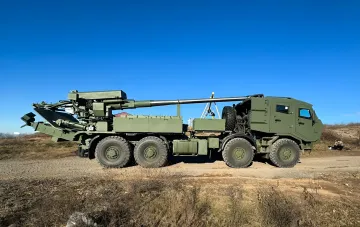
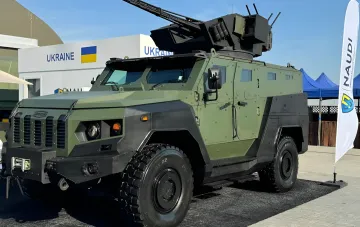
The private defense sector began to take active shape after 2014 and, over the course of a decade, grew into a full-fledged production framework. Among the notable players today are "Ukrainska Bronetekhnika" (Ukrainian Armored Vehicles), Radionix, Ukrspecsystems, and a number of other companies. Their competencies cover a wide range of tasks: from armored vehicles and unmanned systems to electronic warfare means, interceptor drones, artillery ammunition, and mortars. NAUDI has previously noted separately that it was precisely the private sector that became the main force ensuring the supply of artillery ammunition in Ukraine.
Cooperation and International Outreach
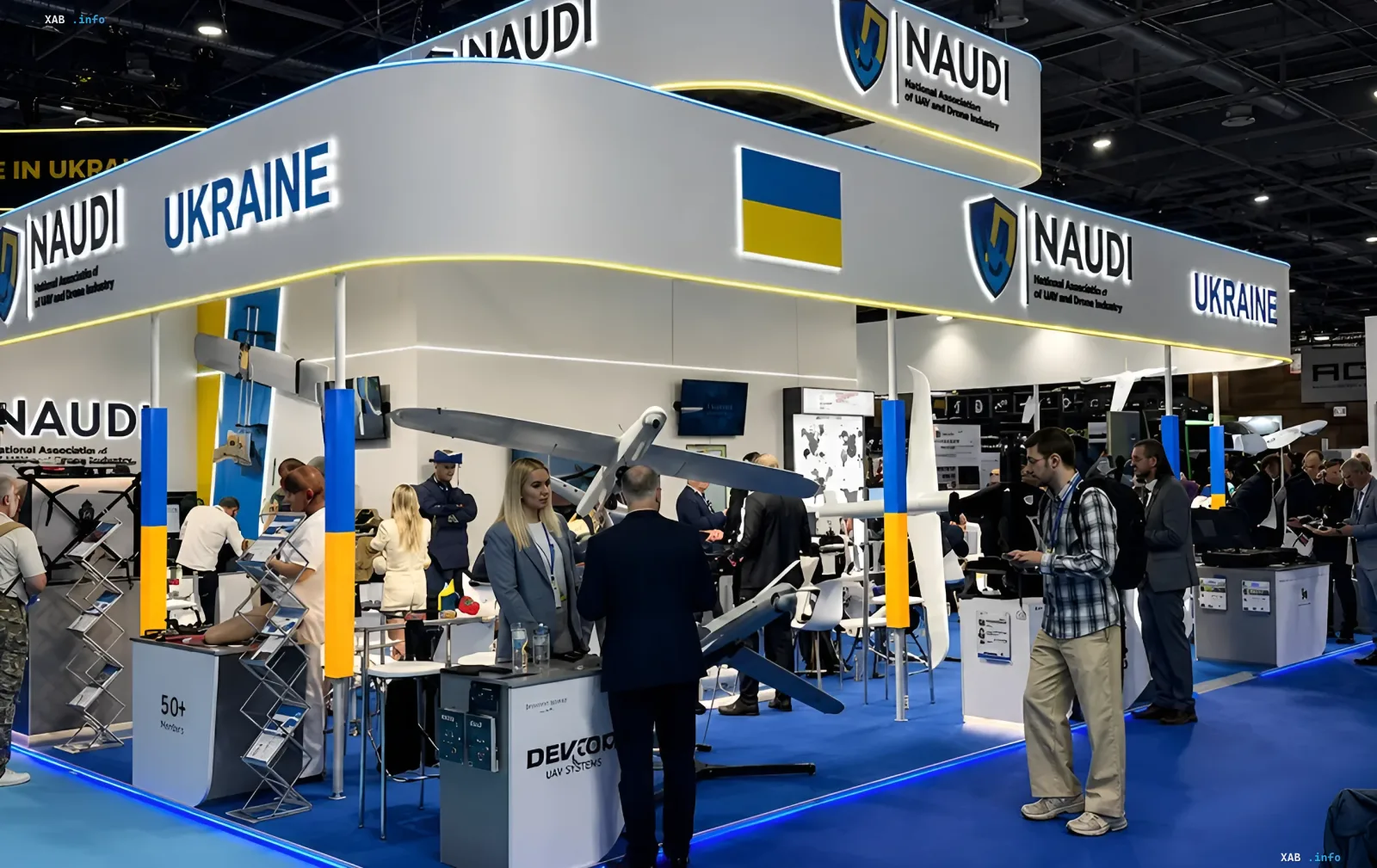
An important tool for the industry's development, NAUDI calls production cooperation: in a number of projects, three to four association companies pool their competencies to create new products or expand production capabilities. A separate direction is international cooperation. The association helps Ukrainian manufacturers present their products at foreign exhibitions, conduct negotiations with foreign governments and companies, and seek partners for joint production and financing. It is precisely this role that the association demonstrates on international stages, where NAUDI booths bearing Ukrainian symbols and displays of unmanned systems serve as a showcase of the domestic DIC for foreign buyers.
Conclusion: A New Architecture for the Defense Industry
The combination of these factors leads to the conclusion drawn by RBC-Ukraine: the private sector, which received no state investment, has become one of the key elements of the new Ukrainian DIC. In effect, the industry has reorganized itself around private manufacturers, while the state's 60 billion UAH remained largely within the perimeter of state ownership. For observers, this means that the future dynamics of weapons deliveries will depend to a large extent on how private companies manage the issues of financing, cooperation, and entry into external markets.