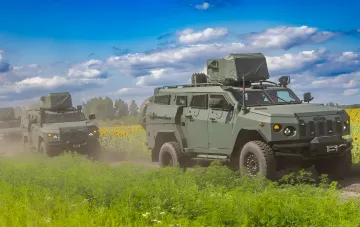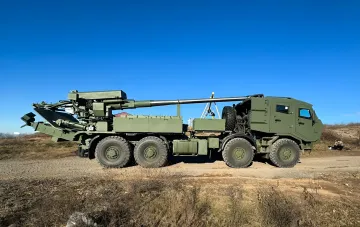
According to the RBC-Ukraine special project "Own Weapons — the Shield of Independence: How Ukraine Rebuilt Its Defense Industry," by the end of 2025 the production capacity of Ukraine's defense-industrial sector reached approximately $35 billion per year. However, available state funding covered no more than a third of this potential, creating a structural gap between what the factories are capable of producing and what they actually receive in orders. By the end of 2026, analysts estimate, the production capacity of Ukraine's defense industry could grow to $60 billion per year, with more than $35 billion of that amount potentially attributable to the production of long-range weapons.
Drones: Eight Million a Year Without Guaranteed Demand
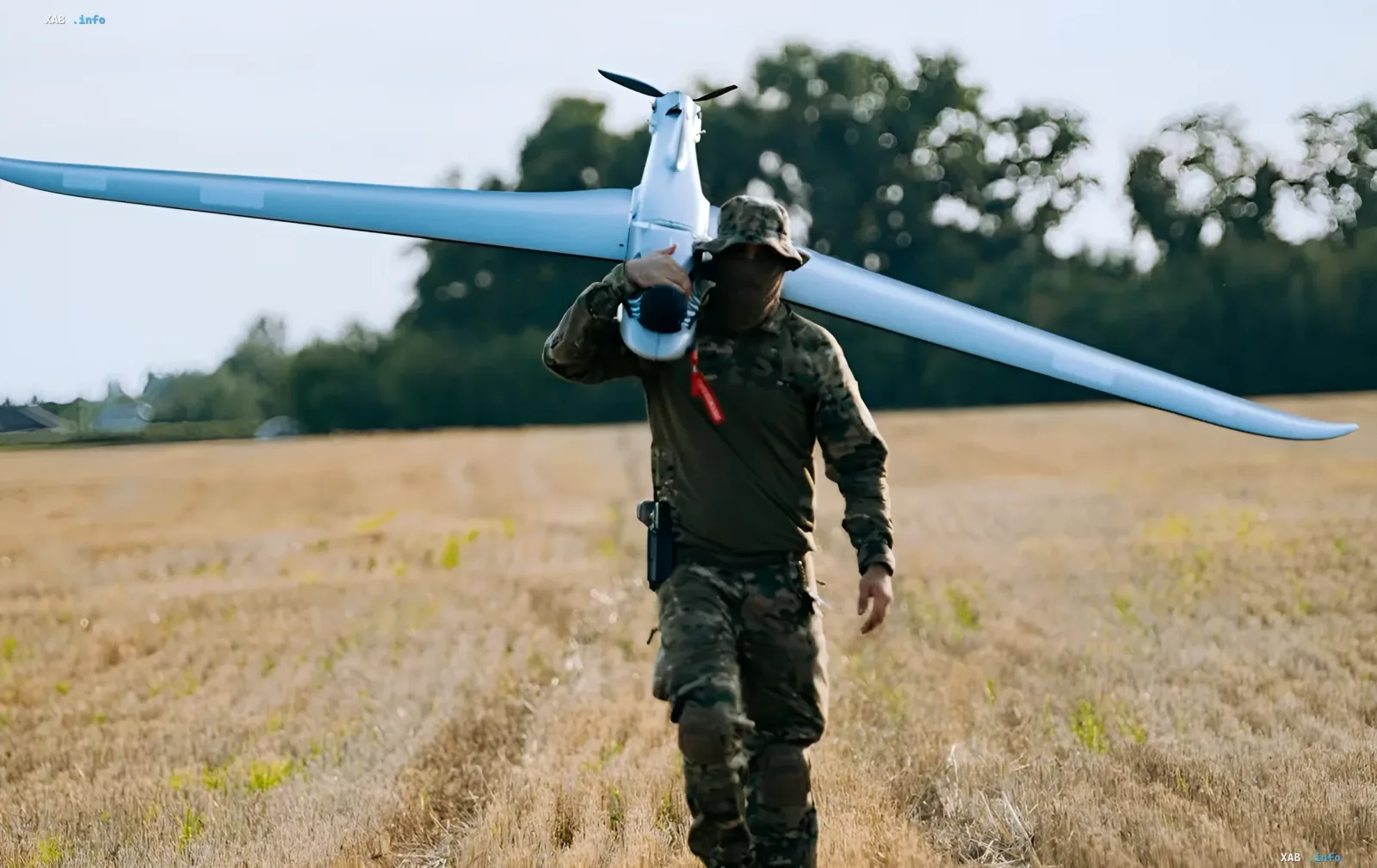
The sharpest gap between production capacity and state orders is observed in the unmanned systems segment. Ukrainian enterprises are capable of producing up to 8 million drones annually, yet they do not have orders for the full volume. President Volodymyr Zelenskyy estimated that with additional funding, drone production could be increased by another 40%, indicating the existence of "reserve" production potential that remains unused due to budgetary funding constraints.
76% of Weapons Are of Domestic Production
At the same time, the problem is not reduced to Ukrainian companies' inability to fulfill state orders. As of the end of 2025, 76% of the weapons that the state purchased centrally were already produced at Ukrainian enterprises. This indicates that the defense industry has passed the stage of import substitution and moved into a phase where the key limiting factor is no longer technological competence, but the volume of funding and the clarity of state order mechanisms.
Risk of Competence Degradation Under Underutilized Capacity
Serhiy Pashynskyi, head of the National Association of Ukrainian Manufacturers of Weapons and Military Equipment (NAUDI), emphasizes that capacity created under wartime conditions requires stable utilization. "The problem is only that the enterprises' capacity is loaded to a small percentage of what is possible, and if it is not loaded, it degrades," he notes. Without a sufficient number of orders, enterprises risk losing both production and technological competencies, which in the long term could lead to an irreversible loss of personnel and know-how accumulated over years of wartime production.
What Is Needed to Develop the Private Defense Industry
According to Pashynskyi, further development of the private defense-industrial complex requires clear rules for forming state orders that would allow enterprises to plan investments and production expansion over a multi-year horizon. The absence of long-term, predictable contracts makes it impossible to attract private capital to the industry, since investors cannot assess the return on investment. Thus, the key task for 2026–2027 is not to expand physical capacity, but to create an institutional environment in which production potential is stably utilized through state orders.