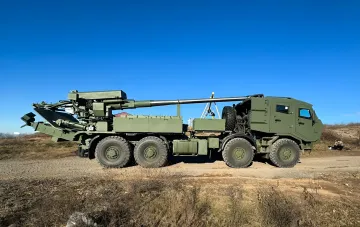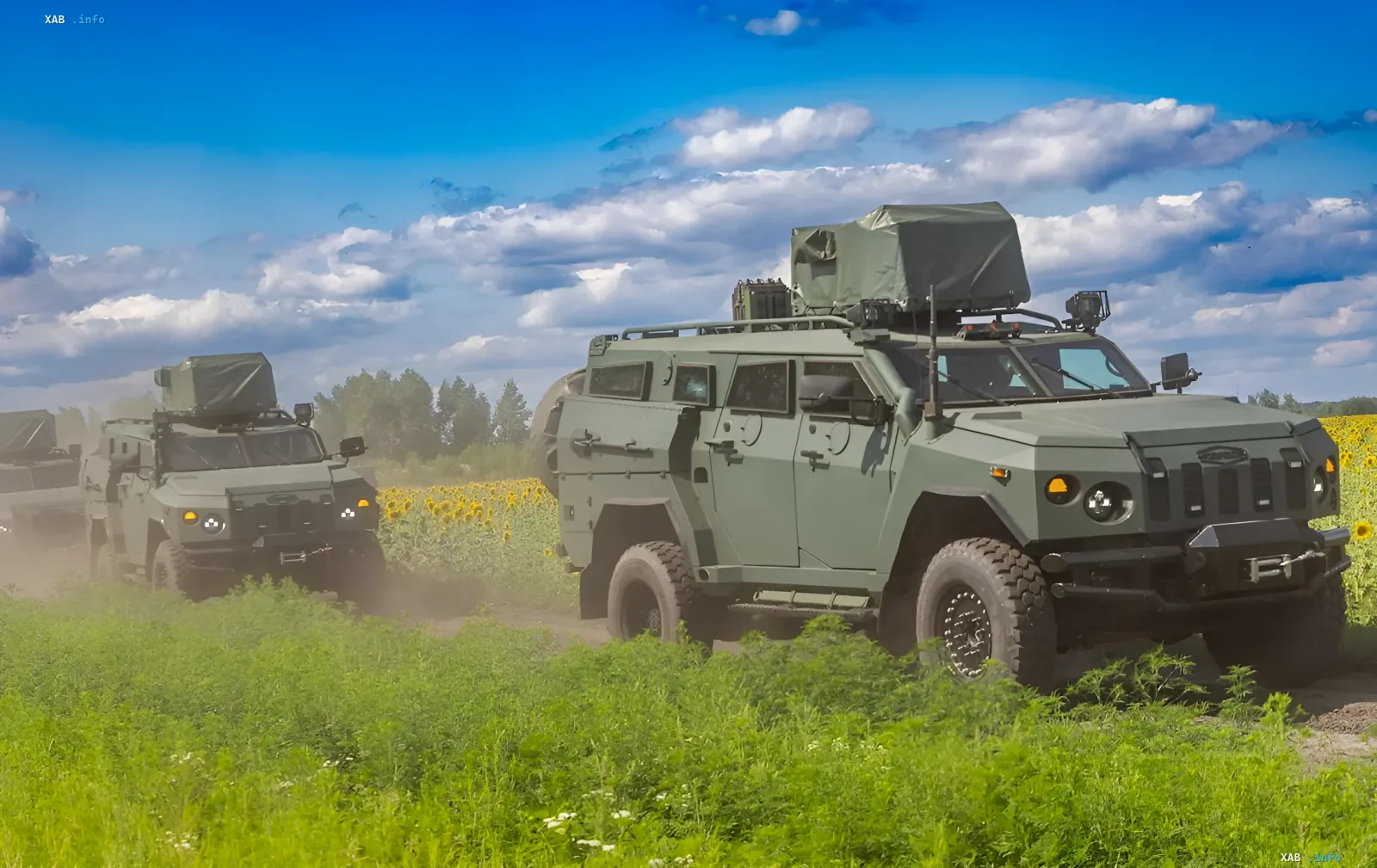
According to industry participants and data from RBC-Ukraine's special project "Own Weapons — the Shield of Independence: How Ukraine Rebuilt Its Defense Industry," Ukraine's defense-industrial complex has created production capacity that significantly exceeds the available funding. As a result, a substantial portion of the sector's potential remains underutilized: factories are capable of producing goods for which the state cannot or has not managed to place orders in time. The issue is not a shortage of production, but a gap between the physical capabilities of industry and the financial capabilities of the state.
The Scale of Production Potential
By the end of 2025, the production capacity of Ukraine's defense industry was estimated at roughly $35 billion per year. At the same time, according to the same review, available funding covered no more than a third of this potential. By the end of 2026, industry capacity is forecast to grow to $60 billion per year, of which more than $35 billion will be devoted to the production of long-range weapons. These figures reflect the industrial base accumulated during the war: new production lines, repurposed facilities, and mastered technologies.
The Funding Gap as the Key Problem
The central problem identified by the special project is not the absence of production capability, but the fact that the state is unable to fully utilize the capacity that has been created. Realizing the stated potential requires funds for raw materials, components, logistics, and wages, as well as for forming a stable state order. Without such funding, some factories operate idle or at minimal load, which reduces the return on resources already invested in rebuilding the industry.
Drones: Record Capacity Without Matching Orders
A particularly noticeable imbalance is observed in the drone segment. Ukrainian enterprises, according to industry estimates, are capable of producing up to 8 million drones per year, yet no state orders exist for this entire volume. This means that even in the fastest-growing segment of the defense industry, the physical ceiling of production is limited not by technology but by the volume of funding and procurement planning. At the same time, the share of domestic production in centralized procurement is already high: 76% of the weapons the state procured centrally at the end of 2025 came from Ukrainian manufacturers.
The Risk of Competence Degradation
Serhiy Pashynskyi, head of the National Association of Ukraine's Defense Industry (NAUDI), emphasizes that underutilization of production creates a risk of losing the competencies built up during the war. "Enterprise capacity is loaded to only a small percentage of what is possible, and if it is not utilized, it will degrade," he notes. According to NAUDI, additional funding and a stable state order would allow Ukrainian manufacturers to make fuller use of the capacity already created and preserve the accumulated technological and human-resource base.
What This Means for the Industry
The review concludes that Ukraine's defense industry has moved from the task of "learning to produce" to the task of "utilizing what is produced." Further growth in potential — up to the mark of $60 billion per year by the end of 2026 — will only make sense if the state can synchronize the volumes of funding and orders with the real capabilities of the factories. Otherwise, part of the industrial base created during the war risks degrading due to underutilization.