For many gardeners, regular pruning of shrubs seems like a mandatory procedure to maintain order and an aesthetic appearance of the plot. However, there is a category of evergreen plants that absolutely cannot tolerate the intervention of pruning shears. Improper pruning can not only ruin the appearance of a favorite tree, leaving "bald" spots on it, but also lead to the death of the entire plant.
Experts from the Styler project have compiled a list of five crops that are better left in their natural form and explained why they need to be handled with extra care.
Pine: No Return to Life
The pine is a tree with unique physiology that is completely incapable of recovering from old wood. The main mistake gardeners make is trying to cut a branch back to a point where there is no longer green needles on it. Unlike many other species, the pine does not have dormant buds on old trunks. If you remove the living part, the branch will simply wither, and it cannot be restored.
The only permitted way to control the size of a pine is to carefully pinch the young green shoots, so-called "candles," by hand at the end of spring. This allows you to slow down growth without injuring the tree.
False Cypress: The Danger Zone of Dead Wood
This popular ornamental shrub attracts gardeners with its dense crown, but hides one very dangerous feature. The green needles of the false cypress grow only on the periphery of the crown. Closer to the trunk, the branches remain dry and brown, forming a so-called dead zone.
If you go deep into this zone during pruning, the plant will never produce new shoots there. An unsightly hole will remain at the cut site forever, which cannot be masked.
Rhododendron: The Price of Beauty
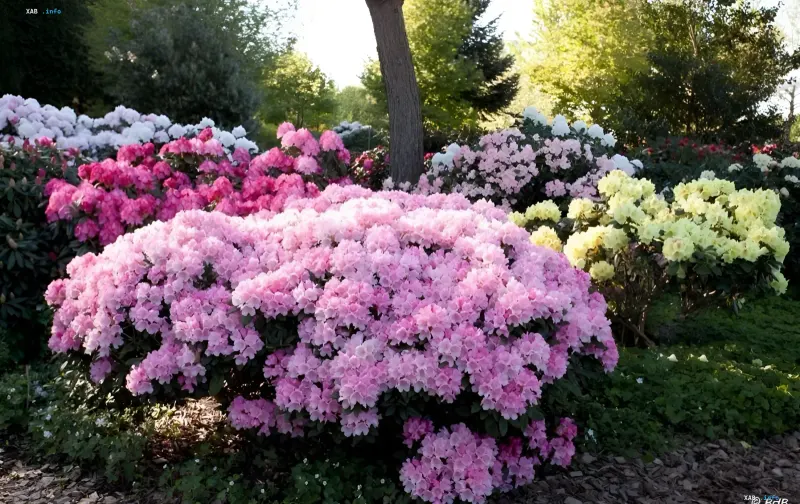
Luxurious rhododendron bushes are valued for their incredible spring flowering and glossy leaves. Many believe that formative pruning will help the bush look better, but in reality, it causes irreparable harm.
The thing is that rhododendrons lay flower buds on the tips of shoots back in autumn. By cutting off these tips, you completely deprive yourself of the opportunity to admire the flowers in the next season. Only sanitary removal of broken or diseased twigs is allowed.
Daphne: The Untouchable Shrub
Daphne is one of the most capricious evergreen shrubs, which is a true untouchable inhabitant of the garden. The plant genetically cannot tolerate the slightest intervention in its crown.
Even minimal pruning of young branches causes powerful physiological stress in the daphne. As a result, it may stop growing for several years or suddenly wither. The bush forms a neat shape on its own, so garden shears are simply not needed for it.
Juniper: Slow Growth and Long Memory
Although some species of junipers are indeed used to create strict hedges, most varietal creeping and scale-like varieties react very poorly to deep pruning.
These plants grow very slowly. If you accidentally cut off a large skeletal branch, the plant will take decades to restore its asymmetry. Experts advise only slightly trimming the tips of the shoots, without touching the old wood.