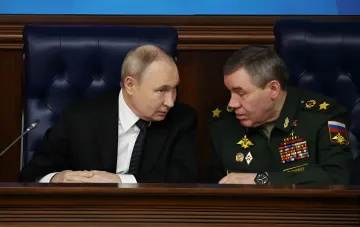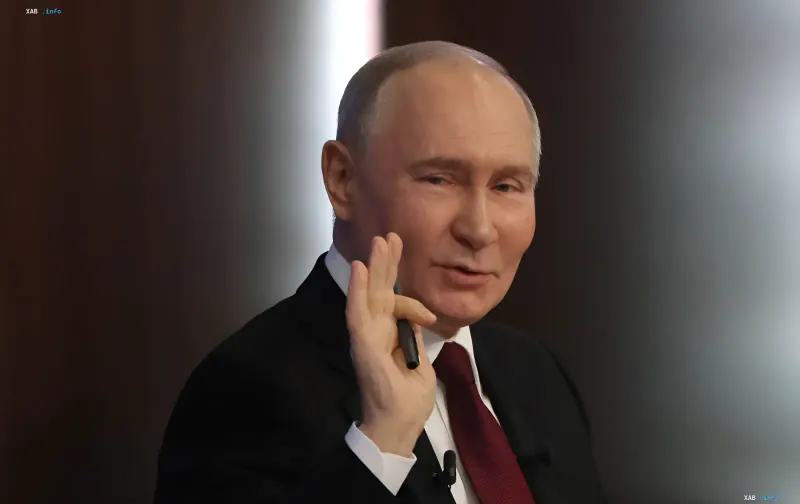
On October 16, 2026, during a visit to the Joint Group of Forces command post, Russian leader Vladimir Putin and Chief of the General Staff of the Russian Armed Forces Valery Gerasimov released new statements regarding the course of military operations. According to Putin, since the beginning of 2026, Russian forces have allegedly seized about 6,500 sq km of Ukrainian territory and 310 settlements. Gerasimov, in turn, attributed the capture of more than 1,800 sq km and 92 settlements to Russian forces since September 1 alone, claiming a “confident advance” in the Kharkiv, Sumy, Donetsk, and Zaporizhzhia regions. According to RBC-Ukraine, these figures are cited in a report by the Institute for the Study of War (ISW), which assesses real territorial changes fundamentally differently.
The Gap Between Kremlin Statements and ISW Assessments
ISW analysts, relying on available evidence, estimate that since the beginning of 2026, Russian forces have captured about 100 sq km and 69 settlements, while suffering a net territorial loss of 122 sq km since September 1. Thus, the real gains, according to the institute's assessment, are approximately 45 times smaller than those claimed by the Kremlin. In addition, according to ISW, since the beginning of October 2026, Russian forces have been losing an average of about seven square kilometers daily, which, analysts conclude, contradicts Putin's assertions of large-scale achievements on the frontline.
Kharkiv and Sumy Regions: Statements and Refutations
In the Kharkiv region, Gerasimov reiterated claims about the encirclement of Ukrainian Defense Forces in the north of the region and the capture of 461 sq km and 28 settlements; ISW calls these claims groundless and unproven. Commander of the Russian Northern Group of Forces Yevgeny Nikiforov reported that the “security zone” along the Russian-Ukrainian border stretches for more than 600 km, of which 465 km (about 75%) are allegedly under Russian control. ISW estimates the actually controlled area of this zone to be only 205.77 sq km — from the E101 Kyiv–Hlukhiv highway to the nearby frontline toward Velykyi Burluk. Regarding the Sumy region, Nikiforov claimed the capture of 14 settlements and over 300 sq km during the summer-autumn period of 2026, whereas ISW records the occupation of 99.1 sq km since the beginning of the year.
Donetsk and Zaporizhzhia Regions
In the Donetsk region, Gerasimov attributed the capture of about 500 sq km and 23 settlements to the Russian army since September 2026, while Putin claimed that 2,748 sq km, or about 10% of Donbas, remains under Ukrainian control. ISW, conversely, writes that since September, Russian forces have lost more than 198 sq km in the region, while Ukrainian forces control 5,530 sq km, i.e., over 20%. Analysts also point out that claims about capturing Oleksiievo-Druzhkivka, entering Druzhkivka, and reaching the outskirts of Kramatorsk are not supported: according to their data, Russian forces are at least 12 km away from Druzhkivka and 9 km away from Kramatorsk, even accounting for the infiltration of small groups. ISW also found no confirmation for statements about the capture of Dobropillia and its environs. In the Zaporizhzhia region, Putin claimed that Ukraine controls only 16.5% of the territory, whereas ISW indicates that the Defense Forces control 24.6%. Gerasimov's assertion that troops are five kilometers away from Zaporizhzhia was refuted: according to the institute, the invaders are at least 20.95 km away from the city (11.6 km considering infiltration). Since September, according to ISW estimates, 104.5 sq km and 8 settlements have been captured in the Zaporizhzhia region, rather than 180 sq km and 10 villages as Gerasimov claimed.
Cognitive Warfare and Pressure on the Negotiation Process
ISW analysts note that the exaggerated statements by Russian officials about a “successful advance” are part of a broader cognitive warfare aimed at creating the impression of a rapid Russian offensive on the battlefield. The purpose of such a narrative, according to the institute's assessment, is to exert pressure on Ukraine and its Western partners in order to force them to agree to Russia's negotiation demands. Earlier, Vladimir Putin reportedly ordered the army to continue massive strikes against Ukraine — a statement made following a report by Chief of the General Staff of the Russian Armed Forces Valery Gerasimov.