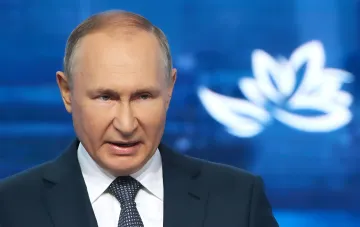
Speaking at the AI Journey conference in Moscow, Vladimir Putin stated that artificial intelligence is becoming an integral part of the economy and everyday life, and that 'living will soon be impossible' without such technologies. Against this backdrop, he noted that Russia must accelerate the implementation of AI and develop its own domestic solutions. The head of state proposed introducing a special 'choice window' for all mobile operating systems used in Russia, allowing users to independently select which AI application or agent to use, rather than being limited to a single pre-installed solution. According to sources, in September the Russian authorities were already considering mechanisms for the mandatory pre-installation of domestic AI on smartphones.
Dependency on Foreign Models as a Threat
Putin placed special emphasis on the risks associated with the use of foreign AI systems. In his assessment, dependence on foreign developments poses a threat to the country's technological sovereignty: foreign developers can restrict access to their products, and models trained on foreign values can imperceptibly influence the worldview of millions of users. For this reason, the head of state declared that Russia must independently control the security, quality, and behavior of its fundamental AI models by training them on domestic data.
Infrastructure and Energy
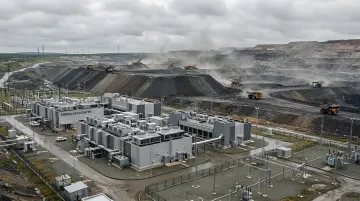
To accelerate the industry, Putin proposed creating a public-private partnership mechanism for the construction of data centers and providing additional conditions for investment in Russian AI models. At the same time, he stated that expanding energy capacities will be necessary, as shortages of electricity, equipment, and computing resources are hindering industry growth. The head of state linked the mass adoption of AI to demographic problems and labor shortages: neural networks and autonomous systems should help compensate for the labor deficit, enabling enterprises not just to automate individual operations, but to overhaul production and management processes.
Restrictions for Autonomous Agents and Data Protection
Putin warned of the danger of AI being used against the state, business, and citizens, drawing attention to the rise in cyberattacks involving neural networks and the risks associated with autonomous AI agents. He urged setting limits on their powers by defining actions that systems must not perform without human involvement, while avoiding excessive bans that could slow down technological development. A separate problem cited was the unauthorized use of neural networks by employees of companies and government agencies: transferring working documents to third-party AI services can lead to the disclosure of personal data, trade secrets, and intellectual property.
Strategy Up to 2036
According to the head of state, Russia will continue to develop sovereign AI models trained on domestic data. Putin urged state, scientific, and cultural organizations to expand the digitization of reliable information for training neural networks, and also proposed updating the National AI Development Strategy up to 2036 and approving an action plan taking into account the proliferation of autonomous systems. These initiatives complement Russia's first artificial intelligence law, signed in July 2026, which established the legal foundations for supporting the development and application of large fundamental models.