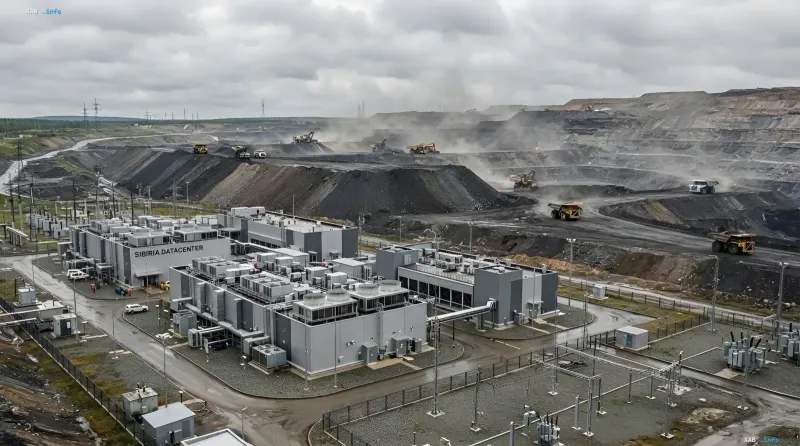
Russian President Vladimir Putin has instructed the government to approve a program for constructing new data centers in regions with developed coal mining by the end of 2026 and to ensure its implementation. The primary focus is on the Kemerovo Region (Kuzbass) and Yakutia. The first report on the implementation of the directive must be submitted by January 15, 2027, after which reports will be prepared annually. Linking computing power to coal regions is logical: they possess the necessary energy infrastructure and, as noted by the Ministry of Digital Development, suitable conditions for housing underground data processing centers.
Criteria for AI Data Centers
The initiative emerged against the backdrop of growing demand for computing power, including for the development of artificial intelligence. In October, a working group under a government subcommission drafted criteria for data centers specializing in AI. According to the document, the capacity of a regional facility must be at least 10 MW, and a federal facility at least 30 MW. Furthermore, artificial intelligence equipment must account for a minimum of 30% of the total energy consumption of the IT infrastructure. These parameters set the entry threshold for new projects and determine which facilities will be classified as dedicated to AI tasks.
Capacity Deficits and Alternative Scenarios
Russia's need for additional computing power by 2032–2033 is estimated at 2.5–3 GW. Amid electricity and capacity shortages, the placement of some AI data centers abroad—in Belarus and Kazakhstan—was previously discussed. The Ministry of Digital Development, in turn, advocates for building underground data centers rather than relocating such facilities abroad. Obviously, coal regions offer plenty of locations for underground data centers, making this model attractive from the perspectives of both energy supply and infrastructure protection.
Supporting Measures: Capacity Reservation and Foreign Data Centers
In parallel with the construction program in coal regions, other decisions regarding data center infrastructure development were adopted in November 2026. The president signed a decree obligating private data centers to reserve 10% of their capacity and space for government use when necessary. Additionally, the temporary use of foreign data centers is permitted, which should smooth over the shortage of computing resources during the transition period until new domestic facilities are commissioned. Taken together, these measures form a multi-layered strategy: domestic construction in energy-surplus regions, reservation by private operators, and temporary access to external capacities.
What This Means for the Industry
For the data center market, the directive signifies a shift in focus toward regions with excess energy capacity and coal mining, where new facilities will be able to receive cheap electricity. Strict minimum thresholds for capacity and energy consumption share for AI equipment have been established for AI tasks, which filters out small projects and stimulates large federal and regional sites. Annual reporting to the government starting in January 2027 turns the program into a tool for ongoing execution control rather than a one-time initiative.