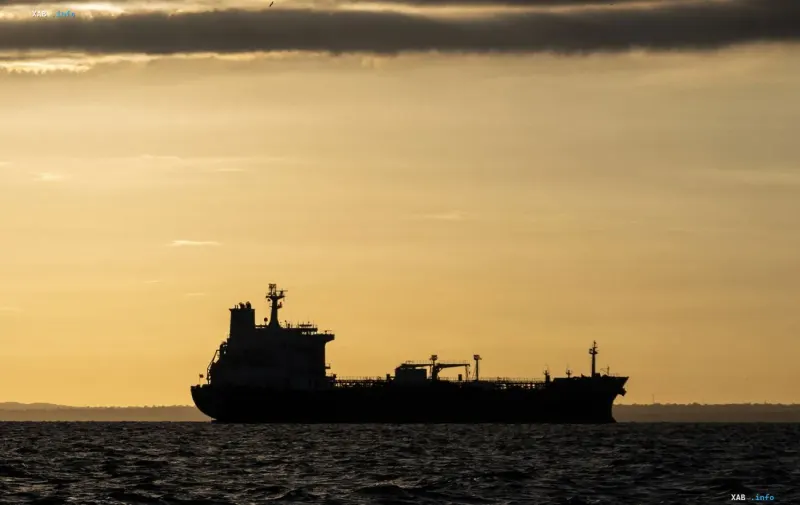
Three tankers carrying Russian diesel fuel are currently moving across the Atlantic and Baltic waters toward the US coast. Their dispatch has become the practical implementation of an agreement reached during negotiations between US President Donald Trump and Russian leader Vladimir Putin, which provides for the supply of Russian diesel to the American and global markets. To legalize these operations, the US Department of Treasury issued a temporary license suspending certain sanctions and allowing export supplies to resume. Notably, at least one of the three vessels is under international restrictions.
First in Line: Agioi Fanendes and the Port of New York
The first vessel scheduled to arrive in the US is the Agioi Fanendes. According to data cited by Reuters and global provider LSEG, the tanker loaded 40,000 tons of Russian diesel fuel at the Baltic port of Primorsk on October 22 and set off on a transatlantic voyage on the night of October 23. Its destination is listed as New York, with arrival expected on November 7—following the US midterm congressional elections. If the offloading proceeds smoothly, this will mark the first delivery of Russian fuel to the US since the ban on Russian oil and petroleum products was introduced in 2022; some sources date this period back to July 2023. The identities of the buyer and seller of the cargo had not been disclosed at the time of publication.
Vessel Queue and Sanction Status
The second vessel expected to reach the US East Coast on November 9 is the 20-year-old Russian tanker Talisman; the exact port of destination is not specified in open data. The third vessel is the Leruo, owned by a Hong Kong-based company and sailing under the flag of Sierra Leone. It departed Saint Petersburg on October 17 and is expected to reach an American port on November 11. Leruo is subject to sanctions by the European Union, the United Kingdom, and Canada, making its arrival the most sensitive in terms of compliance and diplomacy. Combined, the three tankers are transporting approximately 140,000 tons of fuel.
Scale of Supplies Versus Domestic Demand
From the perspective of the US energy balance, the declared volume of about 140,000 tons is equivalent to only a few hours of the country's domestic consumption, making the deal more symbolic and signaling in nature rather than strategic. Meanwhile, according to shipbroker Clarksons, the number of tankers calling at Russian Baltic ports has reached a two-year high following the agreement, indicating a notable surge in export logistics. Analysts, however, warn that it will be difficult for Russia to deliver the full declared volume of diesel fuel within the stated timeframes.
Logistical Risks and Future Dynamics
An additional factor of uncertainty remains Ukraine: the resumption of strikes on Russian oil refineries and export terminals could complicate or disrupt the execution of deliveries. Thus, the implementation of the Trump-Putin agreement will depend on three variables—the operation of the US Treasury's temporary license, the actual utilization rates of Russian refineries, and the military-logistical situation around export hubs. The first two voyages, expected in early November, will serve as a practical test of how sustainable the reached agreement is.