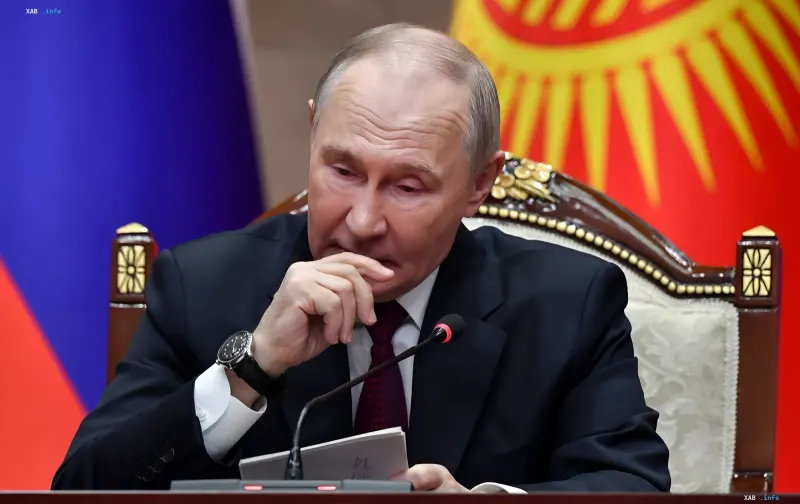
During a meeting of the Council for Strategic Development and National Projects, Russian President Vladimir Putin raised an issue that had previously remained in the shadows but is now becoming a priority on the state agenda. The Russian leader stated that the authorities must begin preparing in advance for the return of military personnel from the front lines after the conclusion of the special military operation. According to Putin, this concerns thousands of people who will return to the rear with "healthy ambitions" and will demand a worthy place in the country's economy.
Strategic challenge: from the front to the civilian sector
Vladimir Putin emphasized that the integration of returning soldiers is not just a social task, but serious economic work. "Many people will return, they need to be employed, and they will come with healthy ambitions and so on. This is serious work that needs to be prepared for in advance," the president stated. He pointed out that without a well-thought-out strategy, the state risks facing social tension if it does not provide decent conditions for those who have gone through combat operations.
Experts note that this could concern hundreds of thousands of people, including both contract soldiers and those mobilized, who will find themselves in the status of "civilians with military experience" after the end of hostilities. Their skills — from operating machinery to working in extreme conditions — could be in demand in various industries, but only if there are targeted retraining and support programs.
Support for families and SVO participants as a priority
Putin also named resolving issues related to the so-called "special operation" as one of the key tasks, including support for the families of military personnel and war participants. According to him, the state is obliged to ensure not only material but also psychological rehabilitation for those who have gone through combat operations. This includes access to medical services, educational programs, and employment benefits.
It is important to note that such statements resonate with previously announced initiatives to create special funds and rehabilitation centers for SVO veterans. However, according to independent analysts, the implementation of these plans requires significant financial investment and coordination between various agencies, which is not yet fully ensured.
Contradictory data
On the one hand, official statements from the Kremlin and Russian authorities speak of a large-scale employment and support program for SVO veterans being prepared. On the other hand, Vadym Skibitsky, a representative of the GUR of the Armed Forces of Ukraine, stated that Russia is considering the possibility of a war with NATO countries until 2030. This creates a contradiction: if the war may continue or expand, then plans for the return and employment of military personnel may be premature or even symbolic.
Furthermore, intelligence agencies note that Moscow is already conducting hybrid operations against Alliance countries, including the use of unknown unmanned aerial vehicles. This indicates that the conflict may transform, but not necessarily end in the foreseeable future. Thus, Putin's statements about preparing for the return of military personnel may be part of a long-term strategy rather than a reflection of immediate plans.
Economic and social consequences
The return of a large number of military personnel to civilian life could have a significant impact on the labor market and social structure of Russia. On the one hand, this could become an impetus for the development of certain industries, such as construction, logistics, security, and manufacturing. On the other hand, the lack of a sufficient number of jobs and adaptation programs could lead to rising unemployment and social instability.
Experts also warn about the risks associated with the psychological adaptation of veterans. Many of them may face difficulties integrating into civilian life, especially if they do not receive the necessary support from the state. This requires not only economic, but also psychological, educational, and social measures.
Outlook and conclusions
Vladimir Putin's statement about the need to prepare for the return of military personnel from the front is an important signal that the Russian leadership is aware of the scale of the consequences of the special military operation. However, the implementation of these plans will require significant effort, resources, and coordination between various agencies. In the context of the ongoing conflict and uncertainty regarding its future, such initiatives could become both a step towards stabilization and a source of new problems.