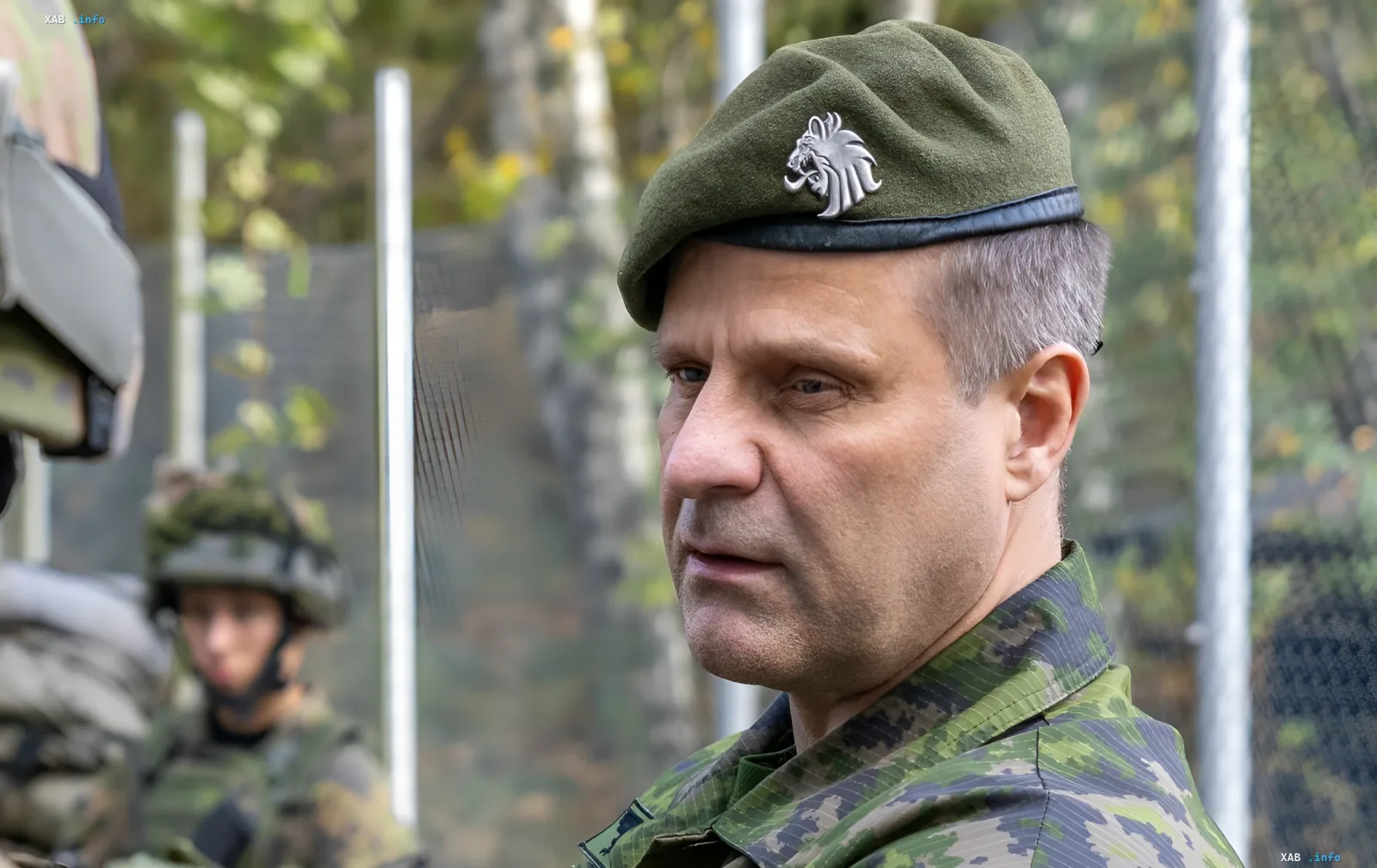
Janne Jaakkola, Commander of the Finnish Defence Forces, stated in a comment to the national broadcaster Yle that Russia, finding itself in a protracted conflict with Ukraine, is increasingly resorting to informational and other methods of influence on Western countries. According to him, Helsinki does not detect a direct military threat from Moscow, however, the growing Russian military presence in areas bordering Finland remains a matter of close attention for the defence establishment. The statement came against the backdrop of a series of events related to diplomatic activity around NATO and assessments of Russia's actual military intentions.
Information Pressure as a Substitute for Direct Aggression
Jaakkola emphasized that, in his assessment, Moscow does not have the resources to simultaneously conduct full-scale combat operations on the front in Ukraine and prepare a large-scale offensive in the western direction. “Russia is stuck in the war against Ukraine,” the commander noted, adding that this is precisely why the Kremlin is “increasingly using informational and other methods of influence on the West.” Under “other methods,” Finnish military doctrine understands cyber operations, coordinated campaigns on social media, data manipulation, and psychological pressure on the public opinion of allied countries. Jaakkola did not cite specific examples of current operations, but pointed out that Finnish intelligence services and the defence establishment are constantly monitoring such threats.
Military Infrastructure at the Border: 2022 Plans in Action
The commander separately addressed the physical buildup of the Russian military presence. “At the same time, we see work in our immediate region to build up capability, for which the decision was already made in 2022, that is, this infrastructure construction that has been widely discussed publicly. Conditions are being created so that at some point troops could be transferred there,” Jaakkola said. This refers, in particular, to the modernization of railway and road arteries, the construction of warehouses and logistics hubs in the western and northwestern regions of Russia, as well as in the Kaliningrad region. According to Jaakkola, if one goes by the plans voiced by Russian military officials, Moscow intends to triple its land military power. At the same time, the commander emphasized that the timelines for implementation “depend entirely on how the situation in Ukraine develops further.”
Context: CIA Director's Visit and Assessments from European Capitals
Jaakkola's statement came against the backdrop of several high-profile events this week. According to media reports, the Director of the U.S. Central Intelligence Agency, John Ratcliffe, made an unexpected visit to Moscow, where, it is claimed, he warned the Russian side against an attack on NATO countries. Meanwhile, according to Bloomberg, European officials familiar with intelligence assessments are convinced that at present “there is no evidence that Russia is preparing a military attack on NATO or Baltic countries.” U.S. President Donald Trump, commenting on the topic, also stated that Russia does not intend to attack the alliance and that “there is no such problem.” In Kyiv, meanwhile, the deputy head of the Operational Command reported that Russian troops are “gradually losing momentum on the front,” and that the Ukrainian command is preparing further active operations in certain directions.
Contradictory Data
The collected sources contain a number of inconsistencies that are important to consider when interpreting the overall picture. On the one hand, Jaakkola directly states the absence of a direct military threat and that Russia is “stuck” in the Ukrainian conflict. On the other hand, he himself emphasizes that the infrastructure work to create conditions for troop transfer has been ongoing since 2022 and is not stopping. This means that, according to the Finnish assessment, the threat is not current, but Moscow's potential capacity for escalation is systematically growing. The second inconsistency concerns the CIA Director's visit to Moscow: some media present it as a “warning” against an attack on NATO, while European officials, cited by Bloomberg, assert that there is no evidence of preparations for such an attack. If the threat is not confirmed by intelligence data, the logic of a “warning” appears contradictory. The third caveat: Trump's statements that “there is no problem” are not, according to available data, supported by specific intelligence documents and sound like a political assessment rather than an analytical conclusion.
What This Means for Regional Security
Jaakkola's comment should be considered in the broader context of Finland's integration into NATO's defence architecture, which Helsinki joined in 2023. The Finnish command, in essence, notes a dual strategy by Moscow: deterrence through informational and hybrid pressure while simultaneously maintaining and expanding “dormant” military infrastructure that could be activated in the event of a change in calculations. For the Baltic and Scandinavian countries, this means that even in the absence of an immediate threat, it is necessary to continue investing in logistics, cyber defence, and intelligence presence. Jaakkola did not name specific timelines by which the infrastructure work could transition to the phase of actual troop transfer, but he linked this transition to the outcome of the Ukrainian conflict — that is, in his logic, the escalation scenario is most likely if Russia finds itself in a state of forced “freezing” of the front in Ukraine and a redirection of resources.