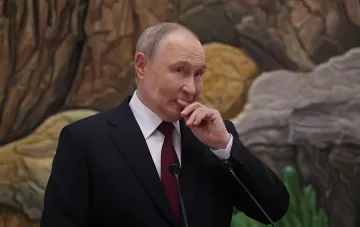
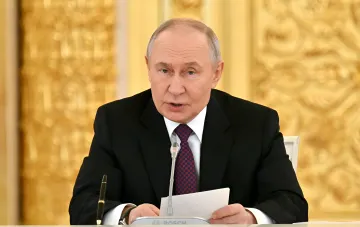
The Russian leadership continues to make resonant statements on the international arena, addressing security and humanitarian rights issues. During his recent speech, Vladimir Putin touched upon the situation of the Russian-speaking population in the Baltic states, claiming their alleged systematic oppression. According to the head of the Kremlin, Moscow is closely monitoring this situation and has already formed a clear response strategy, supposedly relying exclusively on humanitarian tools and the norms of international law.
Rejection of Escalation with the European Union
Special attention in his speech was paid by the Russian leader to the current crisis in relations between Russia and European states. Vladimir Putin categorically rejected accusations of preparing for aggressive actions against the countries of the European Union, calling such statements a targeted provocation and artificial escalation of fears. According to him, Moscow lacks both material motives and strategic plans for a direct military clash with European countries.
Context of Hybrid Threats and NATO Response
The words of the Russian leadership came against the background of ongoing tension on the eastern borders of the North Atlantic Alliance. Over the past year, experts and intelligence services have recorded an increase in the number of drone incidents and the intensification of hybrid attacks by the Russian Federation, to which the Baltic states and Poland turn out to be the most vulnerable. In response to this, the Baltic states have already turned to the EU leadership with a request to allocate half a billion euros to strengthen air defense systems and combat UAVs.
Contradictory Data
While official Moscow verbally denies any aggressive intentions towards Europe and declares an exclusively humanitarian approach to protecting compatriots abroad, Western analysts and intelligence services assess the situation quite differently. Danish intelligence and other NATO agencies openly warn of the intensification of hybrid threats and provocations, pointing to the systemic nature of the Kremlin's actions that contradict its peacekeeping rhetoric.